What Are the Twelve Chinese Zodiac Animals?

The twelve Chinese zodiac animals are more than a list of birth-year symbols. In the Sheng Xiao system, each animal gives a memorable shape to a year in the lunar calendar cycle: Rat, Ox, Tiger, Rabbit, Dragon, Snake, Horse, Goat, Monkey, Rooster, Dog, and Pig.
This article focuses on the animals themselves: their traditional order, core temperament, elemental tone, and the kind of jewelry or ritual object that can echo each sign in daily life. For a wider explanation of the 60-year cycle, Yin and Yang, trines, and the birth-date calculator, start with our Chinese Zodiac guide.
The order is often explained through the Great Race story, in which the animals cross a river and arrive one by one. Museum and calendar sources also remind us that these animals belong to a broader Chinese timekeeping culture, where lunar months, Heavenly Stems, Earthly Branches, and elemental cycles all work together.
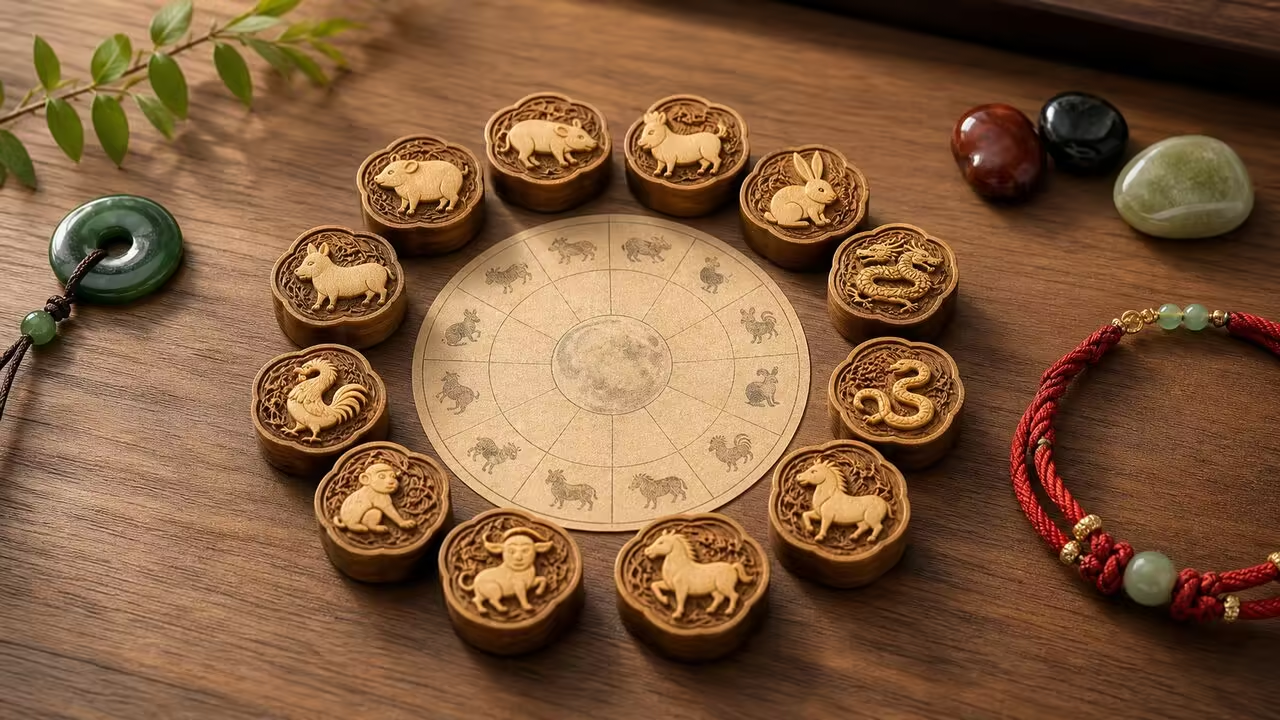
In Tibetan astrological art, the animals also appear around protective diagrams such as the Srid-pa-ho chart. There they are not simply personality mascots; they help frame a complete calendar-and-element system used for orientation, protection, and reflection.
The Twelve Chinese Zodiac Animals in Order
Use the sections below as a quick doorway into each sign. Each animal name links to a deeper Buddha Auras guide for that specific zodiac sign.
The Rat
The Rat opens the cycle through alertness, timing, and adaptability. In the Great Race story, it reaches the riverbank by riding on the Ox’s back and leaping ahead at the final moment.
Rat energy is quick without needing to be loud. It notices openings, reads a room, and adjusts before others have finished naming the problem. When this sensitivity turns into restlessness, a simple doorway pause can help: stop for a breath before entering a new room, meeting, or decision.
Deep blue stones such as lapis lazuli can visually echo the Rat’s Water nature, giving the mind a cooler focal point when thoughts move too quickly.
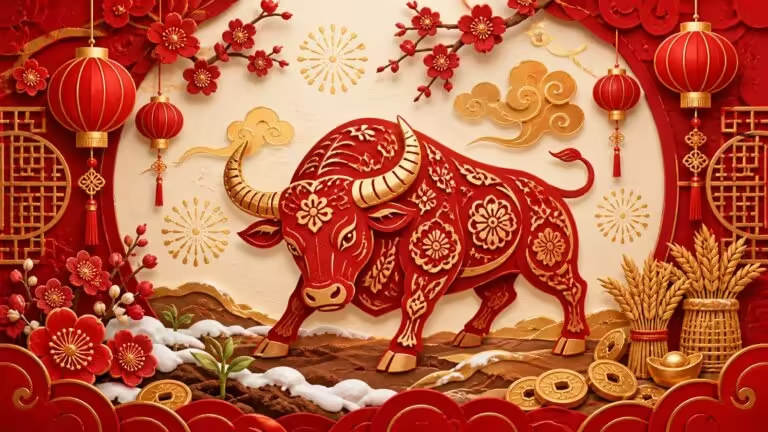
The Ox
The Ox carries the strength of patient movement. It wades through pressure without needing applause, making it one of the clearest images of steady Earth energy in the zodiac cycle.
Ox people often feel most balanced when effort becomes tangible: walking, lifting, cleaning, repairing, or building something with the hands. The lesson is not endless work, but honest rhythm.
Matte black obsidian suits this grounded quality because its weight and dark surface create a quiet, stabilizing presence.
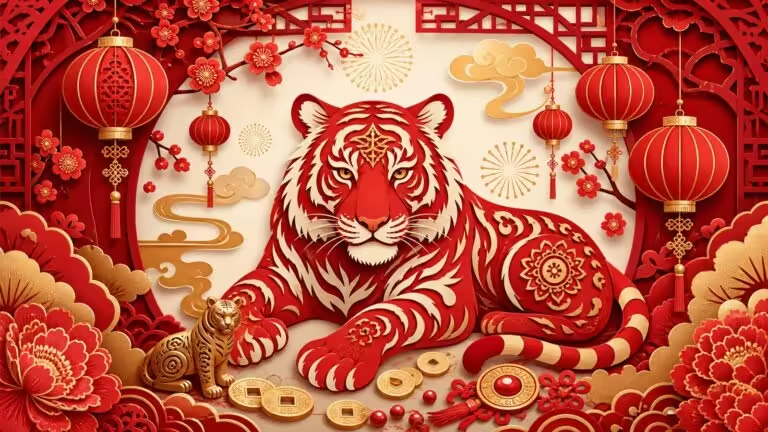
The Tiger
The Tiger is courage in motion. It fights through the river with visible force, yet its deeper gift is not aggression; it is the willingness to move when fear is still present.
As a Wood sign with Yang force, Tiger energy benefits from expression. Humming, chanting, or speaking a difficult truth in a calm voice can release the pressure that builds in the throat and chest.
Water motifs, wave carvings, and cooling stones help soften the Tiger’s heat without dulling its bravery. Readers interested in a more focused interpretation can continue with our guide to Tiger zodiac female personality.
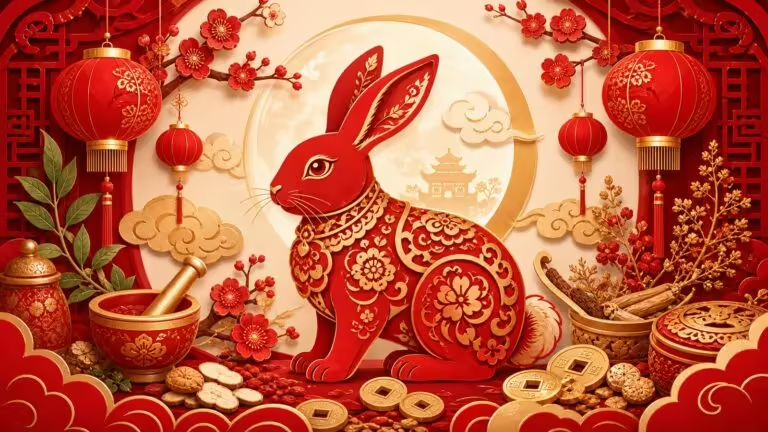
The Rabbit
The Rabbit crosses the river through lightness rather than force, moving across stepping stones and a floating log. Its intelligence is protective, graceful, and often quiet.
Rabbit energy teaches soft boundaries. A dimmer room, gentler fabric, or slower evening ritual can become a real form of protection when life feels too sharp.
Jade is a natural companion for this sign. Its smooth surface and long cultural association with refinement make it a fitting material for Rabbit-style calm; see our discussion of jade necklace meaning for a broader material context.
The Dragon
The Dragon is the only mythical animal in the cycle. In the race story, it could have arrived first but stops to bring rain, turning power into service.
This sign carries authority, vision, and responsibility. Dragon energy is healthiest when it expands the space around it instead of trying to dominate it. Sky-gazing, horizon walks, and spacious planning rituals all suit this archetype.
Clear crystal, pale shell, or cooling white stones can balance the Dragon’s intensity while keeping its presence bright.
The Snake
The Snake wins through timing. Coiled near the Horse, it crosses without wasting movement, showing the value of stillness before action.
Snake energy is observant, strategic, and inwardly warm. Before a complex decision, it may help to hold a warm cup of tea and notice the heat through the palms. The practice is simple, but it trains attention toward subtle signals.
Silver, amethyst, and other cool-to-the-touch materials can support this quiet, watchful quality.
The Horse
The Horse brings movement, independence, and open space. Its Yang Fire nature wants room to run, create, and respond quickly.
When Horse energy becomes scattered, the answer is usually not more thinking. A few minutes of unstructured movement, stretching, or fast walking can restore the body before the mind tries to solve everything.
Grounding materials such as jade, smoky quartz, or a heavier bracelet design can keep that momentum from burning out.
The Goat
The Goat reaches the finish through cooperation, sharing a raft with the Monkey and Rooster. Its strength is relational: beauty, tenderness, and the courage to stay receptive.
Goat energy is nourished by tactile creation. Clay, fabric, gardening, cooking, and arranging a small altar or desk corner can all bring the nervous system back into balance.
Rose quartz, turquoise tones, and softer organic textures suit the Goat’s inward Earth quality.
The Monkey
The Monkey is clever, restless, and inventive. In the river story, it clears reeds and solves practical problems so the shared raft can move.
This sign needs mental movement. Drawing patterns, walking a familiar route in a new way, or mapping a problem on paper gives Monkey energy a constructive path instead of letting it loop.
Reflective metals and clear quartz fit the Monkey’s bright, agile mind.
The Rooster
The Rooster notices what others miss. Its Yin Metal quality is precise, orderly, and comfortable with clear boundaries.
Rooster energy is useful when life feels messy. A period of silence, a clean list, or a single clear sound can help restore focus without adding more noise.
Dzi beads and structured geometric designs suit the Rooster’s love of pattern, symmetry, and deliberate order.
The Dog
The Dog carries loyalty, protection, and sincerity. Even in the race, it pauses to play in the water, reminding us that devotion should not erase joy.
Dog energy is strongest when it protects what truly matters. Widening the gaze during a walk, instead of staring straight ahead, is a practical way to release tunnel vision and return to trust.
Hemp cord, tiger’s eye, and simple protective bracelets pair naturally with this sign. For a deeper reading, see Chinese Zodiac Dog: Inner Harmony.
The Pig
The Pig closes the cycle with rest, appetite, and generosity. Its final place in the race is not failure; it is a reminder that life must include replenishment.
Pig energy asks for warmth: a full table, a slower evening, an honest nap, or a sensory reset after a long day. Abundance here is not excess. It is the ability to receive.
Smooth organic materials and pearl-like surfaces suit the Pig’s Yin Water softness; readers comparing pearl quality can continue with our freshwater pearl value guide.
Find Your Elemental Resonance
The zodiac operates in tandem with the five classical elements. These natural forces shift the baseline tone of your animal sign. As a quick starting point, look at the last digit of your birth year; for a fuller explanation of how this becomes part of the 60-year cycle, use the Chinese Zodiac calculator and system guide.
- Ends in 0 or 1: Metal brings mental clarity and strict discipline.
- Ends in 2 or 3: Water offers deep intuition and fluid movement.
- Ends in 4 or 5: Wood fosters organic growth and natural kindness.
- Ends in 6 or 7: Fire ignites raw passion and dynamic energy.
- Ends in 8 or 9: Earth provides grounded stability and calm logic.
The Synergy of Zodiac and Elements
Understanding the intersection of your animal and element allows for targeted personal alignment. A Metal Rat applies strict discipline to their natural adaptability, while a Water Rat relies on fluid instinct.
To support these specific signatures, choosing the right material for your intentional objects requires careful thought. The physical medium must actively respond to your elemental needs.
An Earth Horse may benefit from the grounding weight of jade, while a Wood Tiger may prefer materials that feel warm, rooted, and steady. The point is not to treat jewelry as a prediction device. It is to choose a physical reminder that helps you return to the quality your sign is trying to cultivate.
Understanding Your Ben Ming Nian
Every twelve years, the cycle returns to your own zodiac animal. This milestone is known as Ben Ming Nian. Traditional practice treats it as a year that deserves extra attention, not because fate is fixed, but because repetition invites review.
A practical modern reading is simple: use the year as a checkpoint. What patterns have repeated since the last cycle? Which strengths have matured, and which habits now need a clearer boundary?
Red string is often worn during this period because red is associated with vitality, visibility, and protection. If you choose one, let it act as a small daily reminder to move deliberately rather than reactively. For related symbolism, see our guide to red thread bracelets across Buddhist, Chinese, and Mexican traditions.
Zodiac Animal Birth Year Reference
Find Your Zodiac Animal by Birth Year
| Year | Date Range | Zodiac Sign |
|---|---|---|
| 1948 | Feb. 10, 1948 – Jan. 28, 1949 | Rat |
| 1949 | Jan. 29, 1949 – Feb. 16, 1950 | Ox |
| 1950 | Feb. 17, 1950 – Feb. 05, 1951 | Tiger |
| 1951 | Feb. 06, 1951 – Jan. 26, 1952 | Rabbit |
| 1952 | Jan. 27, 1952 – Feb. 13, 1953 | Dragon |
| 1953 | Feb. 14, 1953 – Feb. 02, 1954 | Snake |
| 1954 | Feb. 03, 1954 – Jan. 23, 1955 | Horse |
| 1955 | Jan. 24, 1955 – Feb. 11, 1956 | Goat |
| 1956 | Feb. 12, 1956 – Jan. 30, 1957 | Monkey |
| 1957 | Jan. 31, 1957 – Feb. 17, 1958 | Rooster |
| 1958 | Feb. 18, 1958 – Feb. 07, 1959 | Dog |
| 1959 | Feb. 08, 1959 – Jan. 27, 1960 | Pig |
| 1960 | Jan. 28, 1960 – Feb. 14, 1961 | Rat |
| 1961 | Feb. 15, 1961 – Feb. 4, 1962 | Ox |
| 1962 | Feb. 5, 1962 – Jan. 24, 1963 | Tiger |
| 1963 | Jan. 25, 1963 – Feb. 12, 1964 | Rabbit |
| 1964 | Feb. 13, 1964 – Feb. 1, 1965 | Dragon |
| 1965 | Feb. 2, 1965 – Jan. 20, 1966 | Snake |
| 1966 | Jan. 21, 1966 – Feb. 8, 1967 | Horse |
| 1967 | Feb. 9, 1967 – Jan. 30, 1968 | Goat |
| 1968 | Jan. 30, 1968 – Feb. 16, 1969 | Monkey |
| 1969 | Feb. 17, 1969 – Feb. 5, 1970 | Rooster |
| 1970 | Feb. 6, 1970 – Jan. 26, 1971 | Dog |
| 1971 | Jan. 27, 1971 – Feb. 14, 1972 | Pig |
| 1972 | Feb. 15, 1972 – Feb. 2, 1973 | Rat |
| 1973 | Feb. 3, 1973 – Jan. 22, 1974 | Ox |
| 1974 | Jan. 23, 1974 – Feb. 10, 1975 | Tiger |
| 1975 | Feb. 11, 1975 – Jan. 30, 1976 | Rabbit |
| 1976 | Jan. 31, 1976 – Feb. 17, 1977 | Dragon |
| 1977 | Feb. 18, 1977 – Feb. 6, 1978 | Snake |
| 1978 | Feb. 7, 1978 – Jan. 27, 1979 | Horse |
| 1979 | Jan. 28, 1979 – Feb. 15, 1980 | Goat |
| 1980 | Feb. 16, 1980 – Feb. 4, 1981 | Monkey |
| 1981 | Feb. 5, 1981 – Jan. 24, 1982 | Rooster |
| 1982 | Jan. 25, 1982 – Feb. 12, 1983 | Dog |
| 1983 | Feb. 13, 1983 – Feb. 1, 1984 | Pig |
| 1984 | Feb. 2, 1984 – Feb. 19, 1985 | Rat |
| 1985 | Feb. 19, 1985 – Feb. 8, 1986 | Ox |
| 1986 | Feb. 9, 1986 – Jan. 28, 1987 | Tiger |
| 1987 | Jan. 29, 1987 – Feb. 16, 1988 | Rabbit |
| 1988 | Feb. 17, 1988 – Feb. 5, 1989 | Dragon |
| 1989 | Feb. 6, 1989 – Jan. 26, 1990 | Snake |
| 1990 | Jan. 27, 1990 – Feb. 14, 1991 | Horse |
| 1991 | Feb. 15, 1991 – Feb. 3, 1992 | Goat |
| 1992 | Feb. 4, 1992 – Jan. 22, 1993 | Monkey |
| 1993 | Jan. 23, 1993 – Feb. 9, 1994 | Rooster |
| 1994 | Feb. 10, 1994 – Jan. 30, 1995 | Dog |
| 1995 | Jan. 30, 1995 – Feb. 18, 1996 | Pig |
| 1996 | Feb. 19, 1996 – Feb. 6, 1997 | Rat |
| 1997 | Feb. 7, 1997 – Jan. 27, 1998 | Ox |
| 1998 | Jan. 28, 1998 – Feb. 15, 1999 | Tiger |
| 1999 | Feb. 16, 1999 – Feb. 4, 2000 | Rabbit |
| 2000 | Feb. 5, 2000 – Jan. 23, 2001 | Dragon |
| 2001 | Jan. 24, 2001 – Feb. 11, 2002 | Snake |
| 2002 | Feb. 12, 2002 – Feb. 18, 2003 | Horse |
| 2003 | Feb. 1, 2003 – Jan. 21, 2004 | Goat |
| 2004 | Jan. 22, 2004 – Feb. 8, 2005 | Monkey |
| 2005 | Feb. 9, 2005 – Jan. 28, 2006 | Rooster |
| 2006 | Jan. 29, 2006 – Feb. 17, 2007 | Dog |
| 2007 | Feb. 17, 2007 – Feb. 6, 2008 | Pig |
| 2008 | Feb. 7, 2008 – Jan. 25, 2009 | Rat |
| 2009 | Jan. 26, 2009 – Feb. 13, 2010 | Ox |
| 2010 | Feb. 14, 2010 – Feb. 2, 2011 | Tiger |
| 2011 | Feb. 3, 2011 – Jan. 22, 2012 | Rabbit |
| 2012 | Jan. 23, 2012 – Feb. 9, 2013 | Dragon |
| 2013 | Feb. 10, 2013 – Jan. 30, 2014 | Snake |
| 2014 | Jan. 31, 2014 – Feb. 18, 2015 | Horse |
| 2015 | Feb. 19, 2015 – Feb. 7, 2016 | Goat |
| 2016 | Feb. 8, 2016 – Jan. 27, 2017 | Monkey |
| 2017 | Jan. 28, 2017 – Feb. 15, 2018 | Rooster |
| 2018 | Feb. 16, 2018 – Feb. 4, 2019 | Dog |
| 2019 | Feb. 4, 2019 – Jan. 24, 2020 | Pig |
| 2020 | Jan. 25, 2020 – Feb. 11, 2021 | Rat |
| 2021 | Feb. 12, 2021 – Jan. 31, 2022 | Ox |
| 2022 | Feb. 1, 2022 – Jan. 21, 2023 | Tiger |
| 2023 | Jan. 22, 2023 – Feb. 9, 2024 | Rabbit |
| 2024 | Feb. 10, 2024 – Jan. 28, 2025 | Dragon |
References
- National Museums Liverpool: The animals of the Chinese calendar – supports the 12-animal order, lunar-calendar framing, and five-element context.
- Hong Kong Observatory: Heavenly Stems, Earthly Branches, and the Gan-Zhi cycle – supports the 10 stems, 12 branches, and repeating 60-year calendar cycle.
- Himalayan Art Resources: Astrological Chart, Tibetan sid pa ho – supports the article’s note about Srid-pa-ho charts, elemental symbols, and the 12 animal figures of the 60-year cycle.
Recommended Reading
- Complete system: Chinese Zodiac: Your Personal Insight System
- Protective Buddha by sign: Chinese Zodiac: Which Buddha Protects Your Sign?
- Rat sign deep dive: Chinese Zodiac Rat
- Dragon sign deep dive: Chinese Zodiac Dragon
- Dog sign balance: Chinese Zodiac Dog: Inner Harmony