Red Thread Bracelets: Traditions in Buddhism, China, and Mexico

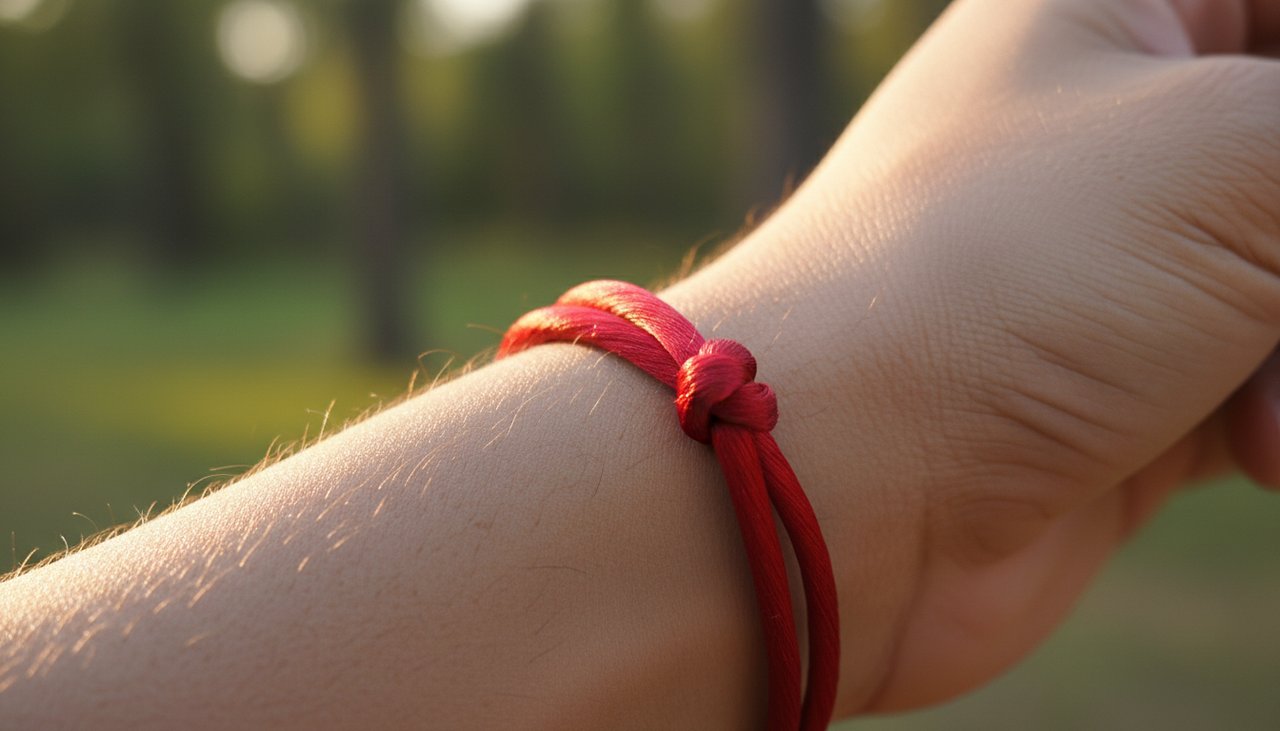
As you secure a crimson thread around your wrist, this simple gesture transforms the cord into a clear anchor of intention. Long before it became a popular piece of spiritual jewelry, a dyed string carried specific cultural weight.
Why Silk and Wool?
Traditional Chinese customs rely on pure cinnabar to dye silk cords. According to ancient medical texts, the intense saturation of this specific red acts to calm a restless mind and suppress scattered thoughts.
It is not merely a color, but a brilliant visual signal that constantly reminds the mind to stay grounded. When the eyes catch this bright hue, it cuts through daily distractions to establish a firm psychological boundary. This pursuit of material energy resonates wonderfully in Latin American culture, thousands of miles away.
In Mexican folk practices known as Curanderismo, practitioners insist on using natural, rough wool fibers. They believe the coarse texture and dense weave act as a physical net, trapping and filtering out negative energy before it can enter the body through the left wrist. To fortify this barrier, the string often incorporates highly specific additions:
- A thick wool base to absorb and filter external malice.
- An ojo de venado seed, whose hard, eye-like surface intercepts and refracts envious glares.
- A brass Caravaca cross to act as a double-barred shield against spiritual harm.
How Do Red Threads Guard the Mind?
In Mexican traditions, a severed thread is never viewed as an accident. When the wool fibers eventually snap, it signals the cord has absorbed its maximum capacity of negative energy. Instead of throwing it away, the wearer buries the remnants near a plant root to return that heavy energy to the earth.
A similar reliance on red threads emerges during a person’s chinese zodiac birth year, known as Ben Ming Nian. Traditional folklore dictates that individuals face a hidden, restrictive astrological phase during this cycle. To counter this, elders tie a vibrant cinnabar-dyed silk thread around the younger generation’s wrist exactly at midnight on New Year’s Eve.
When your fingertips touch that dash of red throughout the year, you remember it is not just silk, but the tangible protection of your elders. It serves as a continuous visual anchor, boosting your presence and confidence during a period of perceived vulnerability.
Activating the Cord
Eastern spirituality treats the cord as an active tool for mindful awareness. In contemporary Tibetan markets, you will often see the Nine-Vehicle Vajra knot. The nine interlocking nodes symbolically map to the Nyingma school’s Nine Yanas, or the nine progressive paths of Buddhist teachings. However, authentic practice dictates that the true power comes from the practitioner maintaining a state of samadhi and chanting mantras, rather than the physical knots themselves.
The cord requires conscious activation from the wearer. When you feel overwhelmed, gently press the knot and inhale slowly for four counts. This creates a tactile friction against your skin that acts as an immediate physical brake for a racing mind.
Follow this by exhaling for six counts. This extended exhale directly stimulates the parasympathetic nervous system, naturally lowering your heart rate and easing physical tension. Incorporating this brief somatic pause mirrors the grounding effects of using mala beads throughout your day. Understanding the specific motifs tied into these Himalayan cords can fundamentally shift how you interact with them .
A Visible Reminder
The true power of any spiritual object is the personal meaning we give it.
Whether you wear a traditionally blessed cord or a modern minimalist design, the item remains a dedicated vessel for your intentions. For everyday shopping, red string bracelets translate that tradition into wearable cord, knot, and charm styles. In our fast-paced modern routines, the thread acts as a highly visible signal of your personal psychological boundaries. It serves as a quiet, tactile reminder of the strength you carry within, offering a brief moment of clarity every time it catches your eye.