Where Should Pixiu Be Placed at Home?

A Pixiu placed without thought is like planting a seed in the wrong season—the intention is there, but the conditions are not. Its position, angle, and height determine whether the figure has a role to play or simply collects dust. This guide walks through each room with specific materials, heights, and angles so you can stop guessing.
We have mapped out the most natural places for a Pixiu based on the layout of a modern home. To understand the deeper roots of these practices, you may find it helpful to look at the broader art of placement: What is Feng Shui: Ancient Art of Harmonious Living
Before You Place: Check the Mouth
Not all Pixiu figures are shaped the same, and the mouth matters more than most people realize.
A wide, open mouth suggests a greater capacity to gather wealth—think of it as casting a wider net. A Pixiu with a vigilant, forward-leaning stance and a narrower mouth acts more like an active guard than a collector. Neither is better or worse. The right choice depends on what you need most right now: accumulation or protection.
If you are uncertain which type you have, hold the figure at eye level and look straight at its face. A collector’s mouth occupies a visibly generous portion of the face—wide enough that the jaw appears relaxed and open. A guardian’s mouth is tighter, the jaw set forward, the expression focused. Trust what you see rather than guessing from the side.
Check this before choosing a spot, because the mouth shape should influence which room you place it in and what material you pick.
The Living Room: Your Home’s Bright Hall
The living room is where energy circulates most freely. In Feng Shui, this space is called the bright hall (明堂, míng táng)—the ideal anchor point for wealth energy.
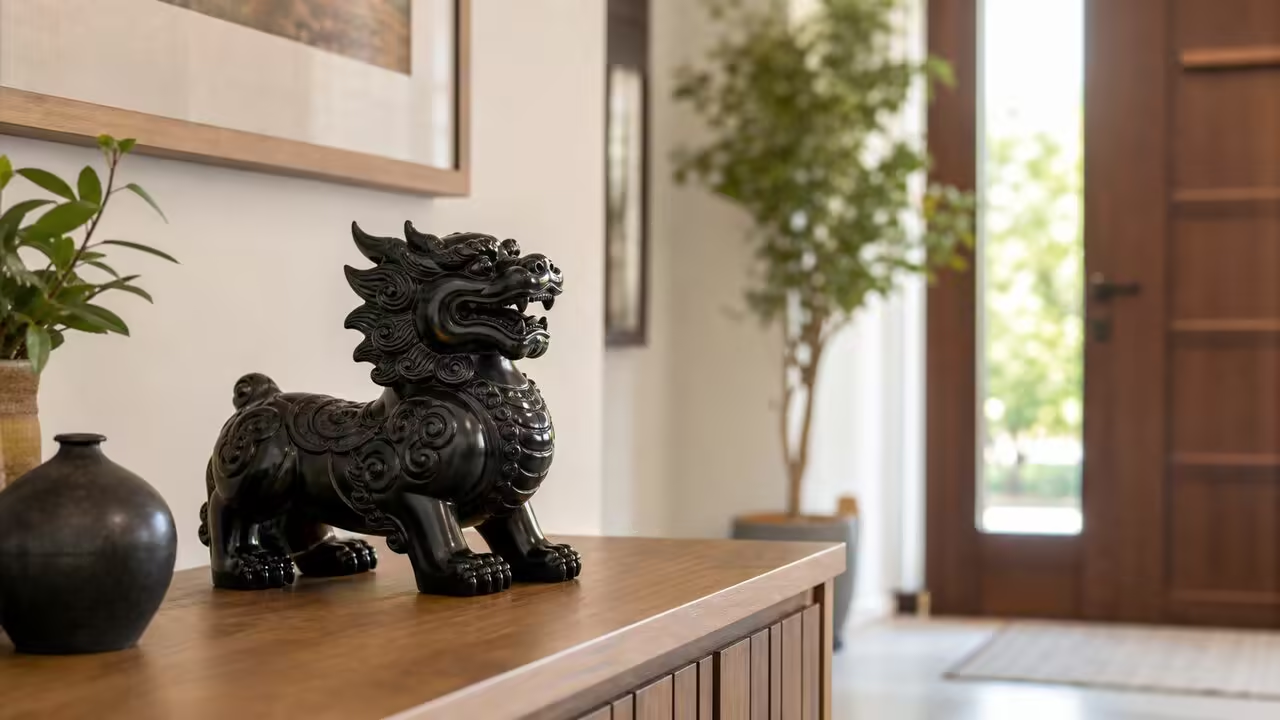
When finding a spot here, consider what the Pixiu sees. It requires a clear view of the entrance to do its work effectively. A Black Obsidian Pixiu is particularly suited for this space, as its dark, grounding nature helps absorb stray energy while pulling in new opportunities.
When sourcing one, hold it under a strong direct light and tilt it slowly. Genuine obsidian—volcanic glass formed under intense heat—often reveals a faint iridescent shimmer at certain angles, sometimes called a rainbow eye. A piece that stays uniformly flat black under any light is more likely dyed glass or resin.
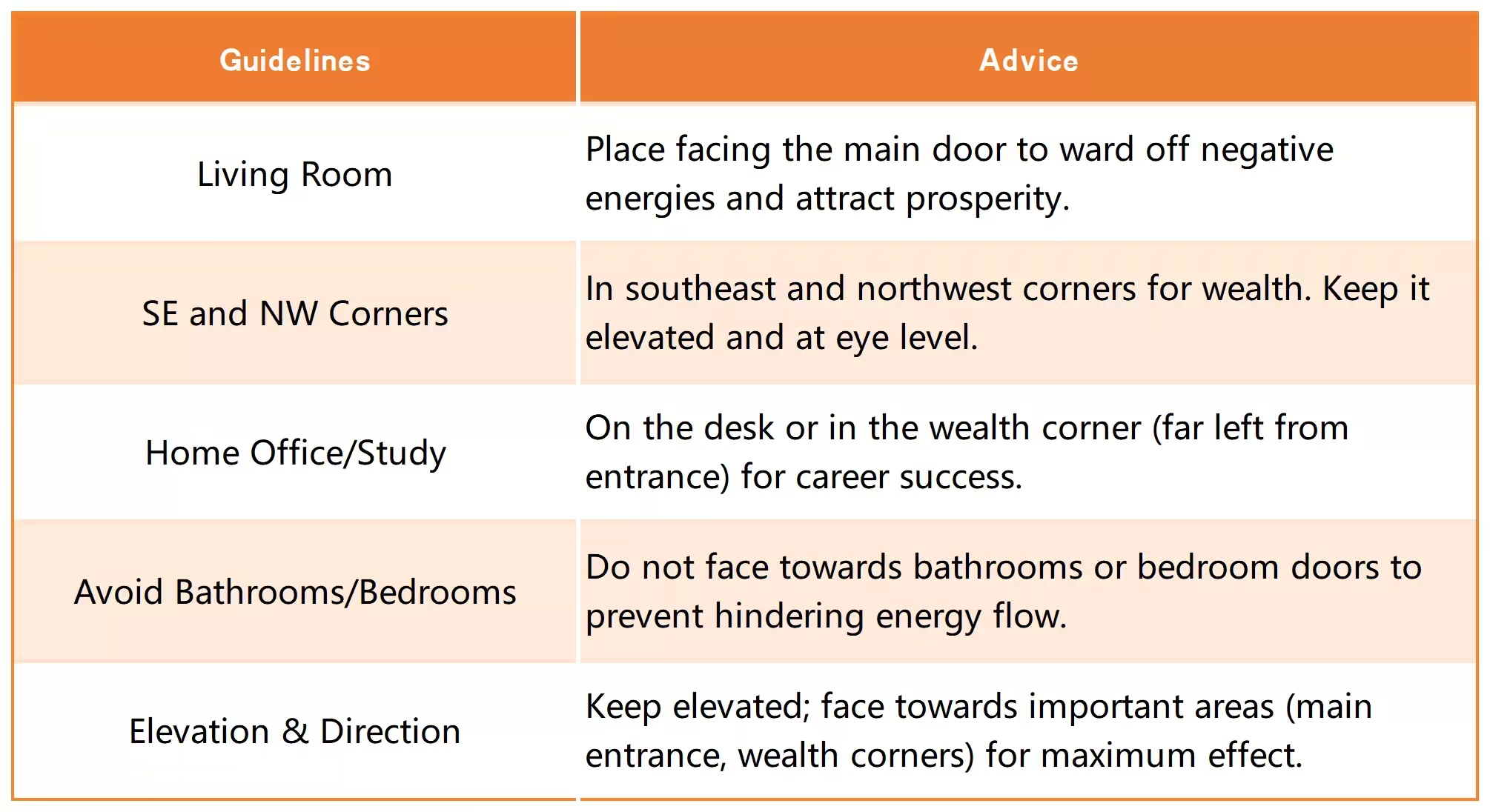
- Look Toward the Door: The Pixiu should face the main entrance or a large window. This allows it to draw in prosperity from the world outside. Avoid placing it directly across from a mirror, as reflections can scatter the energy and push it back out.
- Height and Respect: Place your guardian on a stable surface at roughly waist level. Too high makes the energy feel unreachable. On the floor, it signals neglect—and a neglected guardian does not work hard for you.
- Space to Breathe: Dust and clutter act like tall weeds in a garden, choking the flow of chi. A simple, regular cleaning with a soft cloth keeps the energy fresh and the connection strong.
The Bedroom: Quiet Security
The bedroom is a yin space—a place for the soul to rest and recover. Here, the Pixiu shifts its role from actively seeking wealth to offering quiet security. It watches over you as you sleep, keeping the atmosphere undisturbed.
- Softer Sightlines: The Pixiu should still face a door or window, but never point directly at the bed. A guardian’s energy is vigilant, and having it stare at you while you sleep can feel too intense for a room meant for rest.
- Gentle Materials: For the bedroom, a Jadeite Pixiu is often the best choice. Metal and brass radiate yang energy—active, outward, stimulating—which is the opposite of what a sleeping space needs. Jade is classified as a yin stone in traditional Feng Shui. It absorbs and softens energy rather than projecting it, making it a natural fit for a room where recovery matters more than accumulation.
- Keep It Minimal: Avoid surrounding the Pixiu with electronics or heavy stacks of books. A clear space reflects a clear mind, allowing the room to feel light and restorative.
The Entryway: Guarding the Threshold
The entryway is where the outside world meets your private life. Every kind of energy—positive and negative—passes through here first. In Feng Shui, disruptive forces are called 煞气 (shā qì), which refers to sharp, rushing, or stagnant energy that can unsettle a home. A Pixiu at the threshold acts as a gatekeeper, filtering out shā qì before it spreads further inside.
Position the Pixiu so it has an unobstructed view of the front door, at waist height. For those focusing on clearing away negativity, consider how specific stones interact with the environment: Obsidian in Feng Shui: Dispelling Negative Energy
- Weight and Presence: Entryways see more physical traffic, so a larger Pixiu made of stone or heavy wood feels right. These materials are rooted and permanent, offering a sense of safety the moment you step through the door.
- Natural Balance: You do not need a crowded display. A single Pixiu alongside a healthy plant creates a foyer that feels welcoming to friends but firm in its boundaries.
What If Your Entryway Is Too Small?
In many city apartments, there is barely room for shoes at the door, let alone a table with a Pixiu on it. You still have options:
- Mount a small wall shelf at waist height beside the door frame. A compact stone Pixiu fits well here without blocking foot traffic.
- Use the top of a narrow shoe cabinet or side console, as long as the Pixiu can still face the door with nothing blocking its line of sight.
- If wall mounting is not possible, a small Pixiu placed on a windowsill near the entrance works as a practical alternative—just ensure it looks outward.
Common Mistakes to Avoid
A few small oversights can quietly undo an otherwise good placement. This is not about superstition—it is about maintaining the clarity of your purpose.
- Facing a Wall: If a Pixiu faces a wall or the back of the house, it is effectively turning its back on the world. It needs to look outward to find what you are seeking.
- Buried in Clutter: Treating a Pixiu like a tray for car keys or loose change makes it invisible. When an object becomes part of the mess, its symbolic power fades into the background.
- Skipping the Personal Touch: A Pixiu should be placed and cleaned first by the person who lives in the home. This initial act of care is what turns a stone carving into a personal companion.
If you also wear a Pixiu bracelet, it needs its own activation process.
Caring for Your Guardian
A Pixiu stays effective when it is treated as a living part of your home. No complex rituals needed—just steady, quiet attention.
- Regular Cleaning: Wipe it down at least once a week with bare hands—no gloves or rags that create a barrier between you and the piece. Dust is stagnant energy; removing it is a small act of renewal. Don’t let others handle it casually, and always return it to the same facing direction after cleaning.
- Listening to the Room: If you change your furniture or move to a new home, the flow of the room changes. If a spot starts to feel cramped or blocked, trust your intuition and find a new place where the Pixiu can breathe again.
Frequently Asked Questions
Should Pixiu Face the Window or the Door?
Either works, as long as the Pixiu faces outward toward a source of external energy. The main door is the strongest entry point for chi and is the first choice. A large window facing a street or open area is a solid second option.
Can I Place Pixiu in the Bathroom or Kitchen?
Avoid both. The bathroom drains energy by design. The kitchen has fire and water energy clashing in close quarters, which creates an unstable environment for a guardian meant to hold and protect wealth.
Can I Have More Than One Pixiu at Home?
Yes, but give each one a distinct purpose in a separate room. Two Pixiu in the same space can compete for the same energy flow. One in the living room for wealth and one at the entryway for protection is a natural pairing.
A correctly placed Pixiu does not guarantee overnight change, but it does one thing reliably: it forces you to pay attention to the space you live in. A cleaner surface, a clearer sightline to the door, less clutter at the entrance—these are real, visible improvements that shift how a room feels the moment you walk in.
Frequently Asked Questions
What is Pixiu and its purpose in Feng Shui?+
Pixiu is a mythical Chinese creature believed to attract wealth, abundance, and good fortune, and to protect against negative energies. In Feng Shui, its proper placement enhances positive energy or 'chi' in a space.
What are the recommended locations for Pixiu placement at home?+
Optimal locations include the living room (to attract wealth, facing the room's entrance), the bedroom (for emotional stability and restful sleep, not facing the bed directly), and the home's entrance (to guard against negativity, facing the front door).
What materials are recommended for Pixiu and why?+
For attracting wealth in the living room, brass or gold-plated Pixiu are recommended as they resonate with the earth element, and crystal is also effective. For protective placements at the entrance, wood or stone materials are suggested to foster stability and security.
What are common mistakes to avoid when placing Pixiu?+
Common mistakes include incorrectly orienting the Pixiu (e.g., its back facing the entrance), placing it in cluttered areas which diminishes its power, and gifting it to others, as a Pixiu ideally should be activated and acquired by the owner for effective resonance.