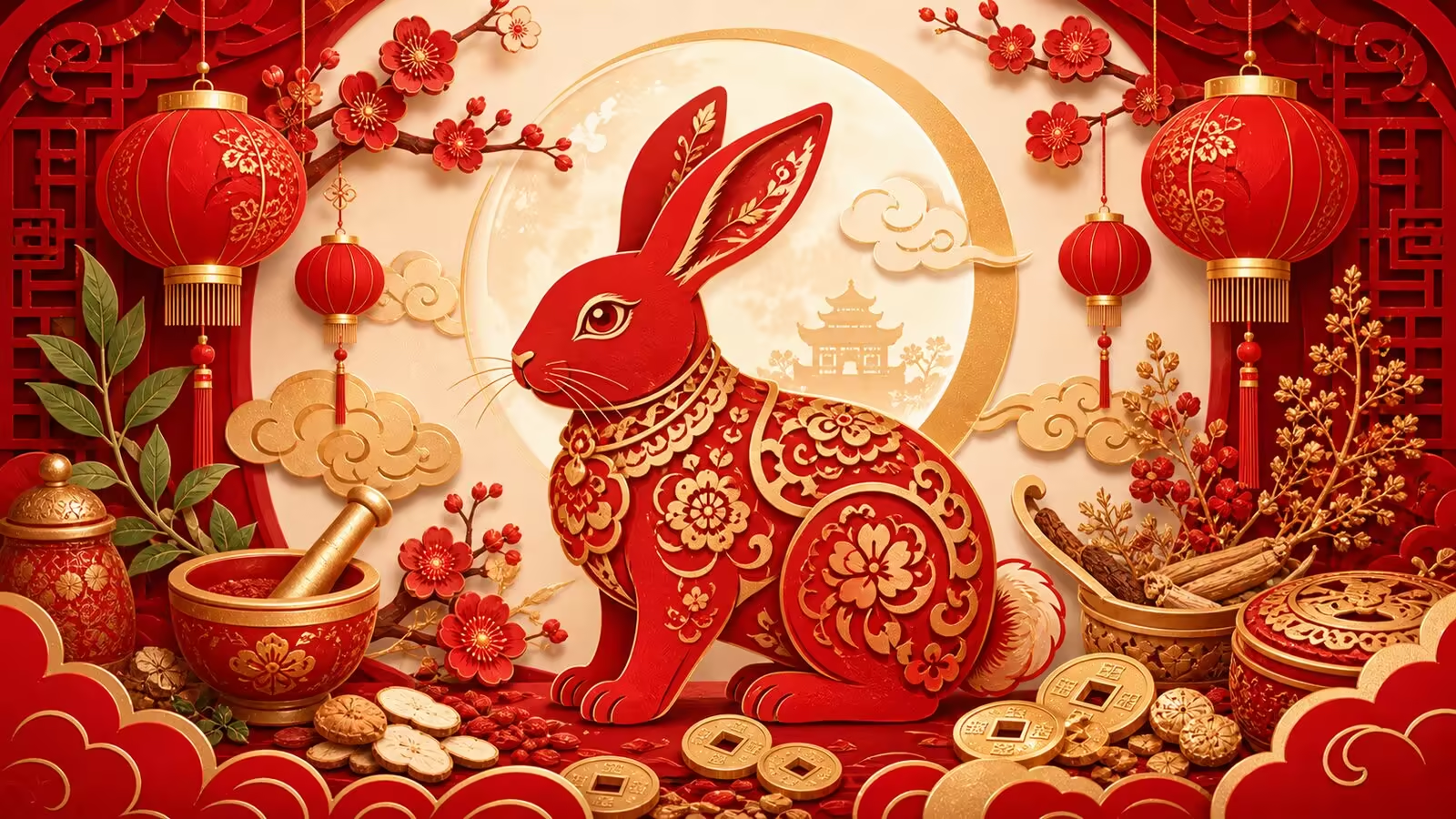
Chinese Zodiac Rabbit

Why does the same zodiac creature appear as a quiet alchemist on the moon while also being depicted as an armored general riding a tiger? This contradiction is the key to understanding the cultural identity of the rabbit within the Chinese Zodiac.
One side of this symbol functions like a research pharmacist, focused on developing life-saving medicine in a controlled environment. The other acts as a uniformed guard, protecting that work from external disruption.
Both roles are necessary for well-being, yet they operate in different ways. One represents the slow process of internal cultivation, while the other provides visible protection against chaos.
Because the Chinese lunar new year can begin in late January or early February, birth dates near the start of the Gregorian year may belong to the previous zodiac sign. Use the calculator below to confirm your exact sign before applying the symbolism in this article.
Ask a specific question for a more tailored AI interpretation.










The Celestial Alchemist of the Moon Palace
Ancient stone carvings from the East Han dynasty show a figure that is far from a passive pet. These reliefs depict a rabbit standing upright on its hind legs, working with purpose.
It holds a pestle 「杵, chǔ」 and works rhythmically at a deep mortar 「臼, jiù」. This is the divine pharmacist, engaged in the quiet work of life preservation.
In mythology, this figure often appears alongside the nine-tailed fox in the celestial court of the Queen Mother of the West. Its presence there marks it as a high-ranking entity responsible for health and longevity.
The moon environment defines the nature of this symbol. It operates through the yin principle, focusing on steady, methodical, and solitary internal growth rather than outward assertion.
The Martial Guardian of Beijing
While the celestial alchemist focuses on the inside, the earthly Tu’er Ye acts as the external defense mechanism—a function mirrored in the design of many pieces of protective jewelry. This local deity transforms the quiet moon dweller into a formidable commander.
The visual shift is deliberate. Instead of a modest laborer, we see a dignified general wearing traditional military armor, ready to step into action.
The specific protective roles of this guardian change depending on its attire and the animal it rides:
- Gold armor indicates a blessing for professional advancement and wealth.
- Brightly colored armor is specifically used for medical defense and dispelling illness — a direct echo of the Moon Palace’s pharmaceutical work, now translated into outward action.
- Riding a tiger serves to protect the home and ward off negative energy. The pairing draws on the tiger’s traditional role in folk Daoism as the suppressor of household evil; placing the rabbit on its back fuses calm intelligence with raw martial force.
- Seated on a qilin focuses on family lineage and the blessing of children. The qilin in folk belief is the bringer of worthy descendants (“麒麟送子”), so a rabbit-rider mount converts the alchemist’s life-preserving function into the gift of new life itself.
This authority mirrors the guard in our initial comparison. The figure keeps misfortune away, allowing the quiet work of internal progress to happen safely behind the walls.
A Symbol of Measured Renewal
The link between the alchemist and the guardian is found in the traditional understanding of time. In the ancient calendar, this creature corresponds to the period of 「卯时, mǎo shí」, which is between 5 and 7 am.
“Mao signifies flourishing,” as the classical text Huainanzi notes, describing the moment when the world transitions from rest to growth.
Botany provides a clear example of this concept. The early morning hours are the daily peak for plant turgor pressure 「膨压, péng yā」, the internal fluid force that keeps stems upright.
This pressure pushes stems upward and unfolds new leaves with a steady, irresistible strength. It is not an explosion of energy, but a consistent, geometric expansion of life.
Whether we look at the grinding of the mortar or the watch of the armored guardian, both follow this principle of sustainable renewal often discussed in Chinese astrology.
Translating Duality into Modern Design
This same cultural duality — quiet cultivation paired with active defense — is what serious contemporary designers use as the structural core of any rabbit-themed piece. Without it, a design becomes ornament; with it, the object carries a working philosophy.
Representing both the dignified protector and the quiet pharmacist is a significant challenge for modern aesthetics. Simple or cartoonish versions often lose this cultural depth.
Effective design often uses a minimalist metal and stone style 「极简金石风, jíjiǎn jīnshí fēng」. This approach removes unnecessary detail to focus on the form and presence of the figure.
Materials are chosen to reflect tradition without looking like cheap imitations. Techniques like matte sandblasting 「亚光喷砂, yàguāng pēnshā」 create a surface that feels authentic and grounded.
This manufacturing style aims to recreate the texture of Qianlong-era jade or the deep luster of red agate stone. The result is a modern piece that carries a sense of historical permanence and weight.
In contemporary artisanal jewelry circles, pieces that commit to these material disciplines tend to hold their value far better than purely decorative alternatives, and increasingly anchor the higher tiers of zodiac-themed collections at auction.
The Synthesis of Creation and Protection
The puzzle of the rabbit’s identity is solved when we see its two sides as a single system. Its strength comes from combining the alchemist with the guardian.
Ancient wisdom suggests that well-being requires a dual approach. We need the internal focus to cultivate our lives, represented by the work of the celestial mortar.
At the same time, we need the external strength to protect what we have built. The armored guardian watching over the home fulfills this role perfectly.
Read carefully, this duality is not just an artifact of old symbolism. It maps almost too cleanly onto the modern condition — the parallel demand to keep cultivating an inner life while building enough defense against an environment that will not stop interrupting it. The rabbit’s two faces are, in effect, the same problem most people are quietly solving every week.
Frequently Asked Questions
What does the Chinese Zodiac Rabbit symbolize?+
The Chinese Zodiac Rabbit embodies a duality: the quiet alchemist focused on internal cultivation and longevity, and the martial guardian offering external protection against disruption. This balance is key to its cultural identity.
What time period does the Rabbit represent?+
In the ancient calendar, the Rabbit corresponds to "卯时" (mǎo shí), the hours between 5 and 7 am. This period signifies a transition from rest to flourishing growth and sustainable renewal.
How is the Rabbit depicted as a guardian?+
The earthly Tu'er Ye transforms the moon dweller into a dignified general in traditional military armor. Its specific protective roles vary with attire and the animal it rides, guarding against misfortune.
How are Rabbit designs made modern?+
Modern designs often use a minimalist metal and stone style, focusing on form and presence. Techniques like matte sandblasting create an authentic, grounded texture, reflecting historical permanence without imitation.
Which Chinese zodiac signs pair well with Rabbit?+
The Rabbit typically harmonizes well with the Pig, Goat, and Dog signs, as they share complementary qualities like gentleness, creativity, and loyalty. These pairings are often associated with mutual support and understanding.
Can the Rabbit bring good fortune?+
Traditionally, the Rabbit is associated with longevity, health, and warding off negative energy, particularly through its guardian aspect. Its symbolism points to sustained well-being and protection rather than sudden fortune.
How should I choose a Rabbit talisman?+
Consider whether you seek internal cultivation or external protection, as the Rabbit embodies both. Look for designs that resonate with authenticity and lasting presence, a standard Buddha Auras upholds in its curated collection.
How do I care for my Zodiac Rabbit jewelry?+
For metal and stone pieces, a soft, dry cloth is usually sufficient for cleaning. Avoid harsh chemicals or abrasive materials that could damage the finish or natural stone, ensuring its symbolic integrity is preserved.