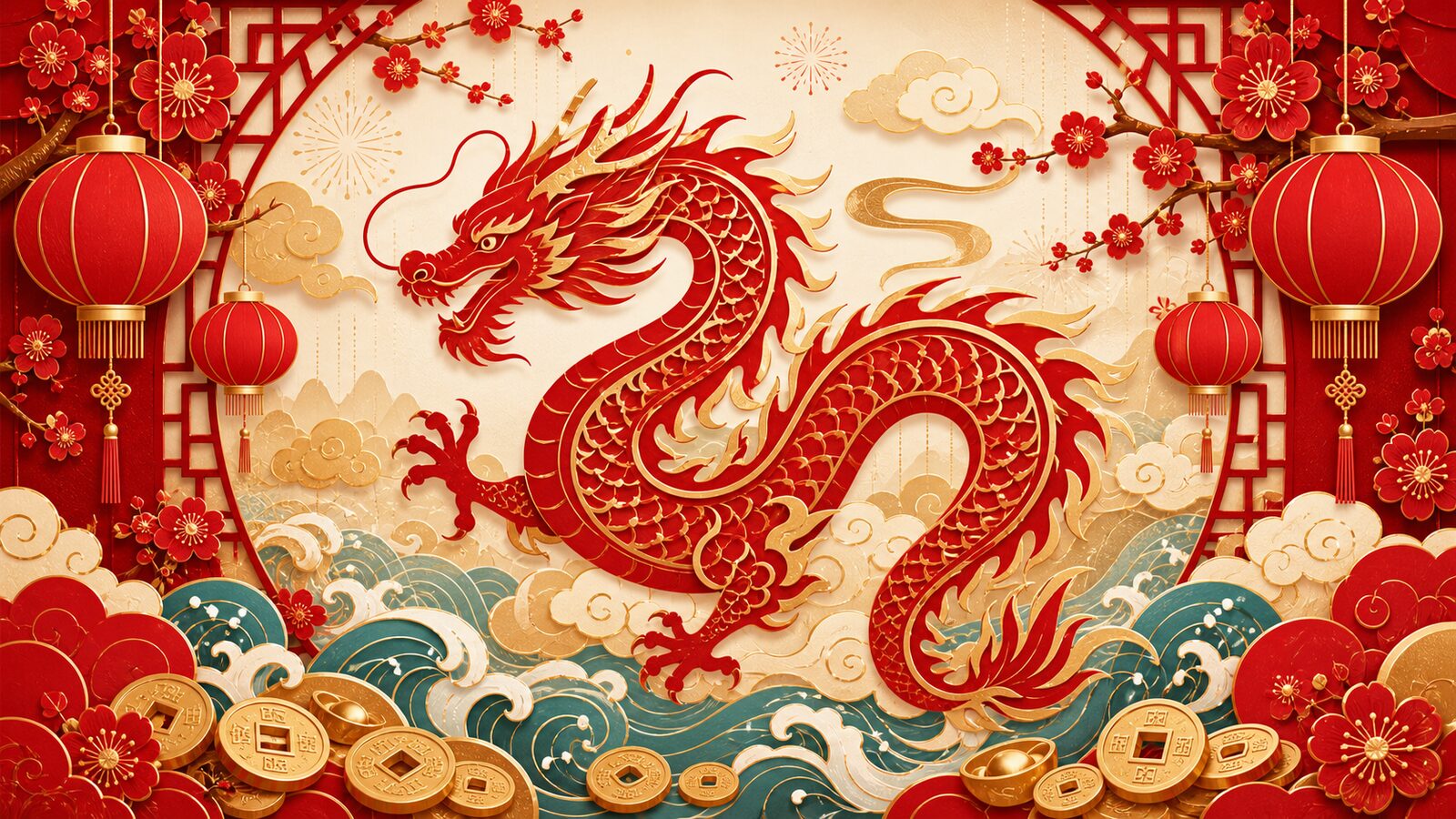
Chinese Zodiac Dragon

Watching the mist lift from the river this morning, I noticed how the clouds constantly shift, forming shapes that dissolve as quickly as they appear. It raises a question about where a form truly begins and where it ends.
We often try to pin things down with rigid definitions, but the most powerful forces usually refuse to stay still. This quiet, persistent shifting of the natural world is the true heartbeat of the Chinese dragon.
Because the Chinese lunar new year can begin in late January or early February, birth dates near the start of the Gregorian year may belong to the previous zodiac sign. Use the calculator below to confirm your exact sign before applying the symbolism in this article.
Ask a specific question for a more tailored AI interpretation.

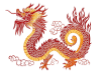






Beyond the Emperor Gaze
Most people imagine a golden beast glaring down from a throne, but we need to look beyond the palace walls to find its true origin. Long before it symbolized political authority, the dragon was a spirit of the wild earth and a foundational pillar of the Chinese Zodiac, occupying the position of 「Chen 辰」 — the fifth earthly branch, corresponding to the hours between 7 and 9 in the morning, when mist rises from the fields and the day’s energy begins its visible ascent.
Its earliest forms — like the C-shaped jade dragons of the Hongshan culture (红山文化), carved roughly five thousand years ago in what is now northeast China — connected early humans to the raw power of weather and soil. These depictions were deeply tied to the mysterious forces of the elements rather than human systems. The attempt to cage this wild spirit into a hierarchy came much later.
During the Han Dynasty, Emperor Gaozu fundamentally changed this narrative by linking his legitimacy to a draconic birth legend. From that point on, the creature was systematized as a tool of the state. It effectively became the exclusive property of the throne.
The Dragon Robe (龙袍, lóngpáo) was the ultimate physical expression of this capture, designed to project dominance. Yet, wearing the symbol of a storm does not grant one control over the wind. The essential, untamed nature of the dragon always remained outside those formal gates.
The Power of Flowing Water
If you walk along a riverbed, you see how water yields to every obstacle while eventually carving the deepest canyons. The dragon acts as the mythological guardian of this fluid strength, holding dominion over rivers, summer rain, and the deep oceans.
In the eighth chapter of the Tao Te Ching, Laozi observed that the highest good is like water (上善若水, shàng shàn ruò shuǐ).
Ancient ink wash paintings emphasize this fluidity, showing a serpentine creature that moves without the mechanical need for wings. It simply swims through the currents of the sky. This lack of rigid limbs is a specific statement about movement.
The creature does not ascend to the heavens through brute force or aggression. Instead, it moves through an effortless alignment with its surroundings. It represents the yielding, unstoppable progression of a rising tide.
The Breath of Heaven and Earth
We do not see the wind itself, only how it bends the forest canopy. In the traditional imagination, the dragon serves a similar purpose as the visible manifestation of Qi, the life force that courses through the landscape.
To capture this unifying energy, early artisans did not invent a wholly new shape. Instead, they pieced the creature together from the diverse ecosystem they observed daily — a set of features the Song-dynasty scholar Luo Yuan later codified as the nine resemblances (九似):
- The branching antlers of a stag
- The long head of a camel
- The watchful eyes of a hare
- The supple neck of a serpent
- The rounded belly of a sea clam (蜃)
- The shimmering scales of a carp, mirroring the transformative koi symbolism found in folklore
- The decisive talons of an eagle
- The grounded paws of a tiger
- The listening ears of an ox
By gathering these nine resemblances, the dragon became a living thread tying the natural world together. Folklore speaks of its ability to expand and fill the sky or shrink down to the size of a silkworm.
It can be brilliant during a thunderstorm or completely vanish into the morning mist. This constant shape-shifting is a direct reflection of the nature of energy. It is a protective force, often compared to the vigilant presence of the Pixiu, which draws from this same draconic lineage. It is always present, quietly animating the soil regardless of our ability to see it.
Within the larger zodiac family, the dragon does not stand alone. It is paired with the Phoenix in countless wedding embroideries — the rising masculine current met by the descending feminine flame, completing one another rather than competing. It shares an unspoken kinship with the Snake, traditionally called the «little dragon» (小龙), as if the two were the same energy seen at different scales. And it stands in productive tension with the Tiger, the king of land set against the king of sky and water — both sovereigns, but in different elements, neither one able to enter the other’s domain. Reading the dragon through these pairings reveals more than reading it alone.
Finding the Dragon Within
We often look up at the sky for answers, forgetting that the clouds also reflect in the puddles at our feet. The cosmic forces we observe outside are mirrored in our own internal rhythms. Cultivating this spirit does not require raising our voices.
Instead, it is about finding harmony with the changes in our own personal seasons, much like the rhythmic focus found when using mala beads for meditation. Consider the traditional artistic motif of the coiled dragon (蟠龙, pánlóng), which represents a creature resting, folded quietly upon itself.
This is not a predator waiting to strike, but a state of undisturbed readiness. It is the potential of a seed resting under the winter frost, gathering strength until the soil finally warms.
Think of a master calligrapher sitting before a blank sheet of paper. They do not force the brush violently, but allow the ink to flow with grace. This embodies the spirit through yielding motion rather than exhausting effort.
The true nature of this ancient symbol is a reminder of our place within the turning wheel of seasons. It teaches us that endurance is found in adaptability, and that the dragon’s relevance to a modern life is not in pursuing visible power, but in choosing the work, the relationships, and the seasons that fit one’s actual current — accepting that some doors only open to forms that have learned to bend.
As the last of the morning clouds vanish into the blue, the shape is gone, but the moisture remains.
Frequently Asked Questions
What is the Chinese dragon's true origin?+
It began as a spirit of the wild earth, deeply connected to elemental forces and a foundational pillar of the Chinese Zodiac. Its earliest forms predated its association with imperial authority.
How did the dragon become an imperial symbol?+
During the Han Dynasty, Emperor Gaozu linked his legitimacy to a draconic birth legend. This systematized the creature as a tool of the state, culminating in the Dragon Robe.
What does the Chinese dragon symbolize?+
It represents the fluid strength of water, the life force (Qi) flowing through the landscape, and untamed adaptability. It embodies transformation and effortless alignment with surroundings.
What are the Dragon zodiac years?+
The Dragon sign occurs every twelve years, most recently in 2000, 2012, and 2024. People born in these years are said to embody the Dragon's characteristics.
What are common traits of Dragon people?+
Individuals born under the Dragon sign are often seen as charismatic, ambitious, and natural leaders. They possess a strong sense of purpose and a dynamic, energetic spirit.
Which crystals pair well with Dragons?+
Amethyst can help balance the Dragon's intense energy, while Citrine supports their ambition and creativity. Red Jasper can ground their dynamic spirit. Buddha Auras offers a range of stones that resonate with the Dragon's nature.
How to embody the Dragon's spirit?+
Cultivate adaptability and find harmony with personal changes, much like the rhythmic focus found in meditation. The coiled dragon (pánlóng) offers a motif of undisturbed readiness and potential.
Is the Chinese dragon a good omen?+
Yes, in Chinese culture, the dragon is overwhelmingly a benevolent and auspicious symbol. It brings good fortune, prosperity, and protection, unlike some Western interpretations.