Chinese Zodiac Tiger

Watch a cat perfectly still before it strikes. The true weight of a predator is rarely found in the leap itself, but in the heavy, breathless silence that precedes it. We often imagine the wild feline mid-roar with muscles taut, treating it as a simple symbol of aggression.
In early Chinese material culture, the tiger appears not only as an animal of force but as an emblem of protection and authority. That history gives the image more range than a simple roar. As a central figure in the Chinese Zodiac, the tiger can be read as a balance of contained power and decisive action.
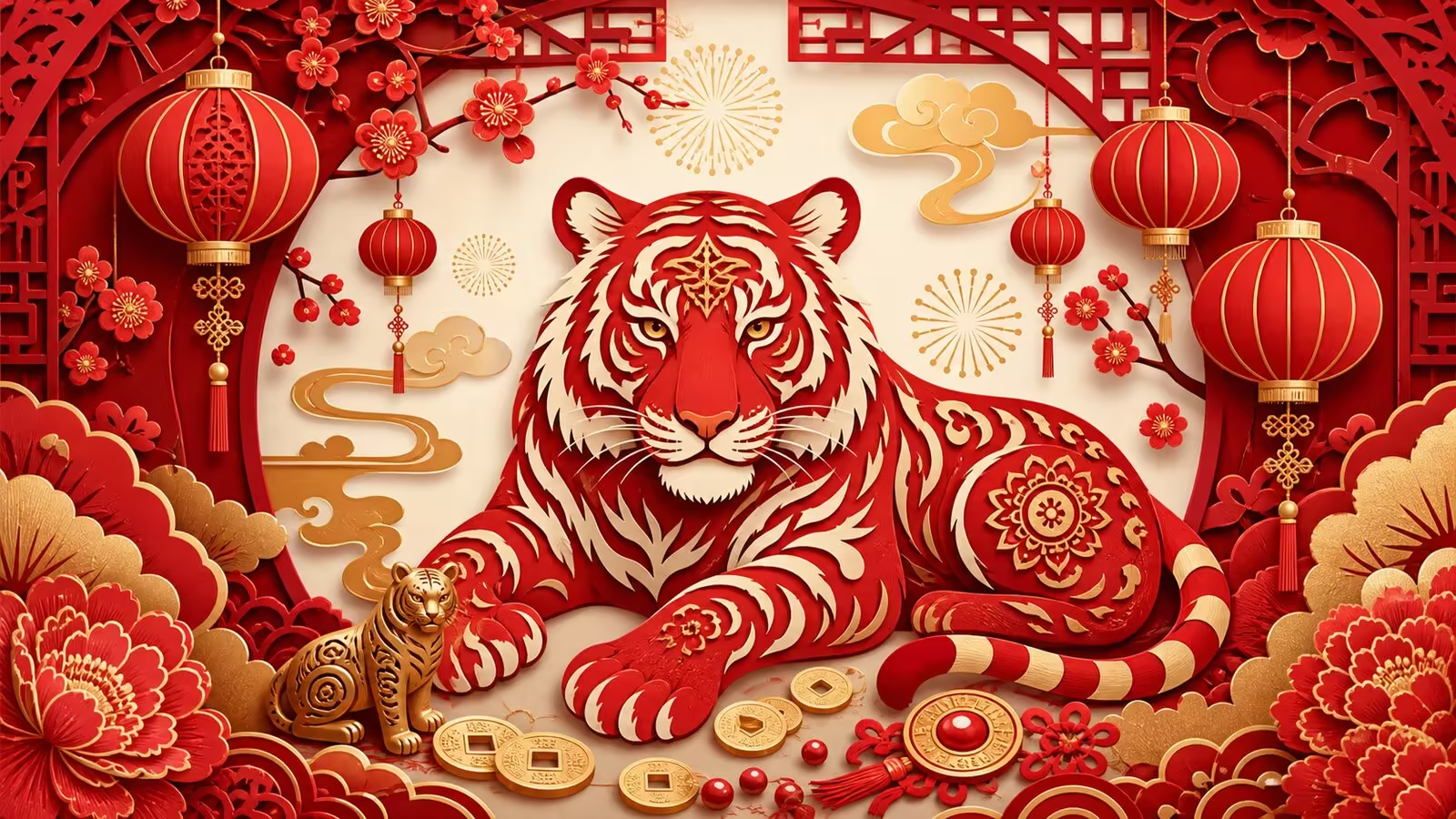
The Guardian at the Gate
To understand this quiet strength, we should observe how ancient cultures viewed the animal. It was not merely a beast of prey, but a mediator standing at the threshold of the seen and unseen worlds. This creature acted as a bridge, grounding ethereal concepts into physical stone and earth, much like the Pixiu is believed to guard the wealth and energy of a household.
In one early description of Xiwangmu in the Shan Hai Jing, the deity is described with tiger teeth and a leopard tail. The passage does not turn the tiger into a single fixed doctrine; it shows how animal features could signal a power that exceeded ordinary human order. Later readers have drawn different meanings from that imagery.
The most powerful forces in nature do not roar to frighten the forest, but to restore its equilibrium.
In traditional folklore, this creature acts as a balancer of energy. It maintains the boundary between daylight and shadow, keeping the world in check through its presence alone. It guards the gate not through constant violence, but through the undeniable weight of its resting state.
The Two Paths of Power
This energy splits into two distinct currents when we apply it to our own lives — like a river that crashes against rocks at one bend and gathers into a quiet pool at the next. Both are the same water doing different work.
The following two paths are a reflective framework for this article, not a formal classification within the Chinese zodiac tradition:
- The Ascending Path — A return to stillness and the accumulation of inner wisdom. Suited for the scholar, the thinker, anyone moving through a season of building reserves rather than spending them.
- The Descending Path — Outward movement and the securing of resources. Suited for the pioneer, the founder, anyone whose terrain rewards motion more than meditation.
For those born in a Tiger year — 1962, 1974, 1986, 1998, 2010, 2022 — the choice between these two paths is often less a one-time decision than a recurring question. Both remain valid; what changes with the seasons is which one a person needs to walk now.
Because the Chinese lunar new year can begin in late January or early February, birth dates near the start of the Gregorian year may belong to the previous zodiac sign. Use the calculator below to confirm your exact sign before applying the symbolism in this article.
Ask a specific question for a more tailored AI interpretation.



When choosing tiger imagery for a workspace, treat direction as a matter of personal or local Feng Shui practice rather than a universal rule. Some people prefer the figure turned inward as a reminder to cultivate steadiness at home; others simply place it where its scale and expression feel calm rather than confrontational.
The Art of Restrained Force
Ancient military authority offers a more concrete image of contained power. Rather than a leaping beast, it could take the form of a small object held in the palm of the hand.
The Metropolitan Museum of Art catalogues a Han-dynasty gilt-bronze tiger tally (hu fu). Its compact scale makes the point quietly: the tiger could signify authority in an object designed to be handled, not merely displayed.
Historical tiger tallies were divided into matching parts as a means of authenticating an order. That practical mechanism is more interesting than a generic image of force: authority depended on recognition, correspondence, and restraint before action could begin.
The artifact teaches us that true authority is held in reserve. When the components align, the execution is swift and precise. This success is born from months of quiet waiting rather than frantic, uncalculated movement.
Wearing the Tiger’s Essence
We do not need to command armies to apply the wisdom of this posture today. Modern interpretations strip away the literal claws and keep the structural core of the meaning, often appearing in the design of modern protective jewelry. The first place we see this is in the natural markings found on the animal’s forehead.
These lines are often abstracted into the 「Wang」 character, which translates to king. The mark signifies a sovereignty over one’s own mind and actions — a quiet declaration of independence that does not require an audience to be real.
To wear the mark is to remind yourself that your strength does not require an audience.
In a season when attention is pulled in a dozen directions before breakfast, this kind of inward kingship becomes harder to hold and more worth holding. The mark is less a charm against outside threats and more a small anchor for the part of the mind that keeps wanting to leave its own seat.
The same logic appears in another folk practice. The final step of making a cloth tiger toy is to dot the eyes with cinnabar — a bright red mark meant to awaken the object and focus its vision. We can borrow the gesture for ourselves, perhaps while handling prayer beads during a moment of morning reflection. Each day begins with one small act of pointing the gaze somewhere on purpose.
The still cat before its leap, the bronze tally waiting for its other half, the mark on the brow, the dot of cinnabar: each offers a different image of attention held in reserve. The tiger’s force is not constant display, but judgment about when to act.
References
- Chinese Text Project: Shan Hai Jing, Great Wilderness West – primary-text context for the description of Xiwangmu with tiger teeth and a leopard tail.
- The Metropolitan Museum of Art Collection API: Tally in the Shape of a Tiger (Hu fu) – official museum record for a Han-dynasty gilt-bronze tiger tally.
Frequently Asked Questions
What does the Chinese Zodiac Tiger mean?+
It symbolizes the paradoxical balance of dormant power and sudden, decisive action. The tiger embodies quiet strength, strategic restraint, and the ability to gather energy before acting.
How to display tiger images at home?+
There is no universal placement rule for tiger imagery. If you follow a local Feng Shui practice, choose a direction that feels intentional and calm in the room; otherwise, prioritize scale, sightline, and the image’s overall character.
What is the "Wang" mark on a tiger?+
The distinct "Wang" character, often seen on a tiger's forehead, translates to "king." It symbolizes sovereignty over one's own mind and actions, representing a quiet declaration of personal independence.
Is Tiger's Eye stone related to this Zodiac?+
Tiger’s eye is a quartz variety known for its shifting band of light, called chatoyancy. It is not directly tied to the Chinese zodiac Tiger, though readers may connect the two through themes of attention and confidence.
How to choose tiger-themed jewelry?+
Choose a design whose material, scale, and motif suit your everyday style. A subtle form or natural stone can carry a personal reminder without making claims about guaranteed protection or outcomes.
How to set intention with tiger jewelry?+
Use a moment of quiet reflection, focusing your attention inward while holding the piece. This practice, similar to "awakening" a traditional toy, helps gather energy and clarify your intentions for deliberate action.
Which Zodiac signs benefit from tiger energy?+
Zodiac compatibility systems vary by tradition and should be read as cultural frameworks rather than predictions. The Tiger’s themes of resolve and considered action can be useful prompts for anyone.
How to care for spiritual jewelry?+
Care depends on the material. Wipe stone or metal pieces with a soft dry cloth, keep wood and seed beads away from prolonged water, and avoid harsh chemicals or extreme temperatures.