Evil Eye Bracelet: Mental Focus

The gaze of a stranger or the weight of an envious comment often triggers a visceral reaction. While some call it a curse, I prefer to view the evil eye protection bracelet as a centuries-old solution to a very modern problem: protecting our mental focus from external negativity.
This ancient emblem is far more than a lucky charm. It functions as a cross-cultural system of positive suggestion, rooted in environmental psychology and the human need for “visual boundaries.” With origins dating back five millennia, it serves as a sophisticated tool for navigating interpersonal dynamics.
By deconstructing its lineage and psychological mechanics, we can see how this symbol acts as a compelling anchor for modern life. It is not just about warding off spirits; it is about reclaiming personal agency in a crowded world.
The evil eye bracelet is a cross-cultural tool used to navigate social and personal energy.
Historical Trajectory and Cultural Roots
The concept of the malevolent gaze reflects an intuitive human awareness of how the intentions of others can impact our mental state. Ancient societies recognized this and developed the amulet bracelet as a visual countermeasure to these social pressures.
Ancient Civilization Foundations
The earliest nazar bracelets and amulets appear in Mesopotamian records around 3,300 BC. Sumerian and Assyrian texts suggest that these symbols were used to mitigate the weight of “unseen harm” or envy. Similarly, the Eye of Horus in ancient Egypt functioned as a potent symbol against ill-will, acting as a visual guardian for the wearer’s well-being.
The persistence of the eye symbol reveals a shared human vulnerability—a primal need to manage the psychological impact of envy and social friction through tangible visual cues.
In the Greco-Roman world, the belief in bascania or fascinum led to the creation of various talisman bracelets. These early forms established a global foundation for protective measures, illustrating a consistent human effort to maintain psychological integrity against external social forces.
Cross-Cultural Evolution
The Ottoman Empire played a pivotal role in popularizing the blue glass nazar. This specific design spread across the Mediterranean and Middle East, becoming a ubiquitous sight in markets from Istanbul to Athens. This diffusion represents a collective agreement on the symbol’s meaning and its utility as a protective boundary.
Over centuries, the symbol transformed into the concentric blue circles we recognize today. This evolution reflects a fundamental human imperative: the safeguarding of personal prosperity. This drive for protection is universal, appearing in various forms like the symbolic jewelry found in almost every major culture.
Protective Guardians: Comparison with the Hamsa Hand
Before diving into the mechanics of the eye itself, it is useful to compare it to its most frequent companion: the Hamsa Hand. Both are respected forms of spiritual jewelry, but they serve slightly different psychological functions.
- The Nazar (Evil Eye): A specific counter-measure designed to deflect or absorb the “glare” of envy. It is a focused tool for interpersonal defense.
- The Hamsa Hand: An open hand representing a broader scope of protection. It is often associated with inviting good fortune and general abundance alongside defense.
Choosing between them depends on your specific intention. If you are dealing with a specific environment of competition or jealousy, the hamsa evil eye bracelet provides a multi-layered approach. Much like the protective presence of certain traditional statues, these symbols provide a sense of environmental security.
Psychological Mechanisms and Benefits
The efficacy of the evil eye jewelry is often explained through spiritual lenses, but the real power lies in how it influences the wearer’s internal state. It functions through cognitive anchoring and social representation.
Cognitive Anchoring and Positive Suggestion
The primary benefit of the bracelet is its role as a cognitive anchor. By choosing to wear a symbol associated with protection, you create a tactile and visual reminder of your intention to remain resilient. This is a form of self-priming that influences your behavior throughout the day.
This process utilizes several psychological principles:
- The Placebo Effect: Belief in the symbol’s efficacy can lower cortisol levels and reduce anxiety, leading to a genuine feeling of security.
- Mindful Awareness: The physical presence of the bracelet on the wrist prompts you to stay aware of your own energy and boundaries.
- Confidence Calibration: When you feel “protected,” you are more likely to confront challenges with self-efficacy rather than fear.
By treating the bracelet as a tool for intention setting, you calibrate your personal energy field for better focus.
Energy Shielding as Social Representation
While often described as “absorbing negative energy,” this mechanism is best understood as a social representation. The bracelet acts as a focal point that “absorbs” the wearer’s focus on external negativity, allowing them to let go of the perceived weight of a bad interaction.
Cultural beliefs, such as the idea that a breaking bracelet has “saved” the wearer, act as powerful symbolic rituals for closure. When the glass cracks, it provides a physical signal for the wearer to release their worries and start fresh. This creates a clear psychological boundary between the self and the perceived malice of others.
Color Spectrum and Intentional Placement
The variations in color allow for a more personalized psychological nudge. Each hue is associated with a different mental state or goal, helping the wearer align the jewelry with their specific needs.
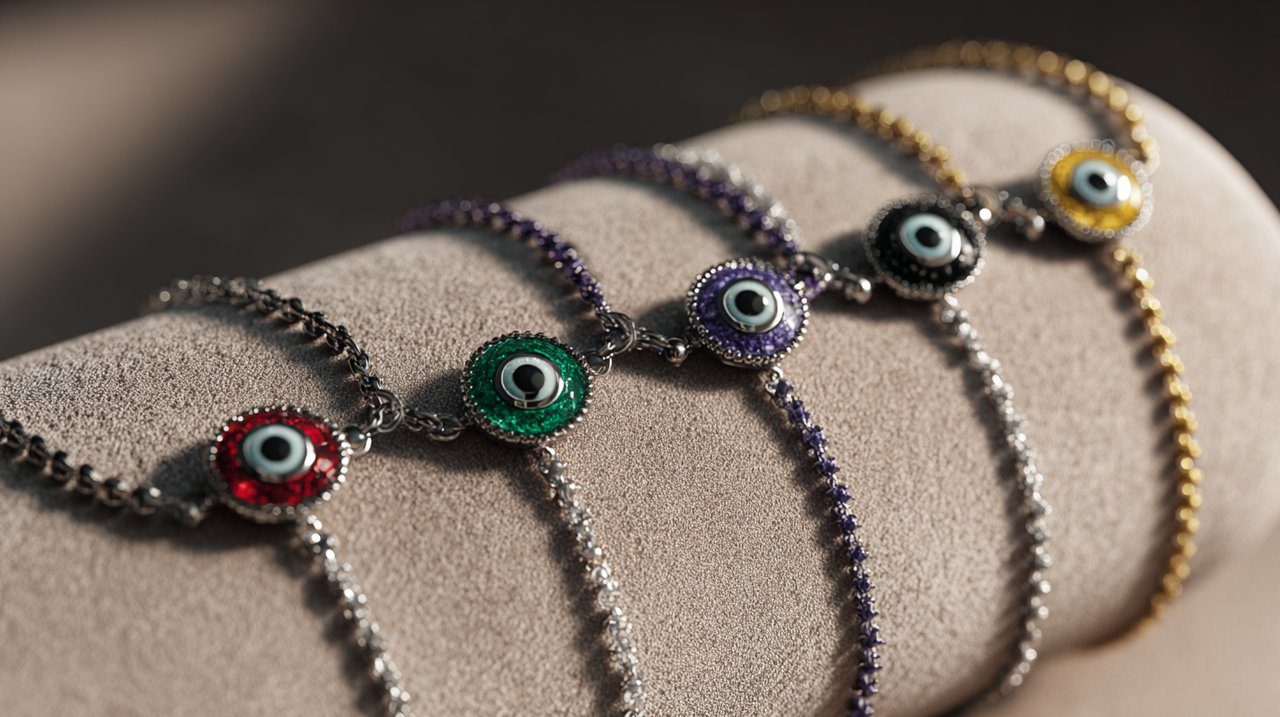
Selecting a color is an exercise in identifying your current psychological priorities.
The Logic of Color Choice
- Dark Blue: The classic choice for general resilience and calm communication.
- Red: Used for amplifying courage and physical vitality; a visual cue for strength.
- Yellow/Gold: Focuses the mind on clarity, health, and concentration.
- White: Symbolizes a mental “reset,” ideal for clarity of thought and new beginnings.
- Black: Often chosen for its grounding properties and the absorption of chaotic social energy. A black red bracelet can combine that grounded look with red cord protection symbolism.
The Receptive Left Side
Tradition suggests wearing the bracelet on the left wrist. In many symbolic systems, the left side is considered the receptive conduit for the body. Practically, placing the anchor on your defensive side serves as a constant reminder to filter what you allow into your personal space.
Maintenance and Ritual Utility
To keep the psychological anchor effective, regular “cleansing” acts as a useful mental reset. This is not about the chemistry of the glass, but about the renewal of your intention.
Periodic maintenance of your tools is a practical way to ensure your connection to your purpose remains sharp and active.
Using running water or moonlight provides a specific time and place to let go of the day’s stress. These rituals serve as a form of “mental hygiene,” allowing you to wash away the psychological residue of negative social interactions. It transforms a piece of jewelry into a functional part of a mindful lifestyle.
Beyond Myth: A Modern Mindset Tool
The evil eye bracelet is a testament to how ancient wisdom survives by meeting universal human needs. It is not a magical shield, but a sophisticated visual reminder of our own strength and resilience. By understanding its history and psychological mechanics, we can use it to build a more intentional and protected life.
Whether you choose it for its historical weight or its cognitive benefits, the intentional use of this symbol fosters a commitment to personal integrity. It reminds us that while we cannot control the gaze of others, we can certainly control how we respond to it.
Frequently Asked Questions
What is the primary purpose of an evil eye bracelet?+
The evil eye bracelet is a universal symbol of protection, designed to deflect negative energies, envy, jealousy, and ill-will, acting as a shield against harmful intentions.
What are the key benefits of wearing an evil eye bracelet?+
Wearing an evil eye bracelet is believed to provide energetic shielding by creating a boundary against negative vibrations, and it offers psychological comfort by instilling a sense of security and confidence.
What is the significance of the color blue in evil eye bracelets?+
Among various colors, blue holds a prominent place, especially in Mediterranean cultures. It symbolizes truth, clarity, and deep protection, and is often believed to offer the most potent defense against the evil eye.
How should one wear and care for an evil eye bracelet to maximize its effectiveness?+
For maximum efficacy, it's often recommended to wear the bracelet on the left wrist, considered the receptive side. Regular cleansing through methods like rinsing with cool water, moonlight exposure, or smudging helps recharge it, and its effectiveness is amplified by personal intention and belief.