What Tashi Delek Means and How to Respond

A guest steps into a Tibetan home after a long road. Before tea is poured or questions are asked, the host may offer two words: Tashi Delek. The phrase is warm, but it is not casual filler. It carries a wish that the other person’s path may open well.
In English, it is often translated as “good luck,” “welcome,” or “auspicious blessings.” Those translations are useful, but incomplete. Tashi Delek is less like a slogan and more like a small act of goodwill placed into a meeting.
What Tashi Delek Means
In Tibetan script the phrase is written བཀྲ་ཤིས་བདེ་ལེགས, transliterated as bkra shis bde legs in the Wylie system. It is two words, and each carries its own weight.
Tashi (bkra shis) points toward auspiciousness, good conditions, and fortunate unfolding. It is the same word found in the Eight Auspicious Symbols of Tibetan Buddhism, the bkra shis rtags brgyad. Delek (bde legs) carries the sense of goodness, well-being, and things resting in a favorable state.
Together, Tashi Delek expresses a wish for another person’s life to meet good conditions. It can greet, welcome, congratulate, or bless. The exact feeling depends on the moment.
That flexibility is part of its strength. A phrase used at a doorway, during Losar, or in a farewell can still carry the same root intention: may things be well for you.

How to Pronounce It
Despite the cluster of letters in the written form, the spoken phrase is simple. It sounds roughly like TAH-shee DEH-lek, four light syllables with gentle stress on the first syllable of each word.
You do not need perfect Lhasa pronunciation for the wish to land. Tibetans generally receive the attempt itself as a sign of respect.
How to Respond
The simplest and most common reply is to return the phrase: someone says Tashi Delek, and you answer Tashi Delek back. The greeting is symmetrical. Both people leave the exchange having wished the other well.
A short guide to the most common situations:
| Occasion | What the phrase carries | Typical response |
|---|---|---|
| Everyday greeting | Respectful hello and goodwill | Return “Tashi Delek” |
| Losar (Tibetan New Year) | Blessing for the year ahead | “Losar Tashi Delek” in return |
| Wedding or celebration | Congratulations and good fortune | Return the phrase, often with a bow or khata |
| Farewell before a journey | Wish for a safe, smooth road | Return the phrase |
Sometimes the phrase is accompanied by a khata, the ceremonial scarf offered as a sign of respect and goodwill. In that setting, the words and the cloth work together: one is spoken, the other is placed into the hands. Our guide to the khata in Tibetan culture explains how a white scarf can turn respect into a visible gesture.
Where the Greeting Comes From
The vocabulary itself is old. Bkra shis runs through centuries of Tibetan Buddhist liturgy, ritual texts, and the names of monasteries such as Tashilhunpo. Wishing auspiciousness on another person has deep roots in traditional Tibetan culture.
The phrase’s career as an everyday greeting, however, is younger than many visitors assume. For much of Tibetan history, Tashi Delek functioned mainly as a festival blessing, spoken above all at Losar, the Tibetan New Year. Scholars of the Tibetan language note that its use as a general-purpose “hello” spread widely only in the twentieth century, as life in Lhasa and in the diaspora called for a standard greeting where older custom had relied on context, gesture, and honorific speech.
That history changes nothing about its sincerity. If anything, it shows a living language doing what living languages do: taking a blessing from the most important day of the year and letting it warm the ordinary days as well.
In Tibetan Buddhist settings, wishing well for another person is not only polite. It echoes a broader ethic of compassion and interdependence. The words are small, but the direction of the mind matters.
This is why the phrase can feel different from a quick “hello.” It asks the speaker to offer something clean: not advice, not performance, simply a good wish.
Blessing and Practice
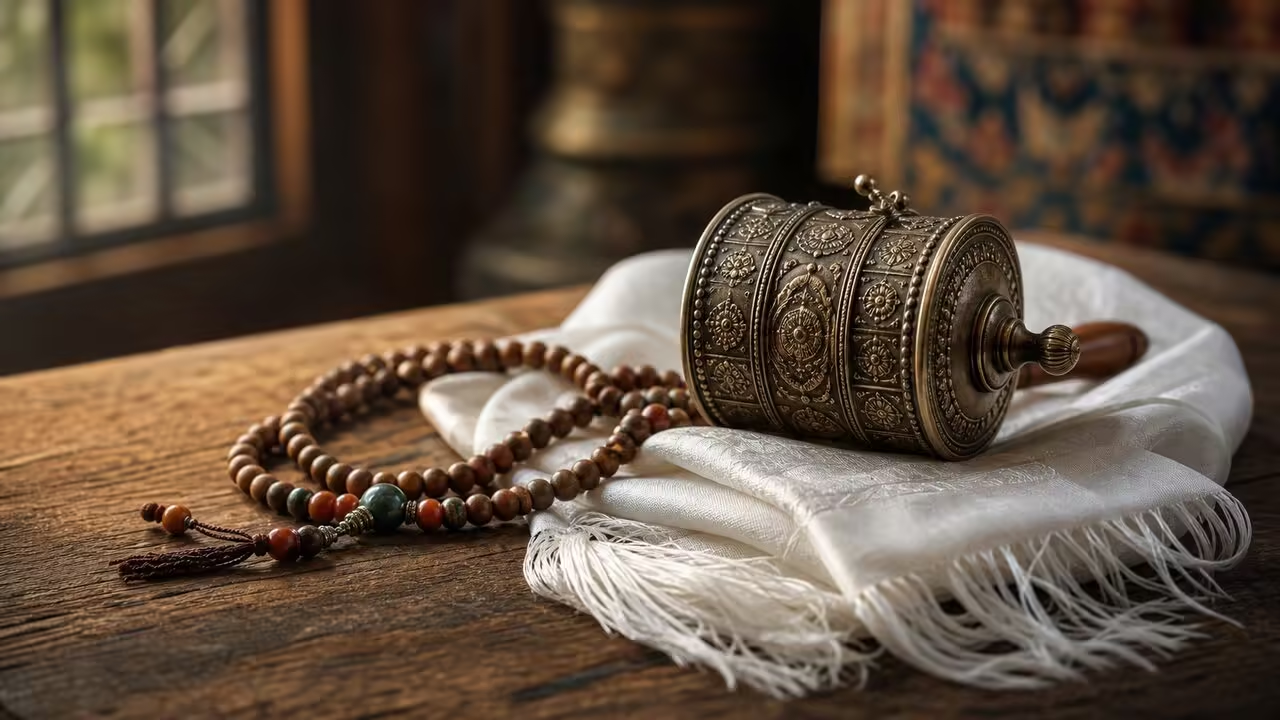
The spirit of Tashi Delek can also appear through prayer and repetition. A prayer wheel, for example, is turned with the intention that sacred words and compassionate wishes move outward. A mala can guide quiet recitation bead by bead.
The connection between these objects and the phrase is simple and physical: they give a wish a rhythm the hand can follow. The hand turns the wheel, touches the bead, or offers the scarf, and the mind returns to goodwill.
This is the useful way to understand Tibetan sacred objects in relation to Tashi Delek. They do not replace sincerity. They help the body remember it.
Modern Daily Use
You do not need to force the phrase into every situation. Used carelessly, any blessing can become costume. Used with attention, it can sharpen the quality of an ordinary exchange.
A practical way to carry its meaning is simple:
- Before speaking, pause long enough to mean the wish.
- Offer goodwill without trying to control the result.
- Use the phrase with respect for its Tibetan cultural setting.
- Let the words change your own tone before they reach another person.
There is also a private version of this practice. When the day begins badly, you can offer the same wish inward: may the next step meet better conditions. That is not magic. It is a way of softening the mind before it hardens around trouble.
A Shared Language of Well-Wishing
Many cultures preserve phrases that carry blessing inside ordinary speech. “Peace be upon you,” “Slainte,” “be well,” and Tashi Delek all show the same human instinct: a meeting should leave both people steadier than before.
Tashi Delek gives that instinct a Tibetan form. It is a greeting, a blessing, and a small discipline of attention. Spoken well, it asks very little. It simply places goodwill at the threshold and lets the other person pass through it.
Reference
- TibetTravel: Tashi Delek – supports the basic meaning and common greeting use of the Tibetan phrase Tashi Delek.