What a Nine-Eye Dzi Bead Actually Means

A Nine-Eye Dzi bead is usually chosen when someone wants one bead to carry several intentions at once: protection, steadiness, prosperity, and a stronger sense of direction. That is why it appears so often in bracelets and necklaces rather than staying only as a collector’s object.
The pattern looks simple at first — a dark agate or chalcedony bead marked with repeated pale eyes. In Tibetan jewelry culture, those eyes are read as more than decoration. They give the wearer a visible point of focus, a small object that can hold a daily promise without needing to be explained to everyone else.
What Makes the Nine-Eye Pattern Different?
Dzi beads are known for patterned eyes, lines, waves, and symbolic marks. The Nine-Eye Dzi stands out because nine is treated as a complete, expansive number in many symbolic systems. Instead of focusing on only one wish, the nine-eye pattern is associated with broader protection, growth, achievement, and good fortune.
That does not mean the bead works like a shortcut. A better way to understand it is as a compact reminder. When the bead sits on your wrist or near your chest, it asks a practical question: are your actions matching the life you say you want?
This is why a Nine-Eye Dzi bracelet can feel more useful than a purely decorative piece. The bead has enough visual strength to interrupt scattered thinking, but it is small enough to become part of ordinary daily wear.
Nine-Eye vs. Other Eye Counts
If you have looked at Dzi beads for any length of time, you have probably noticed that they come in many eye counts — one, three, seven, nine, twelve, and beyond. The number is not random.
Single-eye and three-eye Dzi beads tend to carry more focused symbolism: wisdom, wealth, or longevity as a primary theme. Seven-eye beads are often associated with completeness in Buddhist cosmology. Nine is the point where the symbolism broadens rather than deepens — nine eyes suggest a wide field of awareness rather than a single concentrated wish.
For someone who wants one bead to hold multiple intentions without stacking several pieces, nine eyes is a rational choice. For someone who wants a bead anchored to one specific meaning, a lower eye count may actually be more coherent.
Protection, Wealth, and Direction
The three ideas most often connected with Nine-Eye Dzi beads are protection, wealth, and direction. They are easy to misunderstand if treated as promises instead of intentions.
- Protection means staying aware of what drains your attention, energy, or confidence. A bead can become a physical cue to pause before reacting.
- Wealth can mean money, but it also points to resourcefulness, discipline, timing, and the ability to make cleaner decisions.
- Direction is the quiet part of the symbolism. The nine eyes suggest a wider field of vision — as if you are trying to see more than the problem directly in front of you.
When worn this way, a Nine-Eye Dzi bead becomes less about superstition and more about ritualized attention. You touch it before a difficult meeting. You notice it when spending impulsively. You feel its weight when you need to return to a steadier version of yourself.
Bracelet or Necklace?
The form changes how the bead works in daily life. A bracelet keeps the bead visible and tactile. You see it while typing, paying, writing, cooking, or reaching for your phone. That makes it useful for habits, decision-making, and small moments of self-correction.
A necklace feels more private. It sits closer to the chest and is easier to wear under clothing. Many people choose a Nine-Eye Dzi necklace when they want the symbolism close but do not want the piece to draw much attention.
If you are choosing your first piece, start with how you actually live. A wrist piece suits someone who likes a visible reminder. A pendant suits someone who wants a quieter personal symbol. Both can be meaningful; the better choice is the one you will wear consistently.
Once you have settled on the form, the next question is which specific design is worth choosing.
How to Choose a Nine-Eye Dzi Bead
The strongest piece is not always the largest or darkest one. Look for a bead that feels balanced in size, pattern, weight, and setting. A good Nine-Eye Dzi should look intentional from a normal viewing distance, not only in close-up photos.
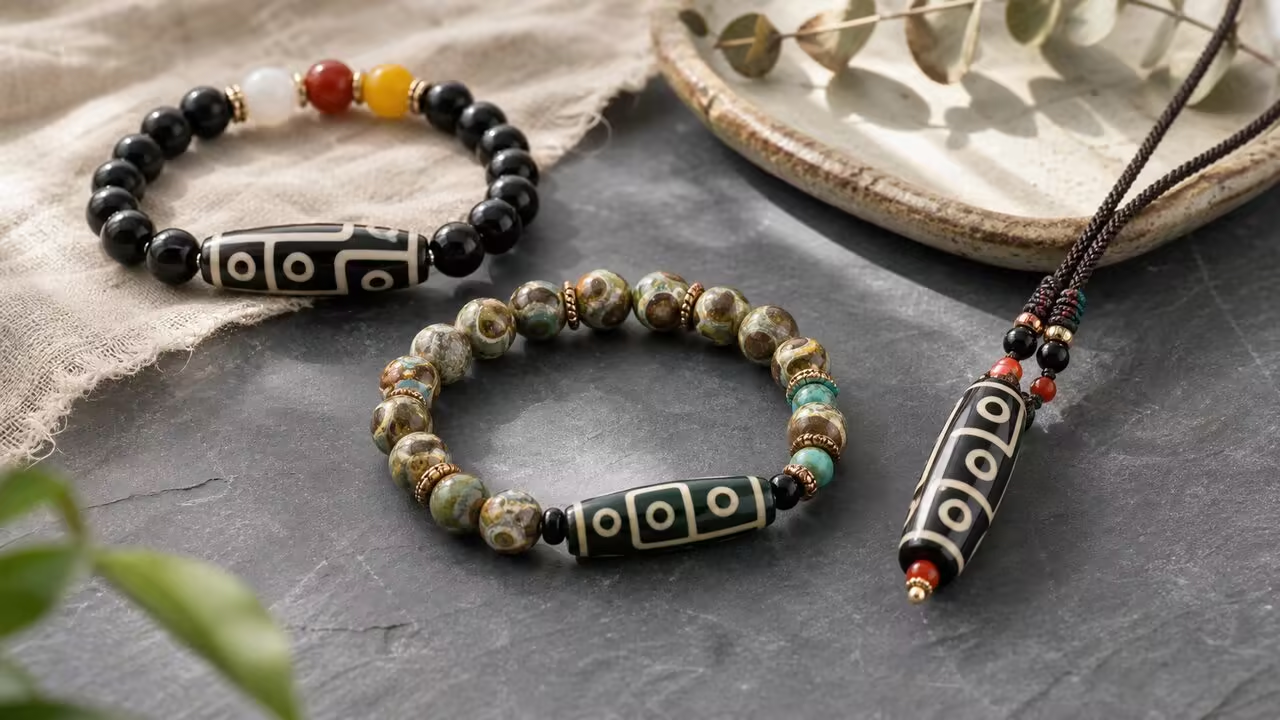
For bracelets, check how the main bead relates to the supporting beads. Sandalwood, agate, turquoise-color accents, copper-tone spacers, and cord all change the feeling of the piece. If you are looking at natural chalcedony with etched eyes — rather than painted or printed patterns — pay attention to the quality of the weathering marks and whether the eye lines are clean and consistently deep. A strong central Dzi bead can become visually heavy if the rest of the bracelet is too busy.
For necklaces, look at the cord, clasp, bead orientation, and pendant length. A bead that sits awkwardly or flips constantly will be harder to wear. The symbolic value matters, but comfort decides whether the piece becomes part of your life.
If you want to compare styles, the Tibetan Dzi beads collection is the better place to start than a single product page. A collection view lets you compare bracelet, necklace, bead size, color, and setting without treating one design as the only correct choice.
Signs of a Thoughtful Piece
Not every buyer needs an antique bead. For daily jewelry, many people are choosing a meaningful modern piece rather than trying to authenticate a rare old object. That is a reasonable choice as long as the description is clear and the design is honest. The GIA overview of gem treatments explains why disclosed treatments matter: they can affect a stone’s appearance, durability, and care requirements.
Look for these practical signs:
- The eye pattern is clear enough to read.
- The bead sits securely in the bracelet or necklace.
- The supporting materials do not overwhelm the Dzi bead.
- The piece feels comfortable for the wrist or neckline where it will be worn.
- The symbolism is described as cultural meaning, not as a guaranteed result.
That last point matters. A good spiritual jewelry page should help you understand the symbol without promising that one bead can solve a life problem by itself.
How to Wear It Without Making It Complicated
You do not need an elaborate ritual to wear a Nine-Eye Dzi bead well. The simplest practice is often the most durable: put it on with one clear intention for the day.
Before leaving home, hold the bead and name the quality you want to strengthen. It might be patience, clean judgment, courage, restraint, or protection from distraction. During the day, let the bead bring you back to that word.
If you wear a Tibetan bracelet stack, give the Nine-Eye Dzi enough visual space. Too many competing symbols can make the piece feel noisy. One central bead often communicates more clearly than several pieces fighting for attention.
Care and Respect
Most Dzi-style jewelry should be kept away from harsh chemicals, prolonged soaking, and rough storage. A few everyday items cause more damage than people expect: hand soap and sanitizer leave residue that gradually dulls the surface; perfume and cologne should be applied before the bracelet goes on, not after; and the salt in exercise sweat is particularly corrosive to both the cord and any metal spacers over time.
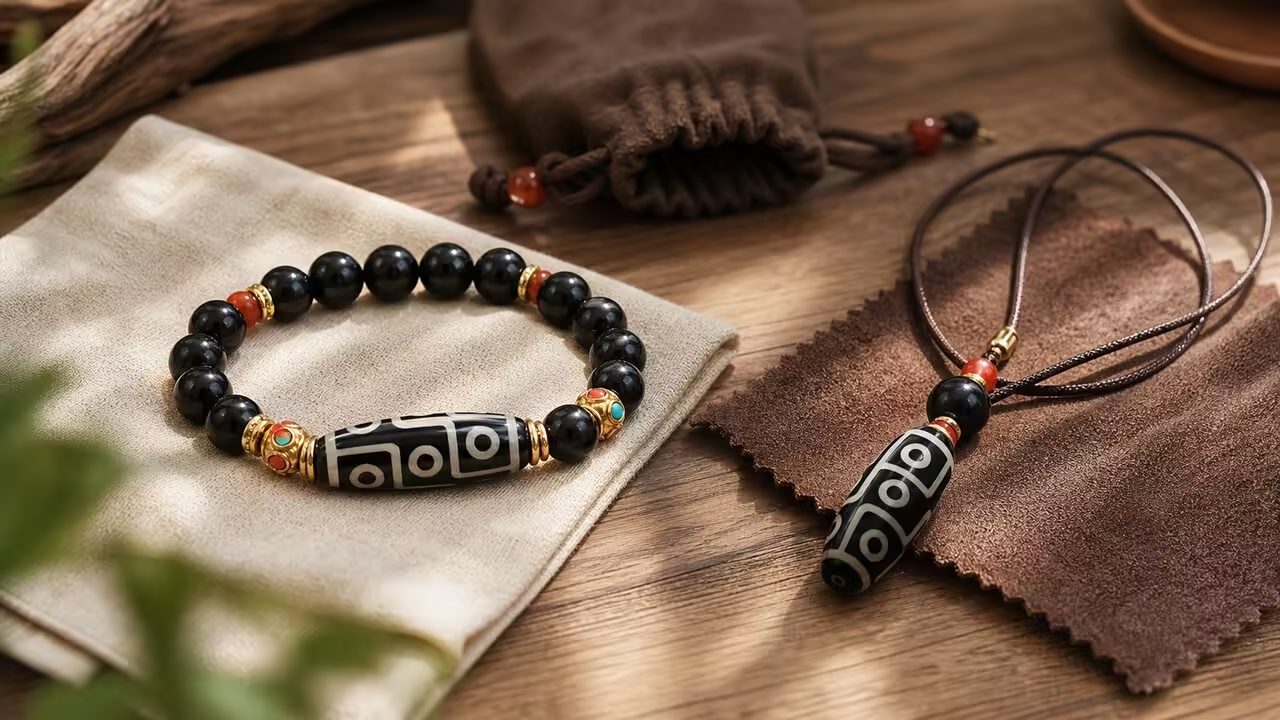
Wipe the bead with a soft dry cloth after wear, especially if it sits directly against the skin. If the bracelet uses sandalwood beads, keep them away from water — wood dries out and cracks when it gets wet repeatedly. Cord stretches with moisture and sweat, and copper or silver spacers will dull faster than you expect without basic care.
Store the piece separately so it does not scrape against harder jewelry. Respect also means not treating the bead as disposable. Whether it is an heirloom, a modern design, or a gift, a Nine-Eye Dzi works best when it is handled as something you return to, not something you consume quickly and forget.
When a Nine-Eye Dzi Makes Sense
A Nine-Eye Dzi bead makes the most sense when you want one strong symbol instead of many small charms. It suits someone drawn to Tibetan-inspired jewelry, protective patterns, wealth symbolism, and tactile reminders for daily discipline.
It may not be the right piece if you prefer very minimal jewelry, if you dislike visible symbolism, or if you expect the bead to do the work without your participation. If you are hoping it will replace your own thinking and effort, it is probably just a stone.
At its best, the Nine-Eye Dzi bead is a compact companion for a focused life. It gathers protection, prosperity, and direction into one pattern — then leaves the daily practice to you.