What Does a King Kong Knot Bracelet Actually Do?

A King Kong Knot bracelet (金刚结手链) gets chosen for more than color or wrist style. Its appeal comes from a simple problem many spiritual jewelry shoppers have: they want something light enough for daily wear, but meaningful enough to feel like a steady personal reminder. A braided cord bracelet solves that problem better than many heavier pieces because it sits close to the skin, moves with the wrist, and turns a small touch into a moment of attention.
For shoppers looking at Tibetan-inspired cord bracelets, the strongest reason to choose this style is not a guaranteed supernatural result. It is the combination of protection symbolism, tactile grounding, and practical wearability. The knot gives the bracelet cultural weight; the cord gives it comfort; the clasp makes it easy to wear consistently.
What Is a King Kong Knot Bracelet?
The phrase “King Kong Knot” is the common English product name for a dense Tibetan-style protective knot associated with the vajra — known in Tibetan as dorje. In Buddhist visual culture, the vajra carries the qualities of diamond-like indestructibility and thunderbolt force. For jewelry shoppers, that meaning translates into a wearable symbol of resilience: something small on the wrist that quietly says, “stay steady.”
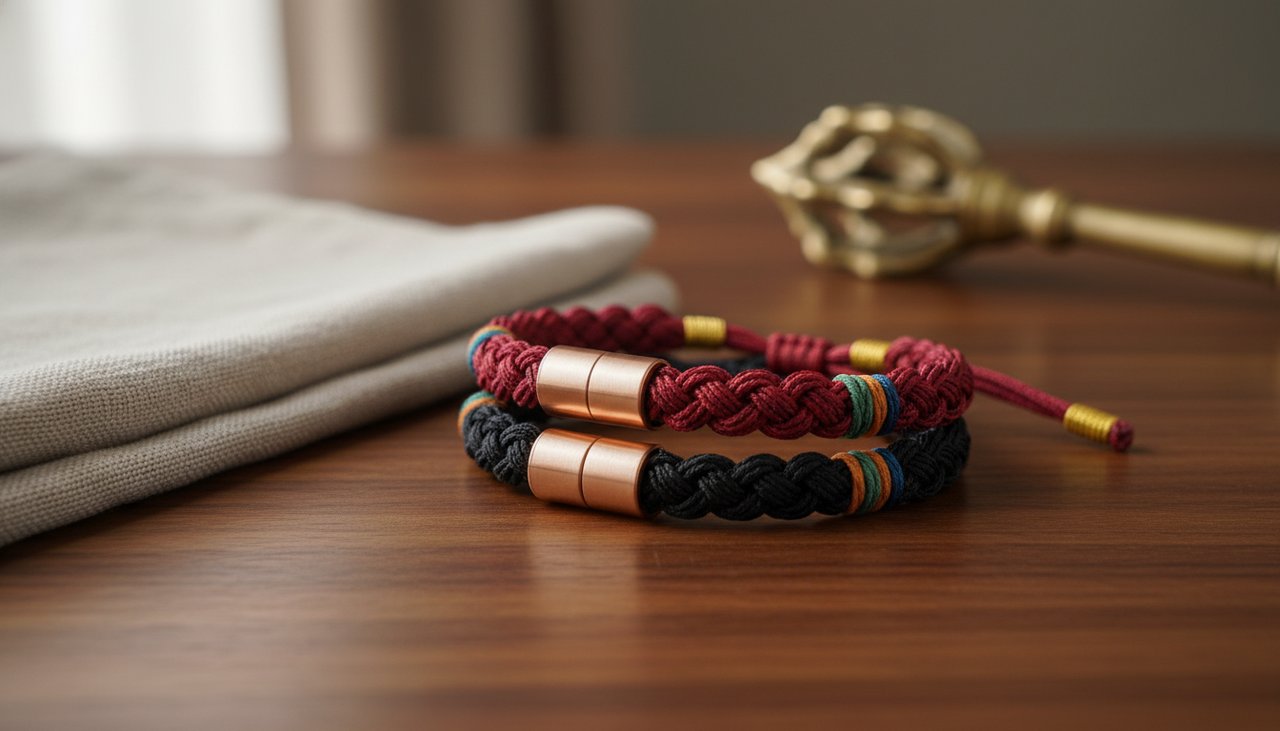
What gives this knot its physical character is how it is constructed: multiple strands of cord cross, wrap, and lock into each other, forming a compact, dense mass that holds its shape under tension. That structure is not incidental. It is what the symbolism is built on — many forces converging into something that does not come apart.
That is why this type of bracelet reads differently from other spiritual jewelry. A bead bracelet draws attention to its stone material. A metal bracelet emphasizes shine. A braided knot bracelet emphasizes repeated human gesture — the act of weaving itself. Its meaning lives in the structure of the cord: many strands crossing, tightening, and holding together.
Red, Black, or Multi-Color: Does Cord Color Matter?
Color is one of the first decisions shoppers make, and it carries its own layer of meaning in Tibetan and Chinese folk traditions.
Red cord is the most widely chosen. In both Chinese folk tradition and Tibetan Buddhist practice, red is associated with protection, warding off harm, and maintaining vital energy. A red braided bracelet carries the heaviest symbolic load of any color variant — which is likely why it remains the default choice for most buyers.
Black cord is associated with grounding, stability, and absorbing negative influence. It is the more visually neutral option and sits comfortably with everyday clothing without drawing attention.
Multi-color versions, often combining red, yellow, blue, green, and white, reflect the five-element symbolism common in Vajrayana practice. Each color corresponds to a direction, an element, and a quality of mind. For buyers who want a fuller symbolic reference rather than a single emphasis, this version holds more conceptual range.
For most shoppers, red or black is the practical choice. Color preference is a legitimate signal of what the wearer wants the bracelet to emphasize.
Why Shoppers Choose Braided Protection Bracelets
Most buyers are solving one of three needs:
- A protection symbol that feels modest and wearable, not dramatic.
- A tactile anchor they can touch during a stressful moment.
- A spiritual accessory that still works with everyday clothing.
The braided bracelet fits those needs because it is soft, close-fitting, and visually restrained. The cord does not demand attention the way a large pendant does. When worn on the wrist, the knot sits within easy reach — the wearer can press it, adjust it, or simply notice it during the day.
That repeated contact is part of the value. It turns the bracelet into a small ritual object for focus, even when the wearer is commuting, working, or traveling.
Protection, Grounding, or Cultural Meaning?
The honest answer is all three — but through different mechanisms.
As protection: the bracelet works symbolically. It gives the wearer a visible boundary marker and a reminder to move through the day with deliberate care.
As grounding: it works physically. The woven texture gives the fingers something concrete to notice, which can help redirect scattered attention — a mechanism psychologists sometimes describe as tactile anchoring.
As cultural meaning: it points toward Tibetan Buddhist and Chinese folk symbolism around firmness, clarity, and intentional practice. The vajra tradition is well-documented; the folk tradition around red cord protection runs even deeper into everyday Chinese life.
What this bracelet cannot honestly do is remove danger, cure anxiety, or change fate. The more credible and durable promise is simpler: it helps the wearer carry an intention. That is a real thing a small wearable object can do.
Why the Magnetic Clasp Matters
A magnetic clasp may look like a modern convenience, but it directly supports the bracelet’s purpose. A meaningful bracelet only works as a daily reminder if it is actually worn. When a cord is hard to tie, slips loose, or feels awkward to remove, people stop wearing it.
A secure clasp keeps the symbolic object in regular rotation. That practical detail is especially useful for shoppers who want spiritual jewelry without the commitment of a permanently knotted cord. The clasp makes the bracelet feel contemporary while the braided structure preserves the traditional mood.
Who This Bracelet Works Best For
- Someone who wants a low-profile protective symbol for daily wear.
- Someone drawn to Tibetan-inspired or Chinese folk jewelry but not ready for a large pendant or prayer bead bracelet.
- Someone who likes tactile accessories that can act as a mindfulness cue.
- Someone looking for a meaningful gift that suggests steadiness, safety, and care.
How to Wear It with Intention
A simple practice: before fastening the bracelet each morning, choose one clear phrase and hold it for a moment. Something like “move steadily,” “return to calm,” or “keep my boundary.” Then let the bracelet do what wearable symbols do best — remind you.
Each time your fingers brush the cord during the day, pause for one breath and return to that phrase. The psychological mechanism here is straightforward: a physical cue attached to a specific intention makes that intention easier to retrieve under stress. The bracelet is the cue. You supply the intention.
That small practice is why this category deserves its own consideration. The wearer is not only choosing a bracelet — they are choosing a compact, wearable way to remember protection, focus, and inner steadiness.
References
- Project Himalayan Art: Vajra — supports the connection between vajra/dorje symbolism and Vajrayana Buddhist ritual culture.
- Britannica: Vajra — supports the broader explanation of vajra as a diamond/thunderbolt symbol in Tibetan Buddhist contexts.