Wenwan Walnuts: What to Look for Before You Buy

A pair of Wenwan walnuts is easy to mistake for a novelty until you hold one. The shell is light, but its ridges make the hand slow down. Turn the pair for a few minutes and the appeal becomes clearer: this is a practice built around touch, repetition, observation, and time.
Wenwan walnuts, often translated as collectible or hand-played walnuts, are selected for their shells rather than their kernels. People rotate a matched pair in one hand, brush dust from the grooves, and watch the surface gradually deepen in color and luster. The pleasure is not instant transformation. It is learning to notice small changes.
What Makes a Walnut “Wenwan”?
Wenwan is a broad Chinese term for cultured objects handled, studied, and appreciated over time. In the case of walnuts, the object remains natural: the shell’s shape, seam, base, ridges, and density determine how it feels and how collectors judge it.
Modern Wenwan walnuts are not one uniform type. Sellers use many variety, regional, and shape names, and those labels are not always applied consistently. That is one reason beginners should judge the actual pair in front of them instead of relying only on a variety name.
The tradition is substantial enough to have dedicated cultural institutions. The Hebei Provincial Cultural Heritage Administration describes the Laishui Mahogany Walnut Museum as presenting walnut origins, development, and walnut culture through objects, photographs, and historical material.
Why They Are Kept as a Pair
A single walnut can be interesting. A pair creates the practice.
When two shells rotate against each other, their differences become obvious. One may sit higher in the hand, carry deeper grooves, or feel heavier near the base. A well-matched pair moves with less interruption, which is why pairing matters so much to collectors.
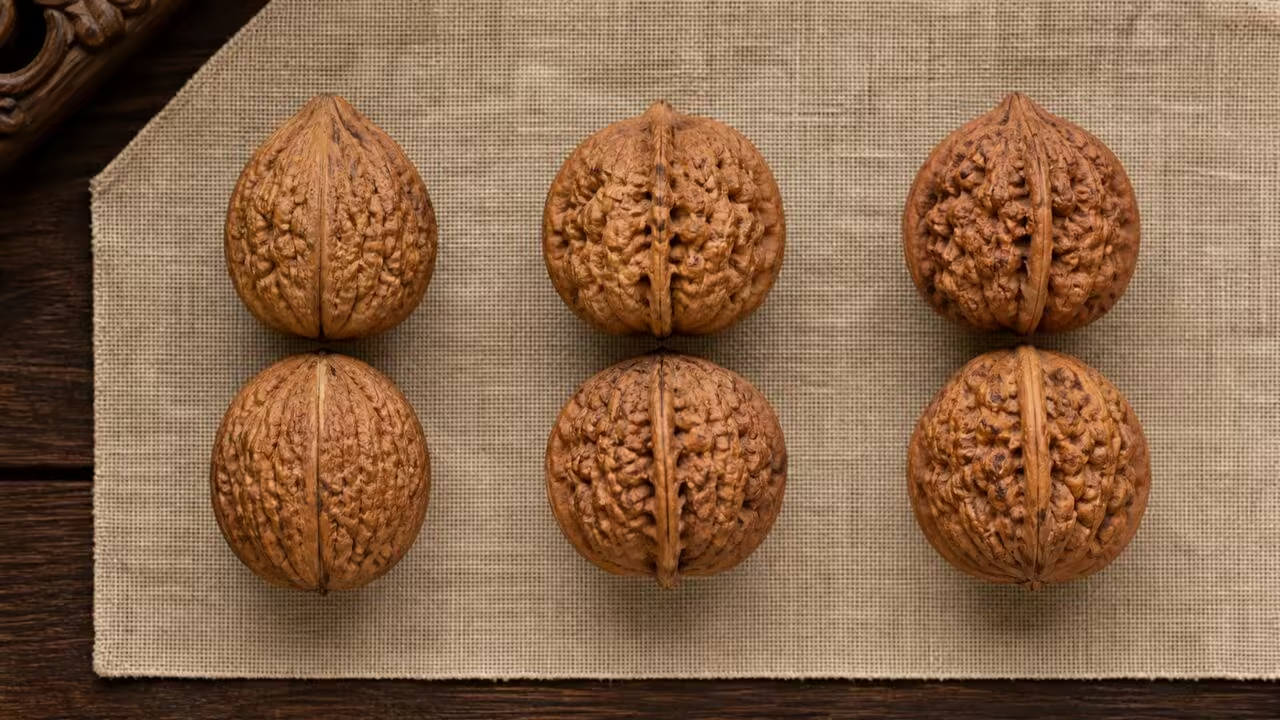
Good matching does not mean the walnuts must look machine-made. Natural shells will never be perfectly identical. Instead, compare the traits that affect appearance and handling:
- Overall size: the pair should feel balanced rather than leaving one walnut doing most of the work.
- Shape and height: similar silhouettes make rotation smoother.
- Ridge pattern: look for comparable depth and visual density, not exact copied lines.
- Base and seam: compare how each walnut sits and whether either seam appears damaged or forced.
- Color: fresh walnuts can vary slightly, but strong unexplained differences may become more obvious with handling.
Common Names Without the Marketing Fog
Beginners quickly encounter names such as Lion’s Head, Official’s Hat, Prince’s Hat, and Chicken Heart. Each name points to a visible shape family, but the boundaries are not standardized across every seller.
| Common name | Typical silhouette | What to compare within a pair |
|---|---|---|
| Lion’s Head | Round and full, with a pronounced dome and thick ridges | Dome height, shoulder fullness, and ridge density |
| Official’s Hat | Taller profile with a broad brim and flatter top | Brim width, top shape, and matching height |
| Chicken Heart | Narrower, more pointed, and compact | Tip shape, taper, and how comfortably each shell sits in the hand |
Treat the name as a starting point, not a guarantee of rarity or value. The market also contains regional names, seller-created labels, and disputed classifications. A modest pair with honest shape, intact shells, and comfortable handling is more useful than a dramatic pair purchased only because of an impressive label.
How to Choose Your First Pair
For a first pair, prioritize durability and fit over rarity. The inspection process is entirely physical and does not require specialist equipment.
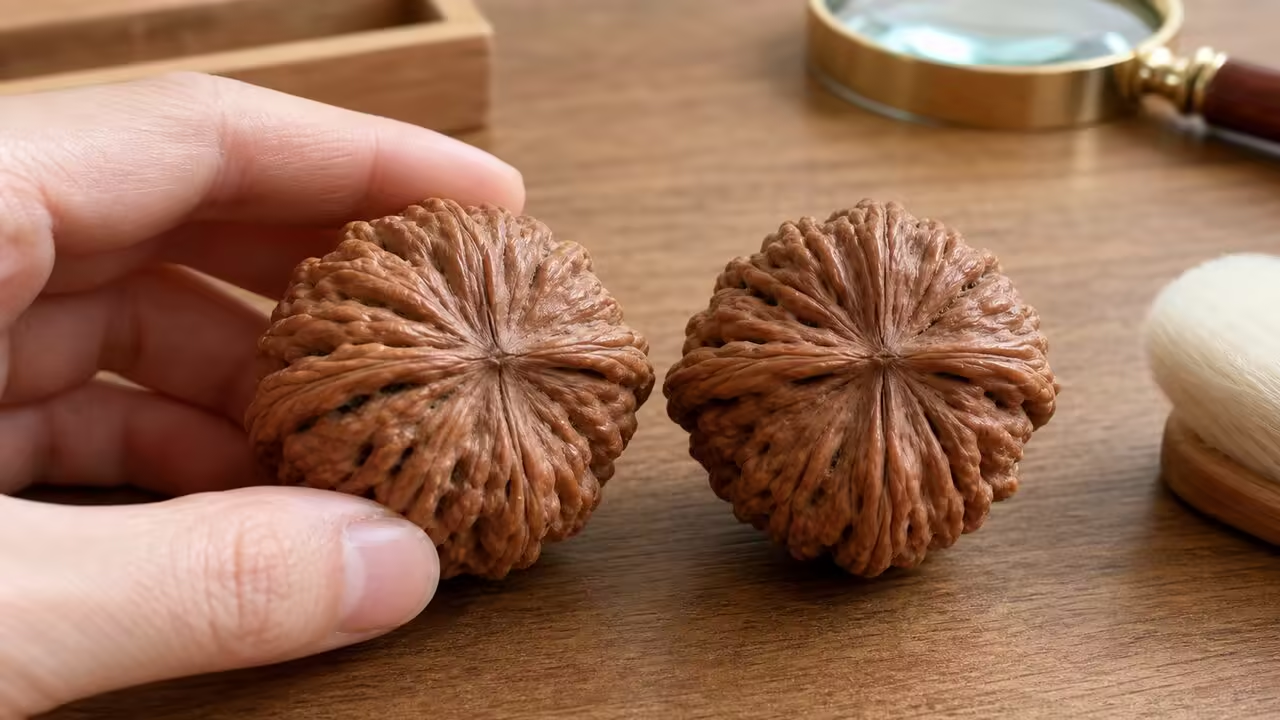
- Check for cracks in bright light. Examine the seam, tips, and base closely. Fine surface lines may be harmless; an opening crack is not.
- Listen gently. Light contact between the two shells should sound firm rather than brittle or hollow. Do not strike them hard to test this.
- Inspect the grooves. Deep texture can be beautiful, but it also demands more brushing and patient cleaning over time.
- Ask what has been done to the surface. Heavy oiling, dye, artificial aging, or aggressive polishing can hide the shell’s actual condition.
Size should follow the hand. Larger is not automatically better. A pair that looks impressive but cannot rotate comfortably will spend more time on a shelf than in use.
Collectors often call small natural surface depressions sand pits. Do not judge them by name alone. A shallow mark away from vulnerable edges may be only cosmetic, while a deep pit near the seam or tip deserves closer inspection because it can be harder to clean and may indicate a weaker area.
Handling and Care
Start gently. Clean hands and a dry, soft brush are usually more useful than oils or treatment products. Brush along the grooves to remove dust, rotate the pair without knocking them together, and store them away from sudden heat, moisture, and long direct sunlight.
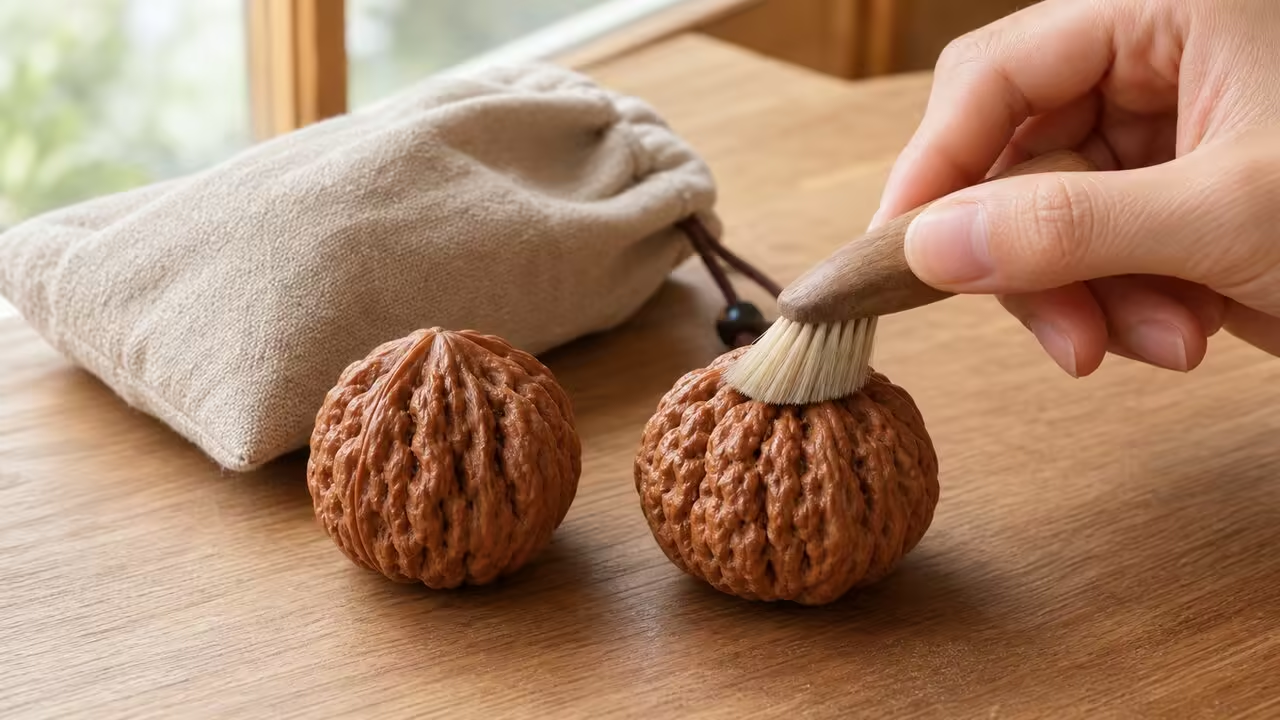
Walnut shell is a lignocellulosic plant material, as summarized in an open-access RSC Advances review of walnut shell as a plant-based material. Its color and surface character can change through repeated handling, exposure, and cleaning, but the exact result varies by shell and treatment history. Trying to force a dark finish with oil, dye, or aggressive polishing can create uneven patches or conceal damage. The most convincing finish is the one that records actual time.
Wenwan walnuts can crack after drops, hard collisions, soaking, or abrupt environmental changes. The Canadian Conservation Institute’s guidance for wooden objects is not written specifically for Wenwan walnuts, but its emphasis on stable relative humidity, gentle dust removal, and avoiding direct heat is a useful conservative principle for natural shell collectibles as well.
If a crack appears, stop rotating the pair and move it to a stable, shaded environment. Avoid soaking it or attempting a quick wet-cloth repair, which can introduce staining or uneven movement. For a valuable pair, ask an experienced conservator or specialist to assess whether the crack is stable before applying adhesive or moisture.
What the Practice Actually Offers
It is tempting to describe Wenwan walnuts only as collectibles or hand exercise tools. Their quieter value sits between those categories. They give restless hands a structured movement, but they also train attention toward texture, symmetry, maintenance, and gradual change.
The pair does not become interesting because it changes overnight. It becomes interesting because the person handling it learns to see more than they did at the beginning.
References
- Hebei Provincial Cultural Heritage Administration: Laishui Mahogany Walnut Museum – official institutional context for walnut culture and collecting history.
- RSC Advances: Recent advances in the use of walnut shell as a plant-based material – open-access peer-reviewed material background on walnut shell.
- Canadian Conservation Institute: Basic care of wooden objects – conservative guidance on stable environments, dust removal, and heat exposure.