How Much Are Pearls Worth? A Practical Value Guide

A pearl can be worth a few dollars or far more than the price of an ordinary piece of jewelry. The difference is not explained by size alone. Pearl type, origin, luster, surface, nacre, shape, color, and matching all affect what a buyer may reasonably pay.
For most shoppers, the useful question is not “What are pearls worth in general?” but “What kind of pearl is this, and how well does it perform on the factors that matter for that type?” This guide provides a practical framework for answering both questions.
What determines a pearl’s value?
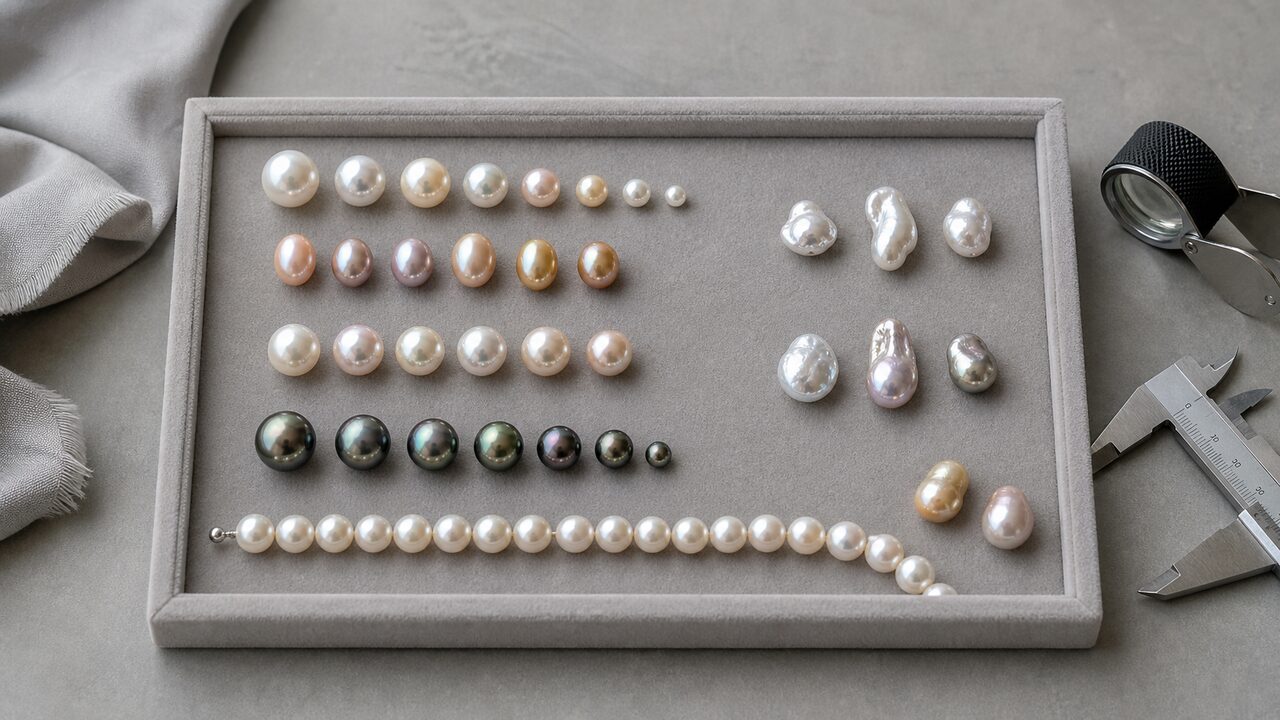
The Gemological Institute of America uses seven value factors to describe pearl quality: size, shape, color, luster, surface, nacre, and matching. The framework applies to both natural and cultured pearls, although the relative importance of each factor can vary by pearl type.
1. Luster
Luster is the quality and sharpness of light reflected from a pearl. A high-luster pearl has bright, crisp reflections that appear to come from within the nacre. A low-luster pearl looks dull, chalky, or flat.
Within the same pearl type, luster is often one of the strongest value indicators. It should not be confused with a shiny coating: good luster has depth, not merely surface gloss.
2. Surface quality
Most pearls have some growth marks. Small pits, wrinkles, abrasions, or flat areas matter less when they are minor or hidden by the setting. Numerous or severe surface features can reduce beauty, durability, and price.
Perfect-looking surfaces deserve careful inspection. Uniform gloss, visible seams, peeling, or repeated identical marks can point to imitation or coating rather than exceptional natural growth.
3. Nacre quality
Nacre is the material that creates a pearl’s characteristic appearance. Its condition and continuity influence luster, surface quality, and sometimes durability. Thin or poor-quality nacre may look chalky or reveal the bead nucleus beneath it.
This is one reason a large pearl is not automatically a valuable pearl. Size without convincing luster and sound nacre can be far less desirable than a smaller, livelier example.
4. Shape
Perfectly round pearls are difficult to produce and usually command a premium within their type. Near-round, oval, drop, button, circled, and baroque pearls follow different value patterns.
Baroque does not mean low quality. A well-formed baroque pearl with strong luster and an appealing silhouette can be highly desirable, especially when its shape is used intentionally in a design.
5. Size
Larger pearls are generally worth more when every other quality factor is equal. In practice, those other factors are rarely equal. Type, luster, surface, and nacre should be assessed before size is allowed to dominate the comparison.
6. Color
Pearl color includes bodycolor as well as overtone and orient. Desirability depends on pearl type, natural rarity, treatment status, fashion, and how well the color suits the finished piece.
A rare color is not automatically valuable if the pearl has weak luster or poor surface quality. Conversely, a familiar white or cream pearl can be valuable when its reflections are sharp and its other qualities are strong.
7. Matching
Matching matters whenever a piece contains more than one pearl. A strand or pair that is consistent in size, shape, color, luster, surface, and nacre requires extensive sorting. That labor and scarcity add value.
Deliberately graduated or multicolored designs can also be valuable. In those cases, matching means visual harmony rather than making every pearl identical.
For the complete professional terminology, see the GIA pearl quality factors guide.
How pearl type changes the price
Start by establishing whether a pearl is natural, cultured, or imitation. Then identify the cultured pearl type. Comparing a freshwater pearl with a South Sea pearl on size alone is like comparing two fabrics only by color: the category changes the meaning of every other feature.
| Pearl type | Typical character | General price position |
|---|---|---|
| Freshwater cultured | Wide variety of shapes and colors; commonly produced | Most accessible, with a broad quality range |
| Akoya cultured | Often round with bright, sharp luster and classic white tones | Usually above comparable freshwater jewelry |
| Tahitian cultured | Naturally dark bodycolors with varied overtones | Premium, especially for strong color, luster, and matching |
| South Sea cultured | Large white or golden pearls with a characteristically softer luster | Often the highest-priced major cultured type |
| Natural | Formed without deliberate cultivation | Specialist market; identification and provenance are critical |
These categories describe broad tendencies, not automatic rankings. A fine freshwater pearl can be more attractive and more valuable than a poor example from a traditionally expensive category.
How much are freshwater pearls worth?
Freshwater cultured pearls deserve their own explanation because low entry prices can obscure how varied the category has become. They are commonly produced and a single mollusk may produce multiple pearls, which helps keep many examples affordable. Their quality, however, ranges from dull, heavily marked beads to luminous, well-shaped pearls suitable for fine jewelry.
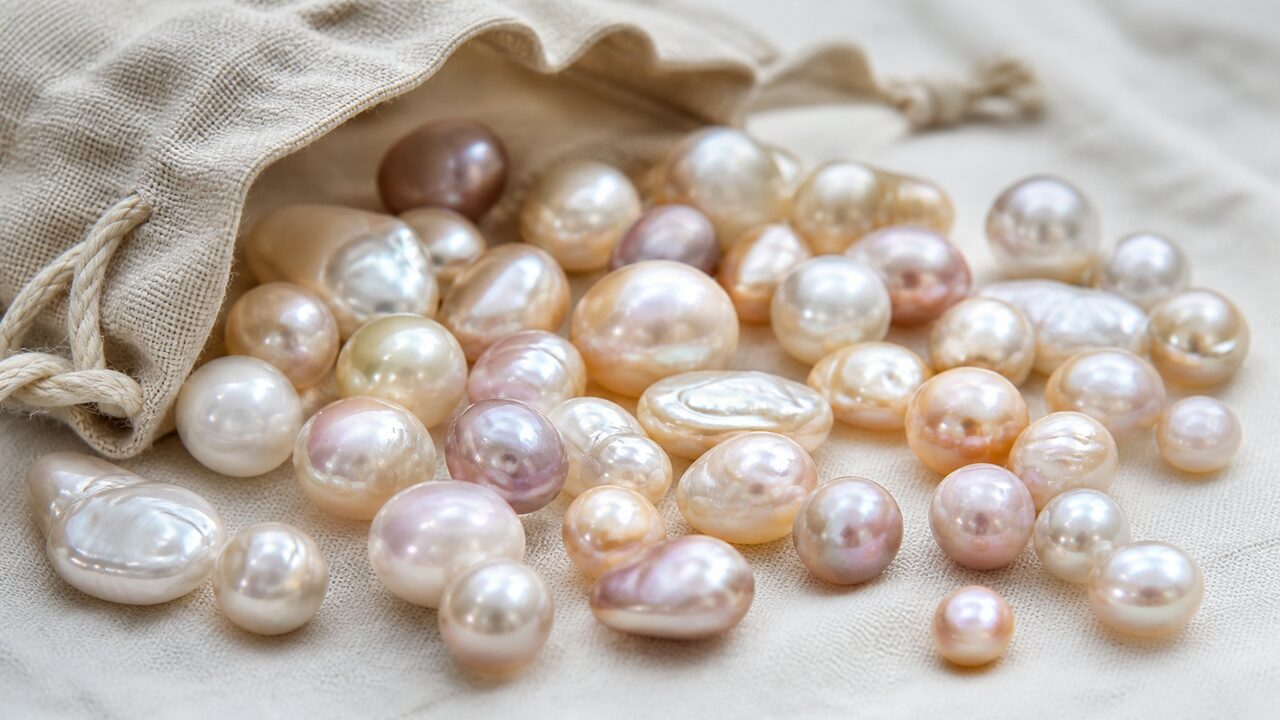
When estimating freshwater pearl value, look at the features in this order:
- Judge the luster. Look for bright reflections with defined edges rather than a milky shine.
- Inspect the surface. Minor organic marks are normal; widespread pits, dull patches, or peeling are more concerning.
- Compare the shape. Roundness can add a premium, but a distinctive baroque pearl can still be desirable.
- Check color consistency. Natural-looking cream, white, blush, and lavender tones can all be appealing. Ask whether color has been treated.
- Assess matching. In a necklace or pair of earrings, consistent quality across the piece is a major part of the price.
- Consider the construction. Clasp material, knotting, string condition, and overall workmanship add or subtract value from finished jewelry.
The redirected topic “freshwater pearls worth” therefore has no single price answer. Loose commercial pearls may cost only a few dollars each, while a necklace made from larger, high-luster, well-matched pearls can sell for hundreds or more. The gap is quality, matching, and workmanship—not simply the word “freshwater.”
Can you value pearls at home?
You can make a useful preliminary assessment at home, but you cannot reliably confirm natural origin, treatment, or market value by appearance alone. Use the following check before buying, selling, or insuring pearl jewelry.
A practical inspection checklist
- Confirm what is being sold. The description should state natural, cultured, or imitation, and name the pearl type when known.
- View the pearls in diffused daylight. Strong retail spotlights can make weak luster look better than it is.
- Compare reflections. Sharp, bright reflections usually indicate better luster than hazy ones.
- Inspect drill holes and edges. Look for peeling coatings, chipped material, or a visible bead beneath thin nacre.
- Check every pearl in the piece. One attractive front-facing pearl does not establish the quality of an entire strand.
- Ask about treatments. Dyeing, coating, bleaching, or irradiation can affect description, care, and price.
- Evaluate the setting. Precious-metal findings, secure knots, and skilled construction contribute to finished-jewelry value.
- Request documentation for major purchases. High-value natural pearls and important cultured pieces may justify an independent laboratory report or qualified appraisal.
A tooth-rub test is sometimes promoted online, but it is not a complete authentication method and can damage surfaces or dental work. For a meaningful purchase, documentation and professional testing are safer than a home trick.
Price is not the same as value
Pearls have long carried associations with purity, composure, wisdom, and inheritance. Those meanings can make a modest strand personally irreplaceable, but sentiment does not automatically raise resale value.
Market value reflects what comparable pearls are likely to sell for under current conditions. Replacement value, auction value, insurance value, and sentimental value answer different questions. When requesting an appraisal, state which one you need.
How to protect what your pearls are worth
Pearls are softer and more chemically sensitive than many gemstones. Poor handling can dull the surface and weaken the string, reducing both beauty and practical value.
- Put pearls on after applying perfume, hairspray, and cosmetics.
- Wipe them with a very soft, clean cloth after wear.
- Keep them away from acids, harsh cleaners, steam, and ultrasonic machines.
- Store them separately from harder jewelry that could scratch them.
- Allow a cleaned strand to dry completely before wearing it.
- Inspect the string and knots regularly, especially on frequently worn necklaces.
GIA’s pearl care and cleaning guide recommends warm, soapy water only for occasional thorough cleaning and a soft cloth for routine care.
The most useful answer
A pearl’s worth is the result of classification, quality, workmanship, condition, and market context. Begin with pearl type, then compare the seven value factors as a whole. For freshwater pearls in particular, do not mistake abundance for uniform quality: the best examples stand apart through luster, surface, shape, and careful matching.
If a seller’s price depends on a claim of natural origin, exceptional rarity, or unusual treatment status, ask for evidence. A beautiful pearl can be enjoyed without a report; an expensive claim should not have to rely on appearance alone.