How Mala Colors Shape Your Meditation Practice

A mala’s color is more than a surface detail. Before your fingers move through the first bead, color gives the mind a visual direction: steadiness, courage, softness, clarity, protection, or renewal. In meditation, that first impression matters. The eye receives a signal, the hand meets the material, and the practice begins with a clearer sense of intention.
This guide looks at mala color meditation as a practical way to choose and use prayer beads. The goal is not to force a rigid rule onto every color. Instead, it is to understand the symbolic language behind common mala bead colors, then choose the shade that feels aligned with the state of mind you want to cultivate.
Why Mala Color Matters in Meditation
Color works as a visual anchor. When your attention drifts, the beads bring you back through touch; their color brings you back through sight. A deep blue strand may encourage slower breathing. A red or brown mala may feel more grounded in the body. A white or clear mala can suggest simplicity and a clean beginning.
Many practitioners also connect colors with chakras, elemental qualities, or traditional images from Buddhist and Taoist symbolism. Those systems can be helpful, but color does not need to become a complicated doctrine. In daily practice, mala color symbolism is most useful when it helps you ask a direct question: What quality do I need to return to today?
The answer may change. On one day you may need calm, on another day movement. That is why choosing a mala by color is less about finding a permanent identity and more about recognizing the energy that supports your current practice.
The 8 Core Mala Colors and Their Meanings
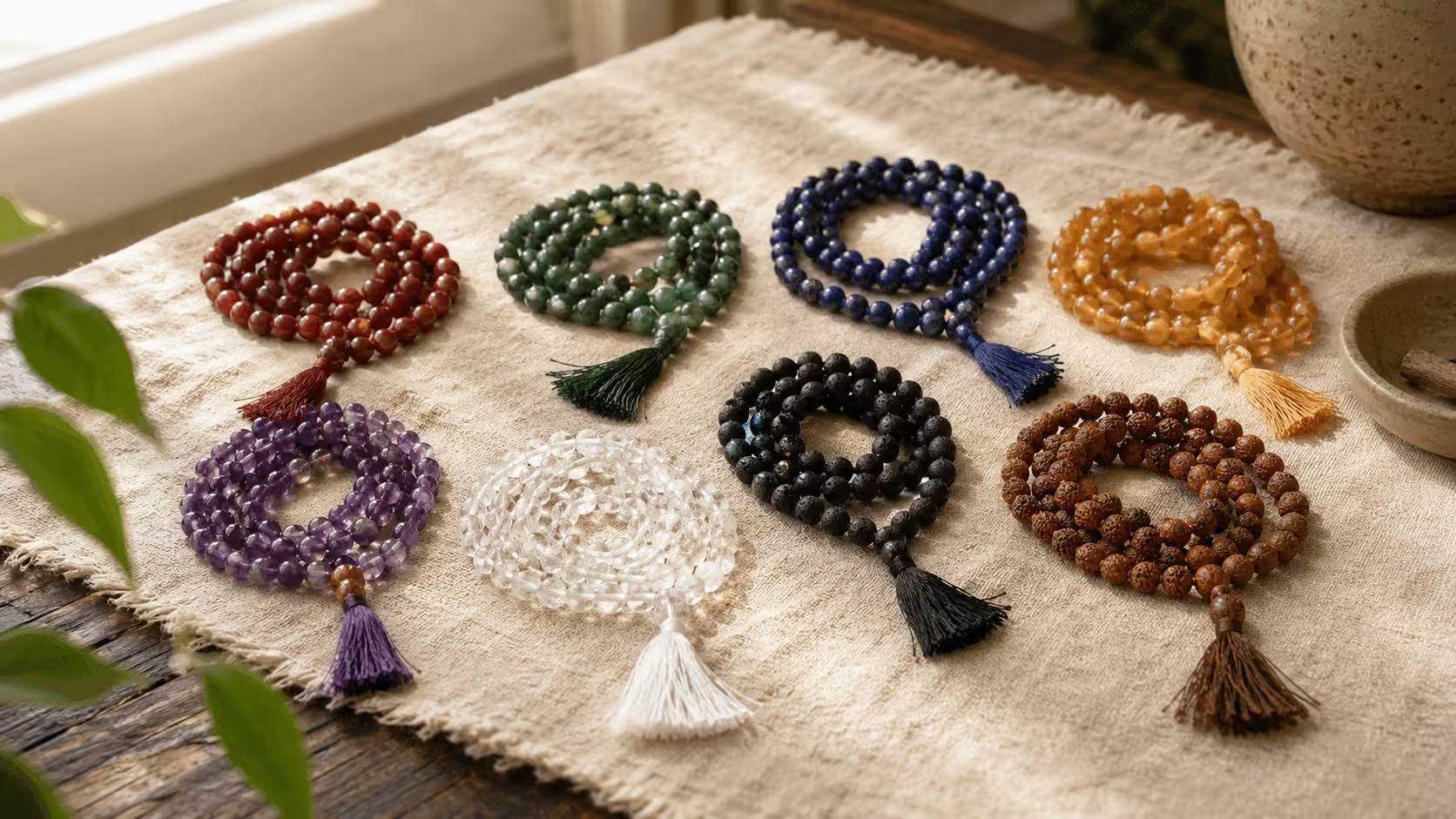
Use this table as a quick reference. Each color section below expands on intention, common use cases, and how to balance the color when its energy starts to feel unbalanced.
| Color | Core Intention | Recommended Stone or Material |
|---|---|---|
| Red | Energy, vitality, grounded action | Red agate, red jasper, carnelian, red tiger’s eye |
| Green | Growth, healing, emotional repair | Jade, green aventurine, moss agate, malachite |
| Blue | Calm, breath, clear communication | Lapis lazuli, sodalite, aquamarine, turquoise |
| Yellow and Gold | Joy, confidence, abundance | Citrine, yellow tiger’s eye, amber, honey-toned wood |
| Purple | Spirituality, intuition, transformation | Amethyst, charoite, lepidolite, purple fluorite |
| White and Clear | Purity, simplicity, new beginnings | Clear quartz, moonstone, white jade, selenite |
| Black | Protection, grounding, inner steadiness | Black obsidian, onyx, lava stone, black tourmaline |
| Brown | Stability, patience, daily consistency | Sandalwood, rosewood, bodhi seed, rudraksha |
Red Mala Beads: Energy and Vitality
Red is the color of heat, movement, blood, and embodied strength. In mala practice, red beads are often chosen when meditation needs to feel active rather than passive. They can support grounding because they pull awareness down into the body, especially when the mind is scattered or overly abstract.
A red mala suits periods when you need courage, discipline, or renewed motivation. If you are beginning a demanding project, rebuilding confidence, or trying to stay present through fatigue, red can act as a reminder to keep returning to the physical breath. Red agate, red jasper, cinnabar-toned beads, carnelian, and red tiger’s eye are common choices for this kind of intention. For a deeper material focus, see our guide to Red Tiger’s Eye Crystal.
Action Tip: If red begins to feel too heated or urgent, slow the pace of the count and lengthen the exhale before moving to the next bead. You can also pair a red mala with a brown cloth, wooden altar surface, or a few minutes of standing practice to keep its energy rooted.
Green Mala Beads: Growth and Healing
Green suggests renewal, recovery, and the living rhythm of nature. In meditation, green mala beads can soften the emotional field without making the practice feel vague. They are often chosen when someone is moving through a transition, repairing trust, or learning to let life feel spacious again.
This color works well for heart-centered intentions: patience, compassion, emotional repair, and steady growth. Green is not only about tenderness; it also carries the resilience of new leaves after winter. Jade, green aventurine, moss agate, malachite, and green sandalwood-toned beads all fit this symbolism. A green mala can be especially useful when your practice needs to feel restorative rather than forceful.
Action Tip: If green turns into emotional heaviness, bring in a little structure. Count only one short round, name a single quality such as patience, and finish by placing both feet firmly on the ground.
Blue Mala Beads: Calm and Communication
Blue carries the feeling of sky, water, and open distance. For many practitioners, blue mala beads help the breath become slower and less compressed. They are a natural choice when meditation is being used to settle anxiety, cool agitation, or create room before speaking.
Blue also supports communication because it is often associated with the Throat Chakra and the ability to express truth without harshness. If you are working through a difficult conversation, preparing to teach, or trying to listen more cleanly, blue can remind the nervous system to pause before reacting. Lapis lazuli, sodalite, aquamarine, blue lace agate, and turquoise-toned beads are common options.
A common morning use is to hold a blue mala near the chest, breathe through the nose, and let the throat soften before the first words of the day.
Action Tip: If blue feels too cool or distant, add one warm anchor: a hand on the lower belly, a yellow candle nearby, or a short gratitude phrase before counting.
Yellow and Gold Mala Beads: Joy and Abundance
Yellow and gold bring warmth, brightness, and confidence into the practice. These colors are often linked with solar energy: the capacity to choose, act, receive, and trust your own presence. A yellow or gold mala can be helpful when meditation feels too heavy or when you want to bring more optimism into your intention work.
This color family supports abundance practice, gratitude, self-worth, and creative momentum. It is not only about attracting more; it is also about recognizing what is already alive and available. Citrine, yellow tiger’s eye, amber, gold-toned metal accents, and honey-colored woods all carry this quality. Use yellow or gold when your practice needs warmth without losing focus.
Action Tip: If yellow or gold starts to feel restless, bring the attention back to one concrete breath instead of many future hopes. A brown or black surface under the mala can help the practice stay steady while keeping the color’s brightness intact.
Purple Mala Beads: Spirituality and Transformation
Purple is associated with mystery, devotion, intuition, and transformation. It is a strong choice when meditation is less about solving a daily problem and more about listening beneath the surface. Purple mala beads can help mark a practice as sacred, inward, and receptive.
Choose purple when you are entering a period of inner change, studying dreams, developing intuition, or making room for a wider spiritual perspective. Amethyst is the classic material here, though charoite, lepidolite, purple fluorite, and violet-toned glass or crystal beads can carry a similar mood. If you want to explore this color in the home as well as personal practice, read our article on Purple Crystal in Feng Shui.
Action Tip: If purple pulls the practice too far into abstraction, return to a simple count. Touch the bead, feel its temperature, and name one ordinary thing you can do after meditation. Transformation becomes more stable when it has somewhere to land.
White and Clear Mala Beads: Purity and New Beginnings
White and clear beads suggest simplicity, cleansing, and a return to the beginning. They are useful when the mind feels crowded or when you want a practice that is quiet, precise, and uncluttered. Rather than adding more symbolic weight, white and clear malas often feel like they remove what is unnecessary.
This color is suited to fresh starts, forgiveness work, purification rituals, and meditation after a period of emotional noise. Clear quartz, moonstone, white jade, selenite, pearl-like beads, and pale sandalwood all fit this intention. A white or clear mala can also pair well with breath practice because the color naturally suggests lightness and release.
Action Tip: If white or clear beads make the practice feel too bare, give the session a single sentence of intention before you begin. “I return to simplicity” is enough. The point is not emptiness for its own sake, but a cleaner place from which to begin again.
Black Mala Beads: Protection and Grounding
Black carries depth, boundary, and protective stillness. It is often chosen when the practitioner wants to feel contained rather than exposed. In meditation, black mala beads can help create a strong edge around attention, especially during stressful periods or after too much social and digital noise.
Black is useful for grounding, energetic protection, shadow work, and returning to the body after overwhelm. It does not need to feel heavy or negative. At its best, black functions like a quiet room: simple, stable, and free from distraction. Black obsidian, onyx, lava stone, black tourmaline, ebony, and dark bodhi seeds are common choices. For more on protective stones, see Black Crystals for Protection.
Action Tip: If black starts to feel too closed, open the eyes slightly and let natural light into the practice. Protection works best when it creates steadiness, not isolation.
Brown Mala Beads: Stability and Earthiness
Brown is the color of soil, wood, roots, and daily steadiness. A brown mala rarely feels dramatic; that is part of its value. It supports a practice built on consistency, humility, and contact with the ordinary world. If your meditation tends to become too abstract, brown brings it back to breath, posture, and the weight of the beads in your hand.
Choose brown when you need patience, reliability, and a stronger connection to nature. Sandalwood, rosewood, bodhi seed malas, rudraksha, agarwood, and other natural seed or wood malas all express this earthy quality. Brown is especially helpful for daily japa or breath counting because it does not demand attention; it quietly holds it.
Action Tip: If brown feels dull or overly heavy, use it with a brighter intention rather than switching away immediately. A simple phrase such as “steady joy” can keep the practice grounded without making it flat.
How to Choose Mala Color for Your Intention
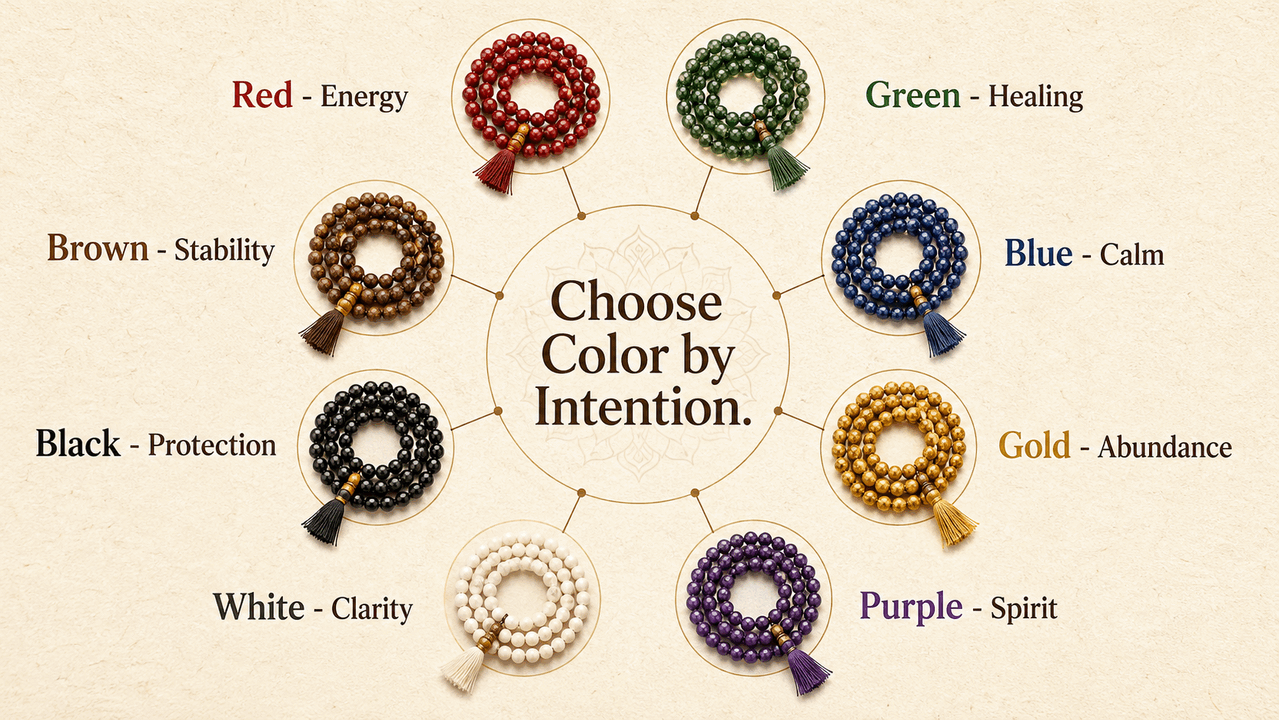
The simplest way to choose a mala color is to name the quality you need before looking at the beads. If your current life feels tense, blue or green may support calm and repair. If you feel tired or hesitant, red, yellow, or gold may help restore movement. If you are beginning again, white or clear beads may give that change a visible form. If you feel too porous or distracted, black or brown may help you return to stable ground.
This is where mala bead colors meaning becomes practical. Color gives you a starting point, but intention keeps the choice from becoming decorative. Write the intention in one plain phrase before choosing: more courage, softer speech, better boundaries, a clean start, steady patience.
Trust your instinct, then refine it with meaning. A color that attracts you repeatedly may be pointing toward an intention you have not fully named. A color you usually avoid may reveal a quality that feels unfamiliar but needed. The best mala is not always the one that matches your usual taste; it is the one that challenges your current comfort zone.
Using Color in Your Meditation Practice
Once you have chosen a color, bring it into the practice deliberately. Before counting, hold the mala in your hand and look at the beads for a few breaths. Let the color become a visual cue. If you are using blue, imagine the breath widening like open sky. If you are using green, let the inhale feel like fresh growth and the exhale like soft release. If you are using black or brown, feel the weight of the beads and let the body settle downward.
Notice which strand your hand wants to pick up, and notice what happens after you hold it. Does the color make your breath tighten or soften? Does the material feel cool, warm, smooth, rough, light, or weighty? A mala can have beautiful symbolism and still be wrong for your current state if it feels forced.
You can also use color as a short visualization. With red, picture warmth gathering at the base of the spine. With yellow, let the breath brighten the center of the body. With purple, soften the gaze and let the color mark the session as inward. With white or clear beads, follow the exhale as if it is clearing a window.
Then begin counting. Move one bead with each breath, mantra, or intention phrase. When attention wanders, return first to touch, then to color. The bead gives your hand something concrete to do; the color reminds the mind what quality it is practicing. For a full step-by-step method, read how to practice with mala beads.
You can also place the mala where you will see it before meditation: beside a cushion, near a journal, or on an altar. Over time, the color becomes associated with the state you cultivate while using it. This is how a simple strand of beads becomes a personal ritual object.
FAQ
Can I use more than one color of mala?
Yes. Multi-color malas can support layered intentions, such as grounding and compassion, clarity and protection, or confidence and calm. If you use several colors, keep the intention simple so the practice does not become mentally crowded.
Does the color matter more than the material?
Color and material work together. Color gives the mind a visual cue, while material gives the hand a tactile cue. If a stone color looks right but the weight feels distracting, choose a material that supports your body more naturally.
How do I know if a color is right for me?
A good color usually creates a subtle sense of recognition. You may feel calmer, clearer, more grounded, or more willing to practice. If you keep analyzing the choice and never settle, return to the basic question: What quality do I need today?