How Crystal Chakra Wands Work, and How to Use One

A crystal chakra wand sits in a curious middle ground. It is more shaped than a raw crystal, more directional than a tumbled stone, and unlike either, it asks to be used — not merely held or worn. Understanding what that shape does, and what it does not, is where any honest guide should begin.
What follows covers four things: what these wands are, the resonance model practitioners work from, the effects people consistently report, and the practical mechanics of choosing, cleansing, and using one.

A note before going further: Crystal chakra wands are tools for reflective and energetic practice, not medical instruments. They sit alongside health care, never in place of it. For any persistent physical or psychological concern, a qualified clinician is the right starting point.
What a Crystal Chakra Wand Is
Wand, Raw Crystal, or Tumbled Stone
A crystal chakra wand is a piece of natural crystal cut into a deliberate shape — typically one pointed or conical end, and one flatter end meant to rest in the palm. The geometry is the whole point.
Compared to a raw crystal cluster, which radiates in all directions, a wand focuses output along its axis. Compared to a tumbled stone, which sits comfortably in a pocket but has no orientation, a wand has a clear front and back. That directionality is what makes it suited for meditation, targeted clearing, and the more deliberate practices covered later in this guide. It is also why these wands appear so often in meditation practices and among broader meditation tools.
What the Stone Itself Contributes
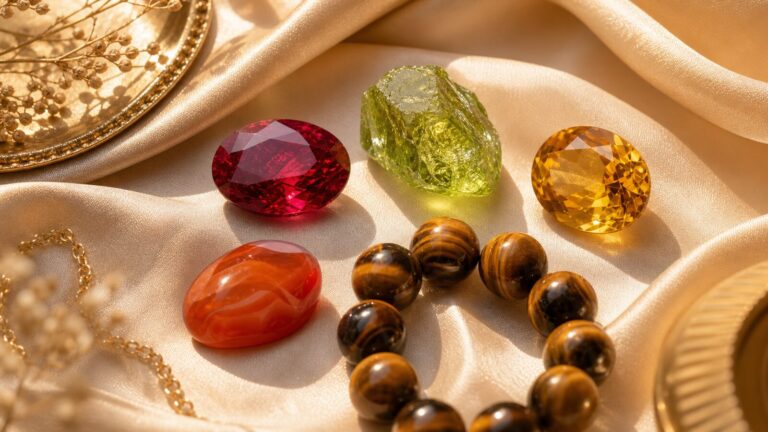
The wand’s shape gives it direction. The crystal it is cut from gives it character. Different stones are traditionally associated with different chakras and different practical uses, and that pairing — material plus geometry — is what distinguishes one wand from another.
The five most common materials, and the work they are typically chosen for:
| Crystal | Chakra Association | Typical Use |
|---|---|---|
| Clear Quartz | All chakras | General amplification and intention work |
| Amethyst | Crown, Third Eye | Calming the mind, deepening meditation |
| Rose Quartz | Heart | Emotional softening, self-compassion practice |
| Citrine | Solar Plexus | Confidence and personal-will work |
| Black Tourmaline | Root | Grounding, energetic boundary-setting |
Each gemstone meaning sits within a long tradition; the crystal property attributed to a stone reflects centuries of practice rather than a single source. For grounding work specifically, Black Tourmaline is among the most commonly chosen Root chakra stones, paired with the directional shape of a wand for focused practice.
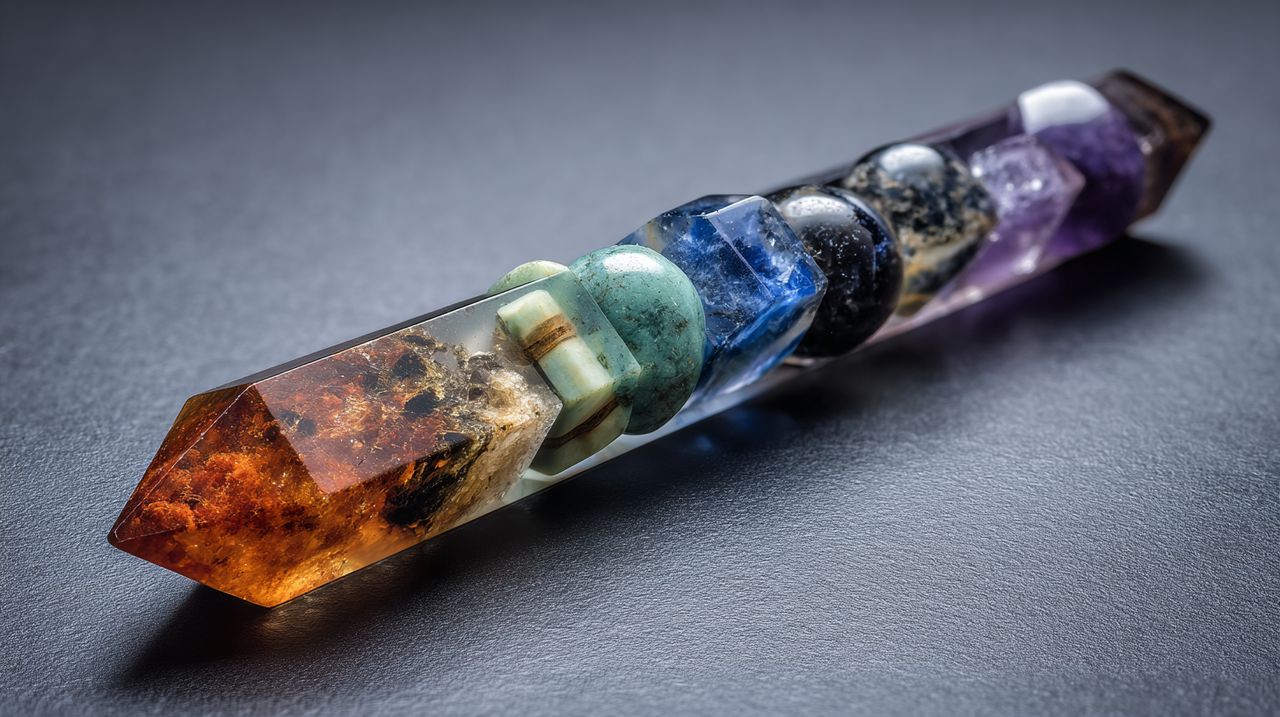
Some wands hold a single material. Others — the seven-chakra combination wands — embed seven different stones along the body of the wand, one per chakra, for practitioners who prefer to address the full system in one tool rather than choosing per session.
How the Resonance Idea Actually Works
The working model behind crystal chakra wands — and behind vibrational healing more broadly — is resonance. Practitioners hold that crystals vibrate at stable, characteristic frequencies, and that exposing a chakra to that stable frequency nudges it toward a more coherent state. The image most often used is a tuning fork: a clean note brings other instruments toward pitch.
Whether this is literally true in physical terms is outside what mainstream science has measured. What is more defensible is that focused attention on a body region, paired with a meaningful object and a clear intention, reliably shifts the body’s subjective state. Whether one reads that as energy work, ritualized mindfulness, or a benefit that travels through expectation, the practical instructions are the same. This framing is what makes the rest of this guide useful regardless of one’s prior beliefs.
Within this model, a wand is said to do three things:
- Clear blockages. Move stagnant or obstructed energy out of a chakra and along its natural pathway.
- Recharge. Direct vital energy into a chakra that feels depleted or underactive.
- Recalibrate. Bring an over- or under-active chakra back toward a balanced operating range — the working definition of chakra alignment in most traditions.
What People Use Them For
The benefits practitioners report are largely consistent across traditions. The list below is what comes up repeatedly, presented as what users describe rather than as guaranteed outcomes:
- Chakra balancing. A felt sense of energetic clarity or “lightness” after directed work, particularly in chakras that had been emphasized as out of balance.
- Deeper meditation. The wand acts as a physical anchor for attention, which tends to shorten the time it takes to settle into a focused state.
- Energy clearing. A subjective sense of release when the wand is moved through the aura — described as similar to brushing off accumulated tension. This is part of broader aura cleansing practice.
- Sharpened intuition. When using stones associated with the upper chakras (Amethyst, Clear Quartz), practitioners often report clearer dreams, faster insight, or a quieter inner critic.
- Intention work. A wand programmed with a specific intention serves as a physical reminder of that intention, which on its own tends to make the intention more durable.
A practical illustration: someone working through emotional heaviness might rest a Rose Quartz wand at the heart center and circle gently for several minutes. Common reports include warmth in the chest, a softening of held tension, or a slow emotional release. Whether the mechanism is energetic in the literal sense or simply the result of sustained, kind attention to a tender place, the inner shift is real to the person having it. That is the level on which the practice can be evaluated.
How to Use a Crystal Chakra Wand
Choosing One
The selection process tends to combine two filters: what the practitioner is drawn to, and what the practitioner is trying to address.
- Intuitive response. Pick up several wands. The one that settles in the hand without effort, that feels neither restless nor inert, is usually the right one. This is not mystical — it reflects a real preference signal that is hard to articulate.
- Match to purpose. A clear goal — grounding, intuition, heart work — narrows the material choice considerably. The table above is a starting point. The selected stone’s crystal healing properties should align with the intended use.
- Material quality. Look for natural color and inclusions rather than uniform perfection. Stones that look too clean or saturated have often been dyed or treated, and most practitioners find these less satisfying to work with regardless of one’s view on energy.
- Sourcing. Where possible, seek vendors who can speak to where their stones come from. Ethical sourcing matters as a value statement and tends to correlate with better material handling.
- Size and tip. A medium wand — roughly the length of the hand — is easiest for most beginners. Single-pointed wands focus energy outward; double-pointed wands receive at one end and emit at the other, allowing energy to circulate through the body.
Cleansing and Programming
A new wand carries the residue of every hand it has passed through. Cleansing resets it; programming sets it to your work. Both steps are quick.
To cleanse, pick one of the following:
- Running water. A few minutes under cool flowing water, with the intent of rinsing accumulated charge. Avoid for soft or porous stones such as Selenite.
- Moonlight or indirect sunlight. Several hours outside, ideally during a full moon. Keep direct sunlight brief — some stones, including Amethyst and Rose Quartz, fade with prolonged exposure.
- Smudging. Pass the wand through the smoke of sage, palo santo, or another preferred incense.
- Crystal cluster. Rest the wand overnight on a larger cluster or geode, which holds a stable charge.
To program:
- Hold the wand in your dominant hand and take several settling breaths.
- State the intention clearly, in plain language. “Help me hold steady through difficult conversations” is more useful than abstract phrasing.
- Visualize the wand absorbing that intention as a steady light. Hold the image for a moment, then set the wand down.
Three Working Techniques
Chakra balancing.
- Lie down comfortably on your back.
- Hold the wand tip a few inches above the chakra you want to address.
- Move the tip in slow circles — clockwise to add energy, counterclockwise to release.
- Stay with each chakra five to ten minutes, longer if attention is still drawn there.
Energy clearing.
- Starting at the crown, move the wand tip slowly down the body in a scanning motion, treating it as if drawing out anything stagnant.
- End by pointing the tip toward the ground, with the deliberate gesture of returning the released energy to the earth.
Aura repair.
- Hold the wand 15 to 30 cm from the body.
- Trace the outline of the body with smooth, continuous motions, as if sealing a seam.
- Pay particular attention to areas that feel thinner or more sensitive.

Using a Wand Beyond Personal Practice
Once the basic motions are familiar, the wand extends naturally into other contexts:
- Space clearing. Walking the perimeter of a room with the tip pointed outward is a common way to reset a stagnant space — useful after illness, after conflict, or before guests arrive.
- Crystal grids. The wand serves as the central anchor of a grid, directing the configured stones toward a chosen intention.
- Combining with other modalities. A wand pairs naturally with breathwork, sound bowls, aromatherapy, or reiki. The shared logic — focused attention plus a steady physical anchor — is the same.
Where the Wand Fits in a Wider Practice
Crystal chakra wands work best as one element of a broader rhythm — part of an approach to holistic wellness rather than the whole of it. Many practitioners pair the focused work of a wand with smaller, ongoing energetic touchstones throughout the day, including symbolic jewelry and culturally significant pieces such as items tied to elephant symbolism meaning.
These objects function less as active tools and more as quiet reminders. Where a wand demands a session, an everyday piece carries an intention into mundane hours — into commutes, conversations, and the moments when sitting down to do focused practice is not possible. Both have a place. The question is which combination supports your particular life, not which one is “more powerful.”
The honest answer to “does this work?” is that it depends on what is meant by working. Treated as a literal physical mechanism, the resonance model is unverified. Treated as a structured way to direct attention, set intention, and create ritual transitions in a day, crystal chakra wand practice produces the same kinds of effects as other contemplative practices — and those effects are well-documented. The wand is a tool for the second kind of work. Used that way, with realistic expectations and consistent practice, it earns its place in an ongoing spiritual growth journey.
Frequently Asked Questions
What is a crystal chakra wand?+
A crystal chakra wand is a tool typically crafted from natural crystal, featuring a pointed end, specifically designed for energy healing and meditation. Its purpose is to concentrate and direct energy towards specific areas of the body, particularly the seven chakras, to help balance them.
How do crystal chakra wands work to balance energy?+
Crystal chakra wands work based on the principle of resonance. Crystals possess stable molecular structures and unique vibration frequencies. When a wand is directed towards a chakra, its energy frequency resonates with the chakra's, helping to clear blockages, recharge underactive chakras, and calibrate imbalanced chakras back to their optimal functioning state.
What are the main benefits of using a crystal chakra wand?+
Key benefits of using a crystal chakra wand include facilitating chakra alignment and balancing, enhancing meditation depth, supporting energy healing by clearing negative energy, boosting intuition and insight, and strengthening intention manifestation.
How should I choose my first crystal chakra wand?+
When choosing, consider your intuition and how a wand feels, your specific purpose or the issue you wish to address, ensure it's made of natural crystal with good quality, and select a size and shape that is comfortable for you to hold, especially if you are a beginner.