How to Choose Feng Shui Liuli Art for Intentional Gifting

Why some gifts stay with us
Have you ever received a gift that felt like it was chosen specifically to help you through a difficult week? The most lasting presents are rarely the most expensive ones. They are the objects that shift the energy of our daily environment and remind us of our own strength.
When you give a piece of Feng Shui Liuli Art, you are providing a visual anchor for a person’s intentions. This guide focuses on the practical logic of selection, helping you find pieces that bring harmony to those you care about. Understanding the liuli art meaning allows you to choose a companion for their specific journey.
Before we explore the details, keep in mind that this guide is part of our broader research into environmental psychology. You can explore our full collection of to see how these pieces act as central hubs for balancing a home.
What energy does your loved one need?
Before picking a piece, think about what is happening in the recipient’s life. What are their current hopes or challenges? From my perspective, feng shui principles are essentially about creating environments that support our mental well-being through positive suggestion.
A piece of Liuli should feel like a companion on their journey. For someone navigating a major life transition, you might look into their Chinese Zodiac or Sheng Xiao to find a piece that complements their elemental nature.
To make this practical, imagine a friend born in a Wood year who feels stuck in a stagnant corporate role. In the cycle of elements, Water nourishes Wood. Choosing a deep blue or translucent black Liuli piece—colors associated with Water—can act as a subtle psychological nudge to stay fluid and keep growing.
If someone needs more calm, an artwork reflecting tranquility will have a better impact than one symbolizing rapid growth. It is about matching the object to their emotional landscape, much like how people select specific Red Agate properties to encourage courage or grounding.
“The most powerful gifts are those that acknowledge and amplify the receiver’s deepest, unspoken hopes.”
Take a look at their home or office. Note the colors and themes they prefer. This observation helps you tailor your gift to their specific needs, ensuring it resonates with their daily life as one of many meaningful gifts they might receive.
How colors and shapes tell a story
Liuli communicates through light and form. These vibrant colors and flowing shapes carry psychological effects that shape how a person feels within a room. Color choice is vital for creating a specific mood.
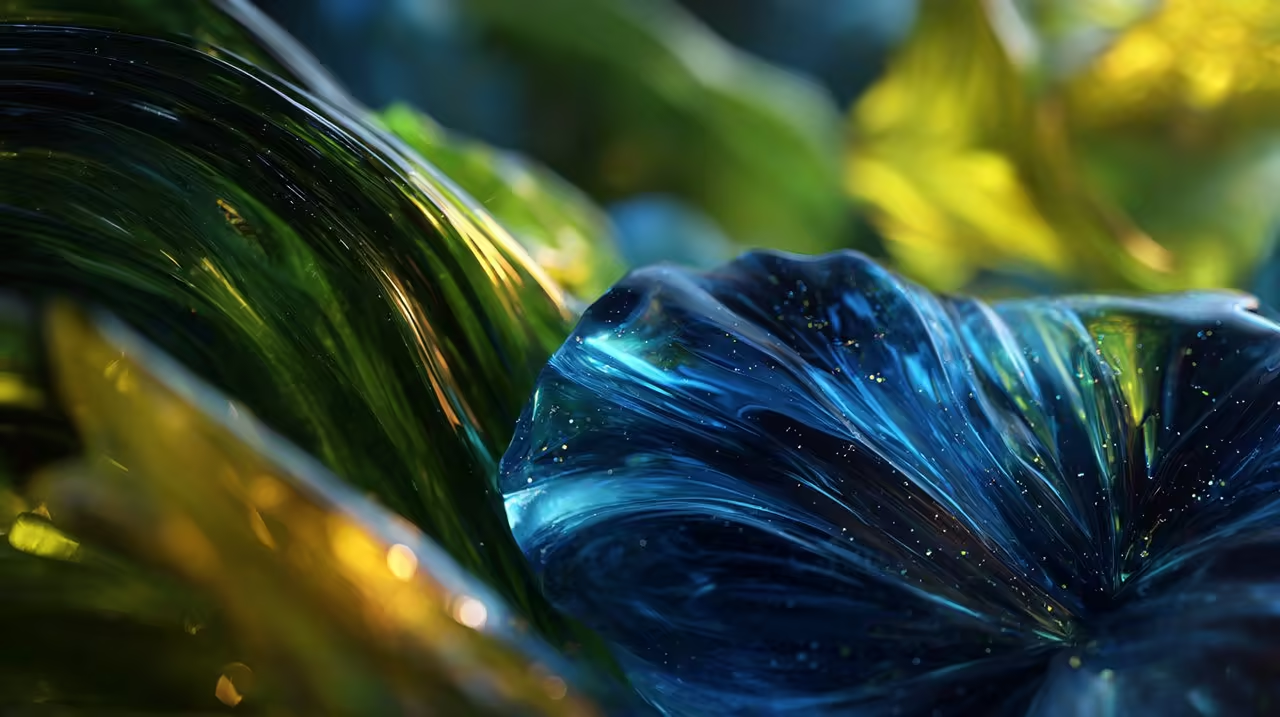
Deep blues and greens encourage peace, while warm yellows can spark creativity. Because Liuli is translucent, light passes through it, creating dynamic reflections that keep a workspace feeling active and alive.
Career support
A Liuli Dragon or a Pixiu can act as a psychological anchor for ambition and protection. These forms serve as reminders of inner strength in high-stakes work environments.
Relationship harmony
A pair of Mandarin Ducks or a Peony flower symbolizes the blossoming of shared affection. These shapes encourage a mindset of openness and social connection in shared living spaces.
Academic persistence
A Liuli Carp jumping over the gate represents the Koi fish meaning of perseverance. It is a classic visual metaphor for students or researchers who are working to overcome complex obstacles.
Where to place your Liuli art
The impact of Liuli comes from how it interacts with its surroundings. This is not about strict rules, but about understanding how an object changes the feel of a room. A well-placed piece can enhance natural light and make a space feel more open.
Think about the room’s primary use. For a living room, a vibrant piece can encourage social harmony. In a study or home office, a deep blue or clear piece helps ground the mind for focus and deep work.
To maximize the psychological impact, consider these placement contrasts:
- Effective Placement: Positioning a Liuli piece on a clean, sunlit shelf where it catches the morning light.
- Ineffective Placement: Tucking the art into a dark, cluttered corner where it loses its translucent vibrance.
Avoid putting high-energy pieces in quiet areas like bedrooms. The key is balance. When the art supports the function of the room, it becomes a functional part of the environment rather than just a decoration.
The ancient spirit of handcrafted glass
In ancient Eastern culture, Liuli was revered as one of the “Seven Treasures of Buddhism,” representing spiritual clarity. Ancient Romans and Egyptians valued similar kiln-cast glass as a medium that bridged the gap between the material world and the intangible essence of the soul.
Authentic Liuli is made using the pate de verre technique. This involves packing cold glass paste into a mold before firing it at precise temperatures. Unlike mass-produced glass, this process creates a unique translucency and a “mist” of tiny internal bubbles.
These bubbles are the “breath” of the piece, marking the human touch involved in its creation. At Buddha Auras, we prioritize pieces where these internal textures are balanced with clarity, ensuring the art feels like a living object rather than a factory product.
When you hold a quality piece, you feel its satisfying weight and smooth finish. This tactile experience speaks to its quality. It is a way of capturing light in a solid form, making it a standout choice for those seeking meaningful gifts that value craftsmanship over quantity.
How these pieces amplify your intentions
Liuli acts as a vessel for resonance. It is a tangible object that holds and transmits your positive intentions. It creates a connection between your wishes as a giver and the receiver’s personal environment.
Visually, the beauty of the piece creates a positive focal point. Psychologically, it serves as a constant reminder of the support you intended to share. Much like how a buddhist mala necklace serves as a tactile anchor during meditation, a Liuli sculpture serves as a visual anchor for the room’s energy.
Consider a Liuli Buddha Hand, which represents protection. When placed with intention, it reinforces a sense of safety and calm. It acts as a powerful anchor for the recipient’s daily peace of mind, similar to how an evil eye bracelet is used in other cultures to ward off negativity.
Sharing the meaning behind your gift
How you present a Liuli piece can change its impact. When you share the reason behind your choice, the object becomes a personal message rather than just a decorative item.
A simple note explaining the symbolism—like why you chose a specific color for their new home—lifts the gift beyond its material value. Personalization strengthens the bond between you and the recipient. It turns a beautiful object into a shared narrative of growth and support.
This approach ensures your effort results in a moment of real clarity. By explaining how the piece is meant to support their well-being, you leave a lasting impression. You are offering a tangible piece of harmony that will light up their space for years to come.