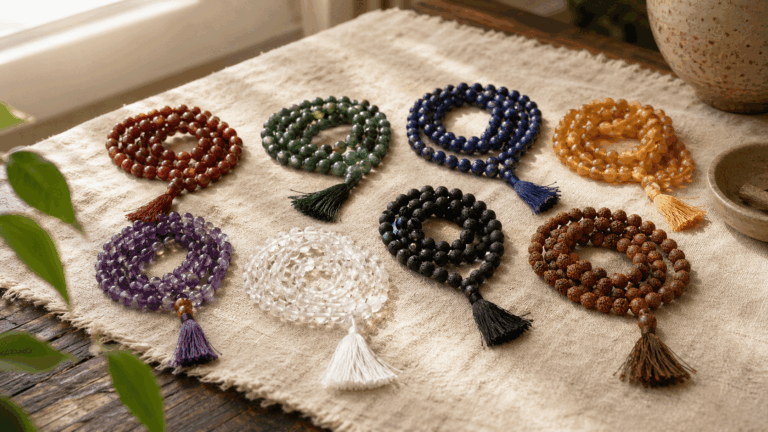
Car Charms: Crystal and Metal for Mindful Driving Intentions

The hum of the engine, the sharp glare of the morning sun, and that sudden surge of frustration as the brake lights ahead turn a solid, unmoving red. We often treat our car as a bubble to get from point A to B, but it is actually one of the few environments that moves through the world with us. Finding the right charm for your dashboard isn’t just about aesthetics; it is about choosing a visual anchor that keeps your headspace from drifting into stress or distraction.
Before we explore the specific sensory differences between materials, it is helpful to see how these choices fit into a larger philosophy of mindful travel. This article is part of our broader exploration of . I invite you to look through that collection to understand how different objects can help set a more intentional tone for your personal space.
Choosing Your Daily Intention
I often think of car charms as environmental cues. They don’t change the traffic flow, but they change the way you perceive the road. To pick the right one, you first have to identify the “emotional weather” of your typical commute.
If you find yourself gripping the wheel too tight during rush hour, you might need a material that promotes emotional regulation. Conversely, if you drive long, monotonous stretches of highway, your priority might be mental sharpness and clarity to combat fatigue. The aesthetic of crystal charms can serve as a gentle reminder to breathe and stay present.
- Are you looking to leave the stress of the office behind the moment you turn the key?
- Do you need a symbol of resilience for a challenging job?
- Is your goal simply to feel more grounded in an increasingly chaotic world?
The Psychology of Crystal and Light
In many Eastern philosophies, light is synonymous with clear thought and the movement of ‘Qi’ or energy. From a modern perspective, we can look at crystal healing properties as a form of sensory feedback. Because crystals refract and scatter sunlight, they create a dynamic environment that prevents your gaze from becoming fixed and dull.
Consider the red agate meaning in the context of driving; its warm, earthy tones are traditionally used to stimulate vitality. In a car, it acts as a subtle visual prompt to stay alert. If road rage is your primary hurdle, a stone like amethyst—often associated with tranquility—provides a cool, purple focal point that encourages a calmer heart rate when someone cuts you off.
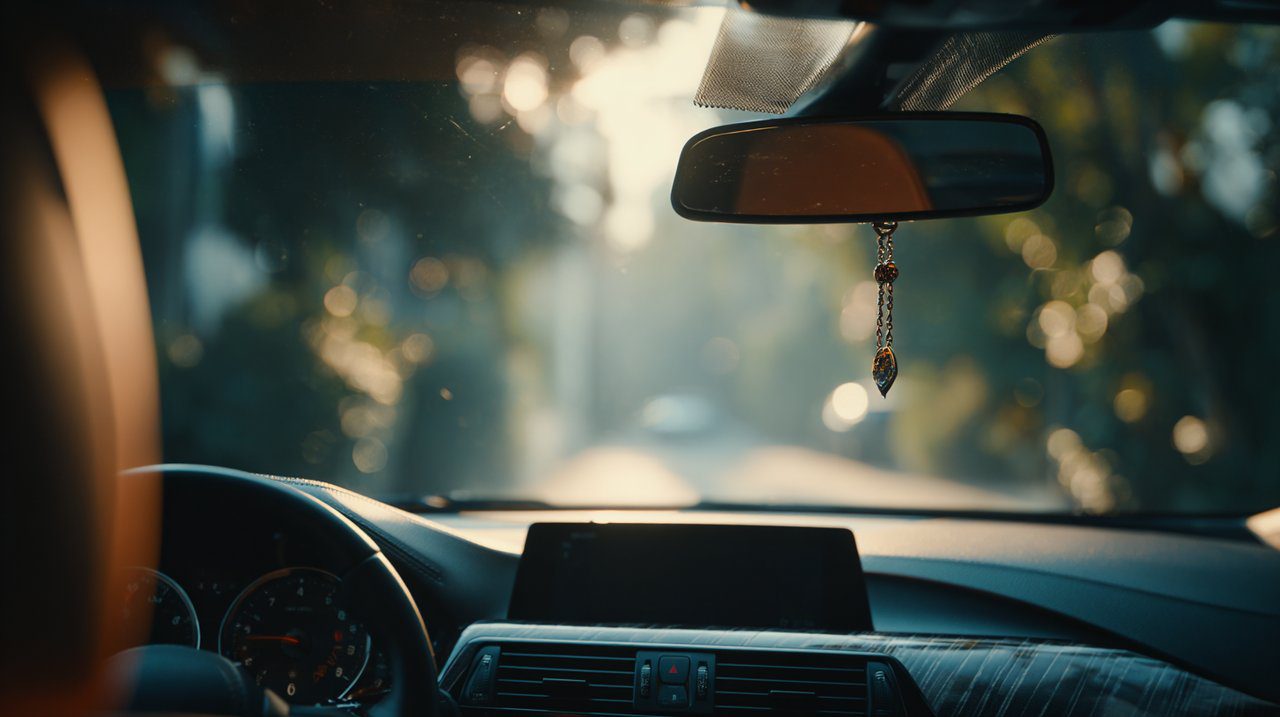
A crystal charm hanging from your mirror does not just sparkle. It catches the shifting daylight and creates a soft dance of light in the cabin, serving as a visual breath that can lower your immediate stress levels.
For those who feel overwhelmed by the fast pace of modern life, the deep, light-absorbing quality of obsidian can be incredibly grounding. Unlike clear stones that scatter light, obsidian pulls the eye inward, offering a sense of privacy and emotional containment within your vehicle’s cabin.
The Grounded Strength of Metal
While crystals interact with light, metal interacts with the weight of tradition and durability. In many cultures, materials like brass were used in bells and chimes because of their unique resonance. In your car, a metal charm provides a sense of permanence and unshakeable strength that light-weight materials simply cannot match.
Materials like brass or silver-toned alloys have a cool temperature and a physical heft that reminds us of the earth beneath the asphalt. If you value stability, the symbolism of metal objects offers a psychological anchor that feels reliable even when the road ahead is uncertain. This is why many pieces of tibetan jewelry utilize metal to create a sense of lasting protection.
The finish matters too. A polished metal surface acts like a mirror, reflecting your surroundings with sharp clarity, which can be a reminder to stay aware of your environment. A brushed or matte finish, however, absorbs light, offering a muted and calm presence that doesn’t compete for your attention while driving.
Finding Your Practical Balance
Transitioning from the symbolic to the practical, we must remember that a car is a high-vibration environment. Your choice needs to survive temperature swings and the occasional sudden stop. This is where the physics of the material meets your daily needs.
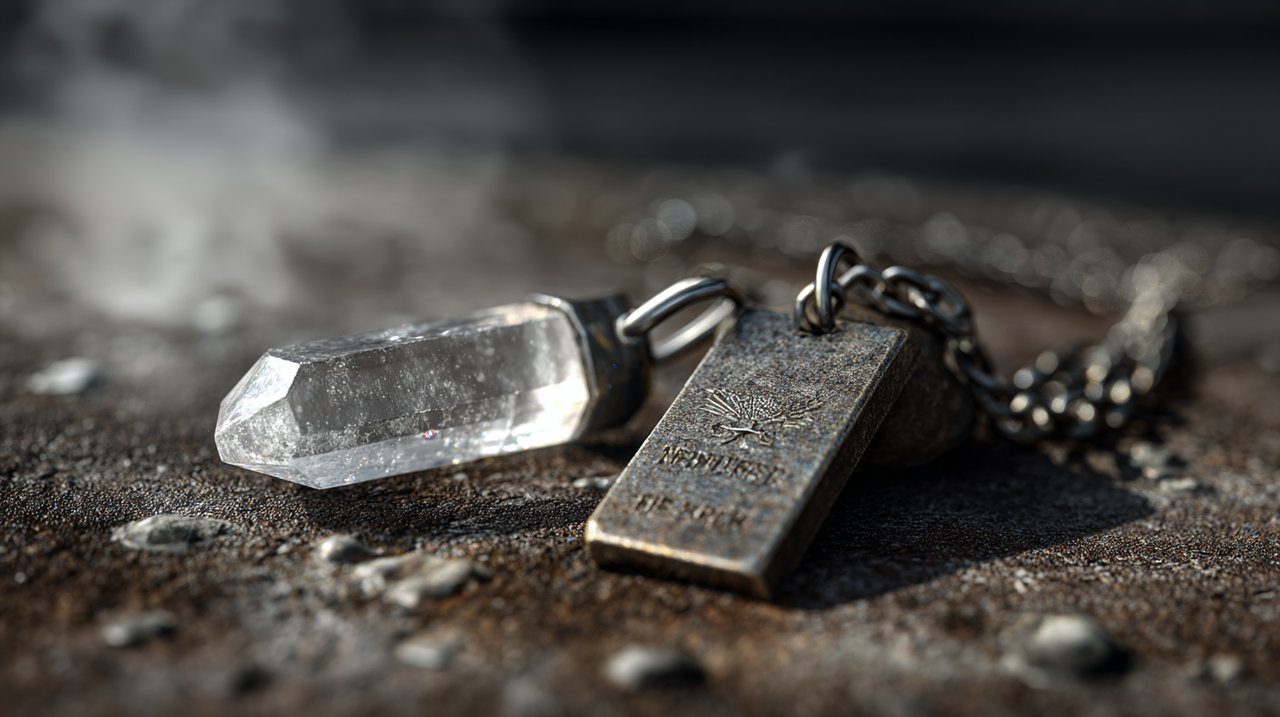
Crystals are naturally more delicate. Over time, sunlight can fade certain stones, and a sudden bump could cause a chip if the charm hits the windshield. Many drivers find that cleaning their crystal becomes a small, mindful ritual—a way to “reset” their intentions for the week ahead.
- Metal is virtually maintenance-free and handles the everyday jostles of the road with ease.
- Crystals provide a shifting, living aesthetic but require more secure mounting.
- Metal often develops a unique patina over time, marking the many miles you have traveled together.
When we speak of protective jewelry for the road, we aren’t talking about physical armor. Instead, we are discussing the mental protection of a focused mind. A well-chosen charm—whether it is the bright focus of a tiger’s eye or the heavy reliability of a brass coin—functions as a psychological boundary.
Ultimately, your choice is about what helps you return to center. When your dashboard piece aligns with your inner state, it becomes more than a decoration. It becomes a silent partner in your journey, helping you navigate the road with a bit more grace and a lot more presence.