Traditional Tea Bowls: Chinese Dynastic Forms and Japanese Zen Influence

To hold a traditional tea bowl is to hold a vessel of quiet wisdom. It’s a simple object, yes, but it cradles more than just tea. It holds centuries of history, philosophy, and the profound beauty of the present moment. Born from the earth and transformed by fire, it becomes a silent companion in our search for stillness.
When we connect with a tea bowl, we’re not just touching clay; we’re connecting with a lineage of hands that shaped it and minds that found peace with it. Every curve, glaze, and unique mark whispers a story. It’s a tangible reminder that everyday objects can be anchors for a deeper, more mindful existence.
Before we explore the details of the tea bowl, it’s worth noting that this piece is part of our comprehensive guide to the . There, you can find a wider range of resources and curated items to support your practice.
The Origins of the Tea Bowl
The earliest tea bowls emerged from a simple, practical need, but they quickly blossomed into forms of silent artistic expression. Their story begins with the earth’s own clay, patiently molded by human hands and then touched by the transformative power of fire. These first bowls carried an honest, raw simplicity, mirroring the very ground from which they came.
Utility in Ancient Rituals
Before they were admired as art, tea bowls served a humble purpose within a growing Chinese tea culture. In ancient China, particularly during the Tang and Song dynasties, tea was more than just a drink; it was a quiet ritual. The bowls were crafted to deepen this experience, their shapes shifting as the ways of preparing tea evolved.
- During the Tang Dynasty (618-907 CE), bowls often appeared robust, shallow, and flared. Their form was perfectly suited for whisked tea, allowing the vibrant green to be quietly admired.
- As the Song Dynasty (960-1279 CE) saw the rise of powdered tea, bowls became deeper and darker. This provided a beautiful contrast to the frothy white tea, enhancing its visual appeal. Here, you might see Jian ware, with its rich “hare’s fur” and “oil spot” glazes, embodying the quiet beauty of that era.
The Journey East to Korea and Japan
The art of tea and its accompanying bowls journeyed beyond China’s borders. Korea and Japan embraced these traditions and lovingly transformed them, each infusing the craft with their unique spirit and understanding.
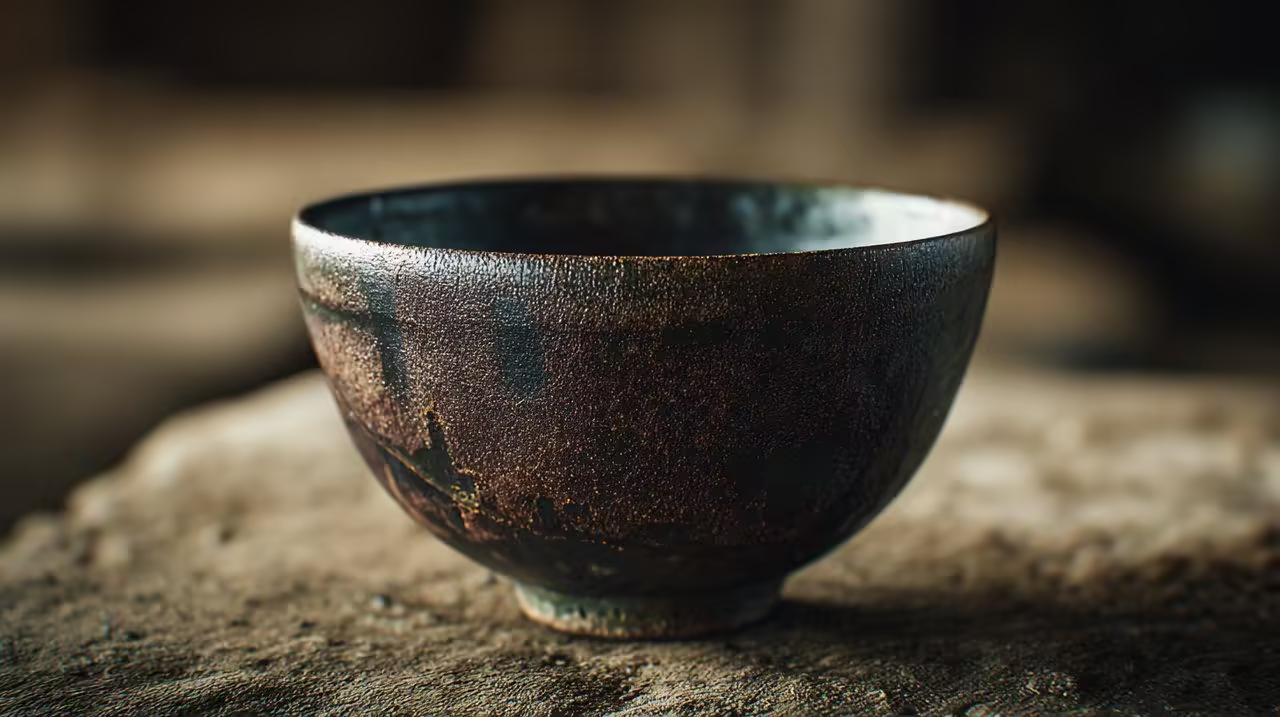
- Under the hands of Korean potters, often amidst challenging times, bowls like the I-do chawan came into being. They carry a rustic charm, with beautifully irregular forms and a subtle ‘kairagi’ (shrunken glaze) or ‘kodai’ (foot ring) that feels utterly natural in the hand. These bowls hold an unpretentious beauty.
- In Japan, especially during the Momoyama period (1573-1603), tea bowls found their central place within the chanoyu, the gentle tea ceremony. Japanese aesthetics, deeply influenced by the principles of Zen Buddhism tea, learned to see beauty in the imperfect, the transient, and the quiet passing of time. This perspective gave rise to distinct styles that celebrated naturalness and a deep, understated elegance.
The Philosophy of Imperfect Beauty
The aesthetic of the traditional tea bowl finds its deepest beauty not in perfect symmetry, but in its resonance with nature’s own unhurried way. It teaches a philosophy of acceptance and finding harmony in the things just as they are.
The Wisdom of Wabi-Sabi
The Japanese philosophy of Wabi-Sabi offers the most insightful way to appreciate tea bowls. It is a quiet understanding that guides both the creator and the user, forming the core of Wabi-sabi aesthetics.
Wabi-Sabi invites us to find beauty in what is imperfect, in the transient nature of things, and in the quiet acceptance of incompleteness. It cherishes the rustic, the unrefined, and the gentle marks left by time and use.
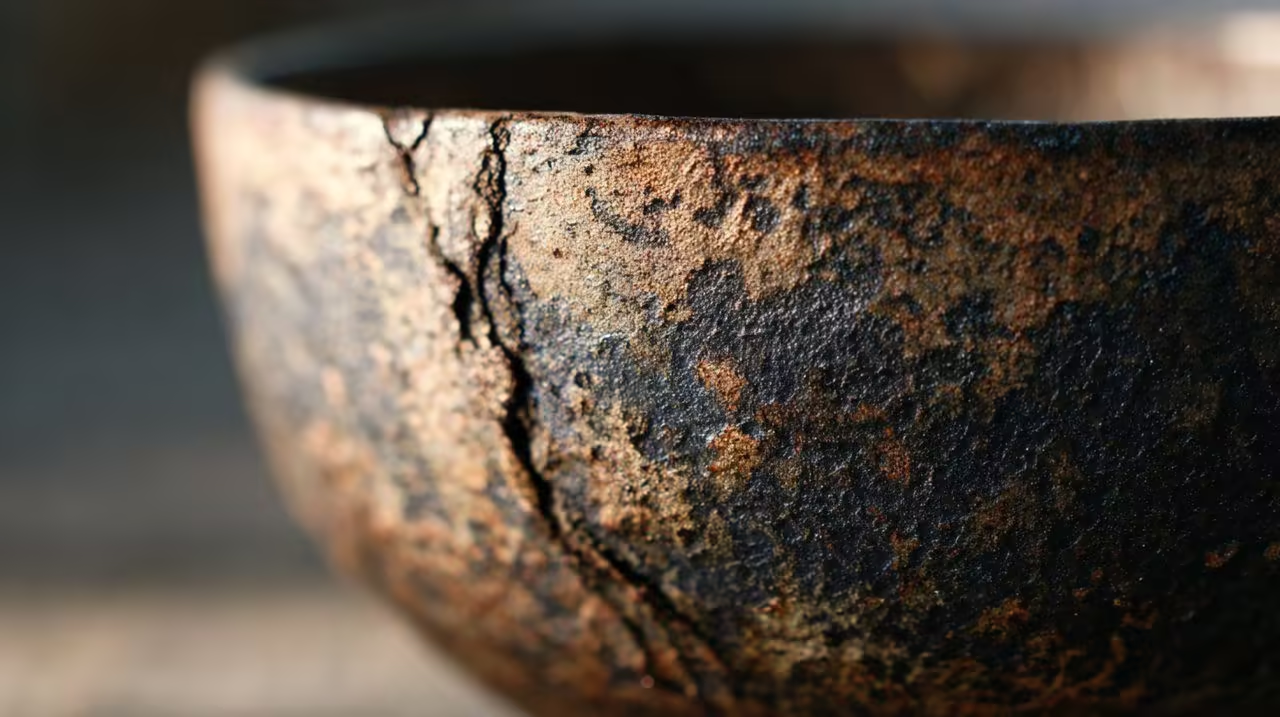
A handmade tea bowl might reveal an uneven rim, a gentle warp, or a glaze that flowed in its own unpredictable way. These are not seen as flaws, but as unique characteristics—celebrated as expressions of natural processes and the potter’s honest hand. They invite a deeper connection and a soft acceptance of the present moment.
Glazes as Nature’s Canvas
- Tenmoku Glazes, born in China, are dark and rich with iron, often revealing patterns that resemble “hare’s fur” or “oil spots”. These effects emerge from intricate firing processes, where minerals gently separate and crystallize.
- Oribe Glazes, developed in Japan, bring forth vibrant green copper hues, often playing against unglazed or iron-painted sections. Their forms, sometimes playfully distorted and boldly colored, reflect a dynamic, untamed spirit.
- Shino Glazes are known for their thick, milky white feldspathic surfaces. Shino ware often shows pinholes, scorch marks, and crawling, creating a tactile, organic surface. These unique effects are deeply cherished, embodying a rustic and warm aesthetic.
The Tea Bowl as a Spiritual Tool
The tea ceremony, with the bowl at its heart, is a practice in profound presence. It is a moment of unmediated connection between our hands, the warm vessel, and our inner self, creating a space for stillness and reflection.
Mindfulness in the Way of Tea
The Japanese tea ceremony, known as chanoyu, unfolds as a carefully graceful sequence of actions designed to cultivate mindfulness. The tea bowl is more than a vessel; it becomes a focal point for contemplation, a physical anchor for the mind.
This practice resonates deeply with our belief at Buddha Auras. Just as wearing a piece of spiritual jewelry can be a constant reminder of our intention for peace and balance, the act of holding a tea bowl can serve the same purpose. It becomes a tool for grounding our energy and finding a moment of inner quiet in a busy world.
A Dialogue with the Self
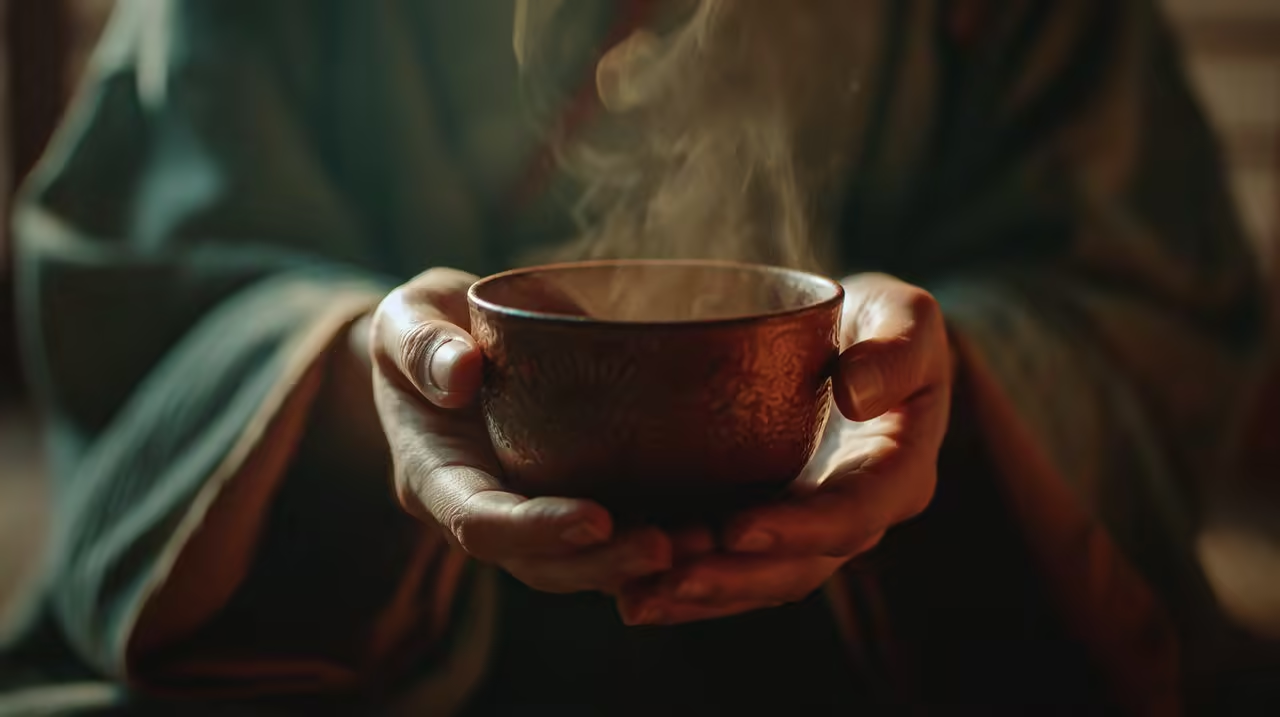
To hold a traditional tea bowl is an intimate act. Its weight, texture, and warmth create a sensory experience that grounds us in the present. It becomes a silent dialogue between ourselves, the object, and the natural world it embodies.
- The Tactile Experience: The feel of the clay, its subtle irregularities, and the smoothness of the glaze engage our sense of touch. It’s a quiet reminder of the earth from which it came.
- Visual Contemplation: The delicate patterns in the glaze and the play of light across its surface invite quiet observation, revealing new details with each patient glance.
- Mindful Presence: The simple act of preparing and drinking tea from such a bowl encourages a slowing down. It is a practice in finding peace, a moment of stillness that helps re-align our inner balance.
What the Tea Bowl Teaches Us
The traditional tea bowl, in its enduring and serene presence, offers gentle guidance. It connects us to a deeper understanding of beauty and the quiet essence of existence, serving as a teacher in physical form.
It stands as a testament to the wisdom that cherishes the journey over the destination, the process over a perfect product. Each chip, crack, or mark of use adds another layer to its story. These are not signs of decay, but whispers of a life lived and shared.
When we hold a bowl of tea, we hold more than the earth’s shape; we hold a river of wisdom that has flowed through millennia. It speaks of the potter’s intent, the kiln’s transformative power, and the countless hands that have cradled it.
In its serene presence, we are invited to find our own stillness. It encourages us to appreciate the simple, profound beauty that surrounds us, and to realize that true perfection often rests in the calm acceptance of what is.