What kind of jewelry brings good luck?

Humans consistently imbue tangible objects with meaning, transforming them into sources of comfort or courage. A cherished ring might offer quiet resolve, or a pendant a grounding presence during a pivotal moment. This deep connection transcends mere aesthetics, reflecting a fundamental drive to assign personal significance to objects, tapping into a perceived reservoir of fortune or protection. Across diverse cultures, this manifests in various forms, from the protective symbolism of a red string bracelet meaning to the enduring power of ancient talismans. But what truly gives these items their perceived influence? It’s often the power of our own minds, using these objects as potent psychological anchors.
Protective Symbols: Ancient Wisdom in Modern Adornment
For centuries, specific symbols have served as tangible conduits for perceived positive energy and profound protection. More than mere decoration, these symbols act as visual anchors, connecting individuals to deeply held values, personal aspirations, and a collective heritage of ancient wisdom. They are not just representations, but frameworks that help us understand and shape our personal narratives.
The evil eye, with its distinctive blue and white motif, is a powerful example of symbolic protection. Originating in ancient Mediterranean and Middle Eastern civilizations, its history spans from early Mesopotamian texts to Greek and Roman traditions. For millennia, it has been traditionally believed to be a potent shield, designed to deflect malevolent gazes or ill wishes. A popular legend tells of a jealous glance turning milk sour or crops barren—a fear the evil eye protection jewelry was designed to counteract.
Today, wearing an evil eye bracelet can function as a psychological anchor. Its presence subtly prompts a heightened awareness of one’s surroundings and reinforces a personal resolve against perceived external negativity, transforming a traditional belief into a proactive mindset.
Similarly, the hamsa hand, often depicted with an eye in its palm, is a widely recognized symbol of divine protection and blessing from North African and Middle Eastern traditions. Its five fingers carry significant weight, representing concepts like strength, power, and good fortune. This ancient amulet is traditionally worn to ward off harm, serving as a tangible reminder of one’s desire for safety and well-being.
Among other notable symbols are the intricate Celtic knots. Found in ancient Celtic artistry, their endless, interwoven loops evoke the ceaseless flow and intertwining of time. These knots speak to the interconnectedness of existence and the eternal cycles of life, serving as a potent reminder that every conclusion heralds a new beginning—a resonant concept for those navigating significant life transitions or seeking continuity.
The Tree of Life, a universal symbol across ancient mythologies and spiritual traditions, elegantly links us to our origins while fostering growth and aspiration. It stands as a powerful metaphor for personal development and spiritual evolution, reflecting the intricate interconnectedness of all creation. Wearing this symbol can serve as a daily reminder of one’s roots and potential for continuous growth.
The true power of a symbol lies not in its form, but in the meaning we imbue it with and the history it carries.
For those seeking balance and harmony, the Yin Yang symbol, a cornerstone of ancient Taoist philosophy, offers a compelling personal emblem. It embodies the concept of duality and equilibrium, serving as a constant reminder of life’s inherent balance. Its design encourages a mindful approach to harmonizing opposing energies, acting as a subtle yet effective anchor for inner peace and thoughtful action.
These protective symbols, whether ancient or contemporary, offer more than aesthetic appeal; they are visual touchstones that reinforce personal beliefs and connect us to a shared human history of seeking meaning and security.
Gemstones: Earth’s Ancient Gifts for Inner Resonance
Beyond their aesthetic appeal, natural stones are widely considered, through traditional wisdom, to possess unique energetic signatures, forged deep within the Earth over millennia. Each gemstone tells a story of geological transformation, immense pressure, and radiant beauty—a journey often paralleled with our own life experiences. Ancient civilizations revered gemstones for their perceived metaphysical properties and healing powers, integrating them into rituals and employing them as powerful talismans. This reverence often stemmed from observable qualities like color and durability, combined with deep cultural interpretations.
A stone deeply embedded in ancient traditions, Hetian Jade, holds particular reverence across Asian cultures, especially within Chinese civilization, where it is often considered the “king of jade.” For millennia, it has been cherished for its traditional ability to attract good fortune, harmony, and longevity. Generations have believed it possesses vital life-giving energy, symbolizing purity, moral integrity, and deep wisdom, often passed down as invaluable heirlooms. This reverence extends beyond its aesthetic, anchoring itself in a cultural understanding of resilience and spiritual balance. In ancient China, jade was often placed in tombs to preserve the body, signifying eternal life and protection in the afterlife. Understanding the rich jade symbolism in chinese culture further enriches its significance, revealing how this material embodies a philosophy of life and a deep connection to ancestral wisdom.
For those who resonate with the ancient wisdom and soothing energies of Hetian Jade, incorporating it into daily life offers a tangible connection to these venerable traditions. Its gentle flow of perceived positive fortune, combined with its inherent beauty, serves as a constant, subtle reminder of self-compassion and inner peace, encouraging a mindful approach to overall well-being. This can be compared to the intricate spiritual significance found in items like tibetan dzi beads or an authentic tibetan bracelet, which similarly serve as personal anchors for spiritual practice and cultural identity.
Among other notable gemstones is Amethyst, with its captivating purple hues. Traditionally, it has been associated with mental clarity, spiritual protection, and sobriety. Historically, it was believed to guard against intoxication, fostering a clear mind and a deep sense of inner calm. When worn, amethyst can serve as a gentle, constant reminder to pause and actively seek tranquility amidst life’s stresses. Imagine a moment of heightened tension: touching your amethyst jewelry can become a physical cue to recenter, fostering focus and inner peace through a subtle, self-directed intervention.
For those seeking protective energies in different forms, exploring gemstones like Tiger Eye offers a complementary approach. Known for its traditional ability to instill courage and ward off perceived negative influences, its vibrant, shifting bands are said to provide focus and mental clarity during challenging times, making it a compelling choice for daily wear. This stone, much like a steadfast companion, encourages a grounded perspective when navigating complex situations, much like the grounding influence of a red agate stone meaning in other traditions.
These gemstones, each a geological marvel, offer more than just beauty; they provide tangible connections to ancient beliefs and serve as personal reminders for cultivating desired states of mind and spirit.
Cultural Narratives: The Deep History of Symbolic Adornment
Many cherished symbols derive their perceived power from centuries of deep cultural significance. Understanding these historical roots enriches personal choices, connecting individuals to a collective human experience of seeking protection and blessing. These traditions powerfully illustrate how symbols transcend mere aesthetics, evolving into tangible vessels for shared human aspirations and enduring narratives, much like the evil eye or the hamsa hand discussed earlier. How do these ancient patterns continue to resonate and shape individual experiences in contemporary life?
The Ankh, an enduring emblem from ancient Egyptian belief systems, serves as a compelling example. This distinctive cross-like symbol, topped with a loop, represents eternal life, vitality, and divine protection. Pharaohs and deities were frequently depicted holding it, signifying their dominion over life and death. Legend has it that the Ankh was the key to unlocking the gates of the afterlife, granting immortality. When worn today, the Ankh continues to symbolize eternal life, bridging ancient wisdom with contemporary spirituality, and serving as a powerful reminder of life’s intrinsic value and our connection to the enduring cycle of existence.
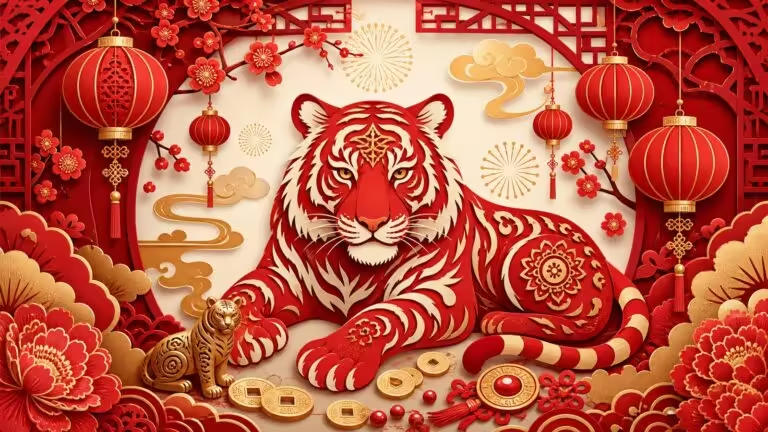
In many East Asian cultures, the Dragon stands as a particularly significant symbol of power, immense strength, and good fortune. Often associated with imperial authority, ancient wisdom, and benevolent forces, Eastern dragons offer a stark philosophical contrast to their fearsome Western counterparts. While Western dragons often embody destructive aspects, Eastern dragons are revered as auspicious beings, believed to bring prosperity, control natural elements like rain, and embody a dynamic, positive force. Consider the ancient tales of benevolent dragons bringing life-giving rain to parched lands, or guarding celestial treasures. Another notable symbol of fortune and protection in these cultures, often seen alongside the Dragon, is the mystical pixiu, frequently depicted as a winged lion, revered for attracting wealth and safeguarding its owner. This rich symbolic landscape is also reflected in the chinese zodiac, where animals like the dragon hold specific cultural meanings and influences, and other symbols like the koi fish also represent perseverance and good fortune.
Incorporating the Dragon into one’s personal collection can signify strength and good fortune. This emblem connects the wearer directly to these rich cultural narratives, serving as a direct link to ancient wisdom and personal affirmation. It echoes the significance of other animal symbols across cultures, such as the elephant symbolism in South Asian traditions, both acting as anchors for specific virtues and psychological touchstones.
From the Ankh to the Dragon, these cultural symbols are not merely historical relics; they are living testaments to humanity’s enduring quest for meaning, protection, and connection, offering a lens through which to view our own aspirations.
Mindful Adornment: Cultivating Intention with Your Jewelry
The true influence of any jewelry piece resides not solely within the object itself, but in the intention and mindfulness we bring to wearing it. By cultivating personal rituals, these chosen pieces transform from mere accessories into meaningful companions, deepening our connection and reinforcing their symbolic significance.
- Some individuals hold their pendant or mala beads, or even a meditation necklace, while setting morning intentions. This physical presence acts as a tangible anchor for hopes and goals.
- Others strategically select specific pieces for particular challenges. This might mean wearing a strength-symbolizing item before a difficult conversation or a calming stone during periods of heightened stress.
- Before adorning yourself, take a conscious moment to acknowledge the symbol’s inherent meaning and your personal connection to it.
- Periodically cleanse your jewelry, either physically or energetically, to refresh its purpose and reaffirm your bond with it.
These personal rituals transform adornments into active participants in one’s journey, making them more than just objects. They become personal reminders, much like how some might interpret an angel number as a sign guiding their path, offering a sense of connection and purpose. Exploring the broader psychology behind these cherished items reveals their true impact on our mindset and choices.
Curating Your Collection: A Journey of Self-Discovery
Curating a meaningful jewelry collection involves more than mere accumulation; it is a deliberate process. Select items that deeply resonate with your personal journey and core values. This becomes an insightful exercise in self-discovery and intention-setting, allowing each piece to narrate a unique chapter of your story. To guide this thoughtful process, consider these key principles:
- Reflect on Intentions: Consider what specific qualities or energies you aspire to cultivate—be it courage, inner peace, mental clarity, or a sense of protection.
- Explore Diverse Symbolism: Investigate the breadth of cultural symbols and their underlying meanings. Identify those that genuinely resonate with your personal aspirations and beliefs.
- Connect with Gemstone Energies: Understand the unique energetic properties traditionally associated with various gemstones. Assess if a particular stone’s qualities align with your current emotional or spiritual needs.
- Trust Intuition: Sometimes, a piece simply ‘feels’ right, a subtle calling. Allow this innate intuition to guide your selections, recognizing that this personal connection is paramount.
Ultimately, each carefully chosen piece transforms into a tangible representation of your inner landscape and aspirations—a wearable reminder of your unique path and core purpose.
Intentional Living: The Enduring Power of Meaningful Adornment
Ultimately, our exploration clarifies a deeper understanding: the true influence of jewelry and its connection to perceived fortune stems from how symbols and personal intentions interact to shape daily experience. These cherished pieces are not mere magic talismans. Instead, they serve as tangible anchors for deeply held values and aspirations. By reinforcing positive behaviors and self-belief, these objects can subtly influence perceptions and outcomes, thereby manifesting what is often interpreted as “good luck.” This perspective acknowledges the psychological and cultural framing that imbues these items with their enduring power.
Whether your preference leans towards ancient symbols, the unique energetic properties associated with natural gemstones, or modern interpretations of traditional designs, the core principle remains consistent: wear chosen pieces with awareness and genuine gratitude. When adorned with such intention, jewelry transcends simple ornamentation, evolving into a meaningful companion on life’s journey, fostering quiet confidence and a clear sense of purpose, and reflecting a conscious engagement with your personal narrative. For those seeking to further understand the protective qualities of specific gemstones, consider exploring the psychology behind powerful stones like onyx.