Tibetan Jewelry: Wearable Wisdom and Sacred Adornment

Tibetan jewelry operates at the intersection of material science and spiritual technology. It is defined by a dual functionality, serving as both physical protection and a mental anchor. Unlike conventional adornment focused on aesthetic display, these objects are engineered to influence the wearer’s physiological and psychological state.
This category of jewelry functions as a portable sanctuary. The mechanical and structural purpose of each piece outweighs its visual appeal, shifting the focus from how an object looks to how it facilitates a connection to specific internal states.
Historical Evolution
The development of these pieces follows the trajectory of Tibetan civilization. It is a record of resilience and an intimate relationship with the high-altitude environment of the plateau.
For centuries, these items have served as vital cultural markers. They are active spiritual tools rather than passive accessories, carrying a functional weight that dictates their form and material composition.
Pre-Buddhist Foundations
The origins of these designs trace back to the Bon religion. This indigenous belief system utilized natural elements and symbols for protection long before the arrival of Buddhism. When Buddhist philosophy reached the plateau, these existing practices were not discarded.
Instead, they were integrated into a new framework, adding layers of symbolic intent to traditional metalwork. Early artifacts utilized locally sourced minerals, reflecting the self-sufficiency of a nomadic population navigating a harsh landscape.
Regional Identity
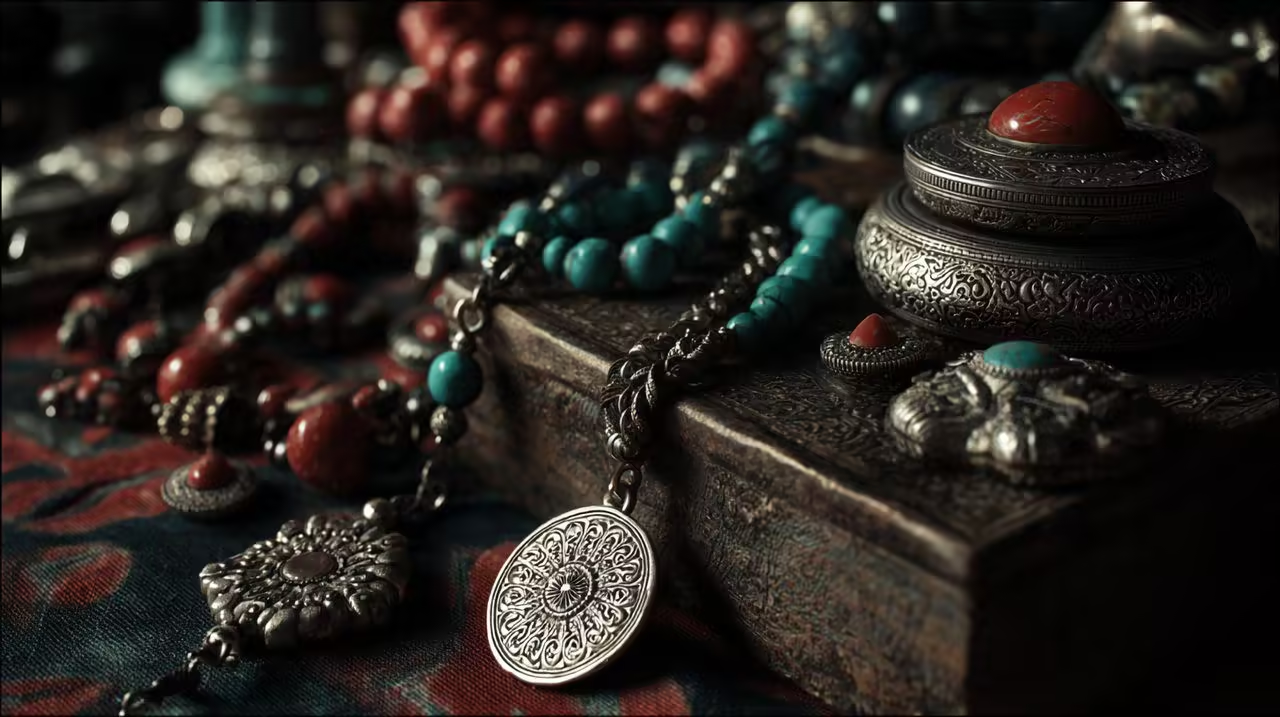
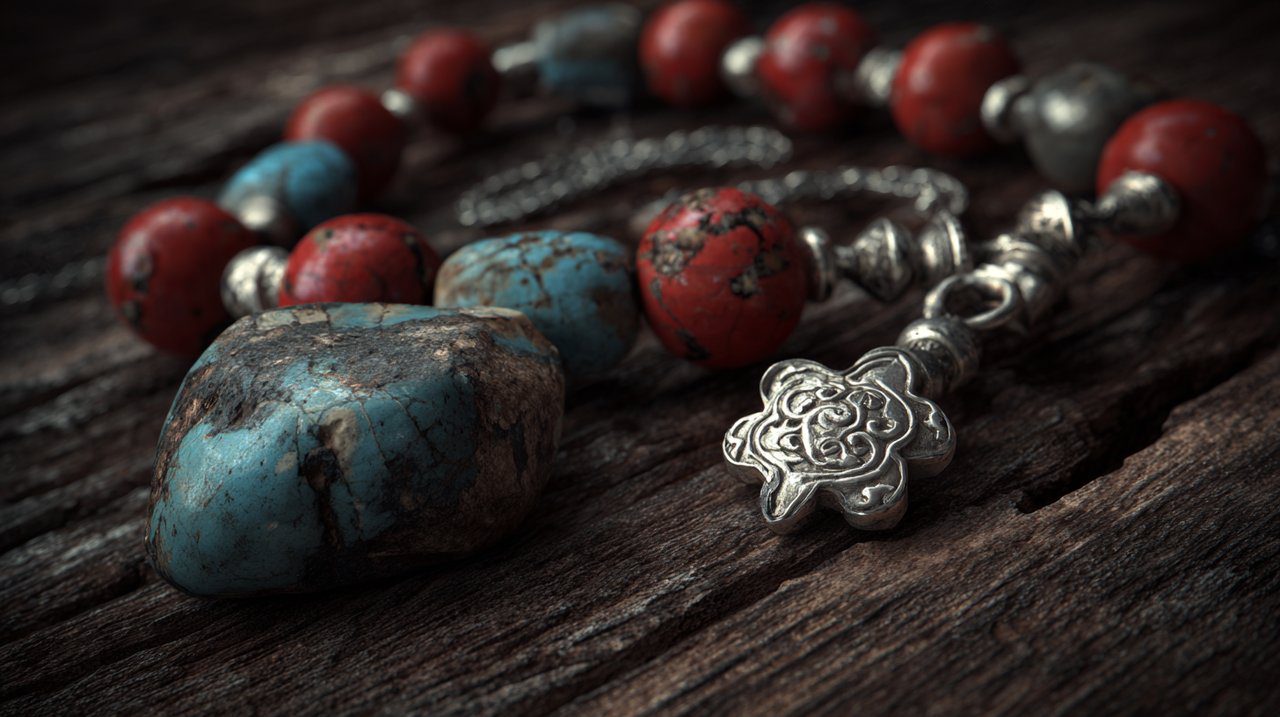
The diversity of the Tibetan plateau created distinct stylistic languages. In the Kham and Amdo regions, nomadic life favored bold, robust silverwork. These pieces are characterized by heavy settings of turquoise and coral, often doubling as portable stores of value.
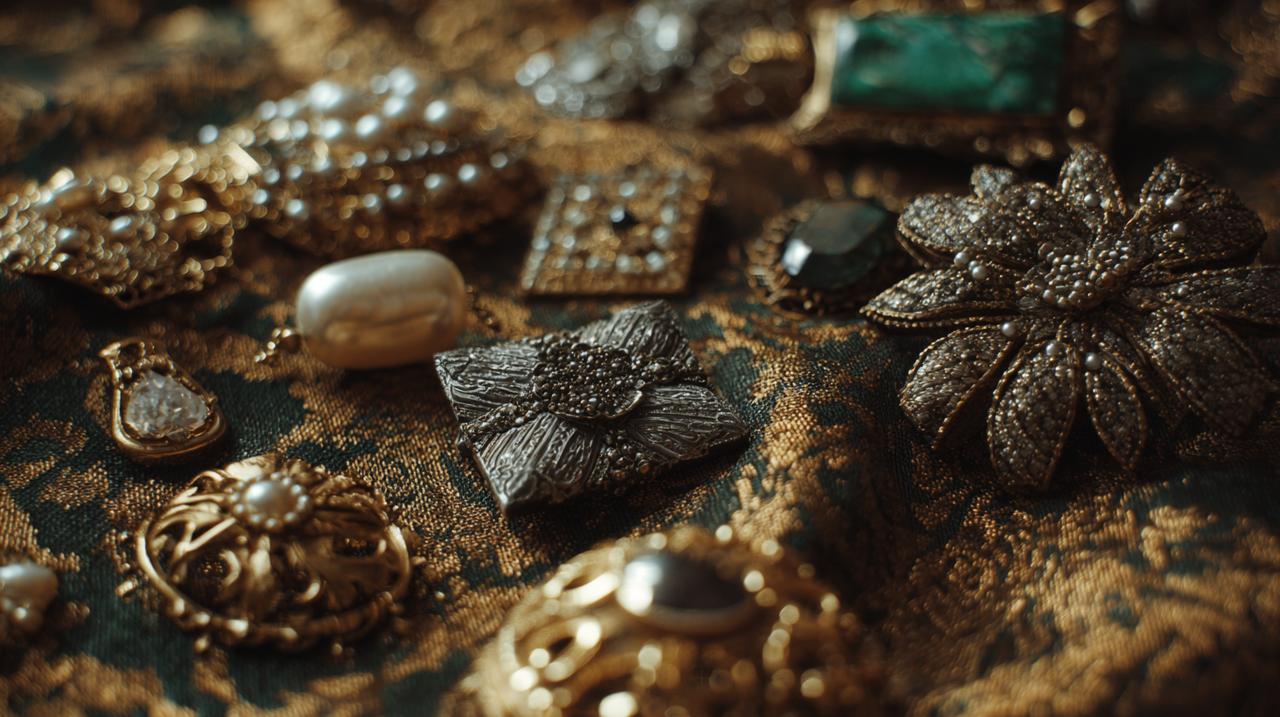
In contrast, the Lhoka style and Central Tibetan traditions reflect agricultural and courtly stability. These regions produced refined filigree and intricate granulation. These adornments marked specific rites of passage and tribal affiliations with surgical precision.
Design Philosophy
Selection in this tradition is rarely driven by superficial preference. Mindful pieces rely on a functional design framework where the architecture of each item demands participation from the wearer’s nervous system. Every texture serves a mechanical purpose.
Tibetan symbols redirect scattered attention inward. They function as a spiritual compass, providing a constant tactile reminder of specific intentions or vows. This internal focus distinguishes these pieces from Western jewelry which often prioritizes social signaling.
The auditory and tactile feedback is essential. The rhythmic metal-on-metal grind of tibetan prayer wheels vibrating through the palm pulls a distracted mind back to the present. The physical sensation of the object becomes the primary driver of its spiritual utility.
“In Tibet, jewelry is not merely an accessory; it is a portable shrine, a prayer in tangible form, a constant companion on the path to awakening.”
Materials and Craftsmanship
The utility of these adornments is linked to their constituent materials. Each element is selected for its physical properties and symbolic frequency. These earth-sourced materials are processed through techniques that prioritize the preservation of their energetic integrity.
Tactile Anchors
Choosing a piece is a practical calculation. You must match a mineral’s physical properties to the stressors of your daily routine. Dense materials provide immediate somatosensory feedback to counteract mental fatigue.
- Turquoise: Known as the sky stone, it signifies wisdom and protection. The cold, dense surface of a weathered stone provides a physical interruption to the momentum of stress.
- Red Coral: Representing life force, its naturally weathered texture provides a sensory reset. The irregular surface triggers mechanical receptors in the skin, anchoring the prefrontal cortex. These act much like root chakra stones to stabilize the wearer.
- Amber and Beeswax: These resins are valued for their thermal properties. Old beeswax develops a rich patina and retains a specific warmth that contrasts with the coldness of metal and stone.
The Mechanics of Dzi Beads
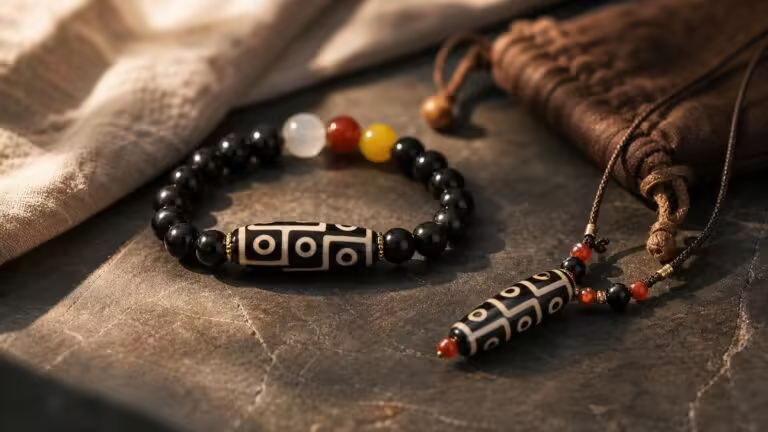
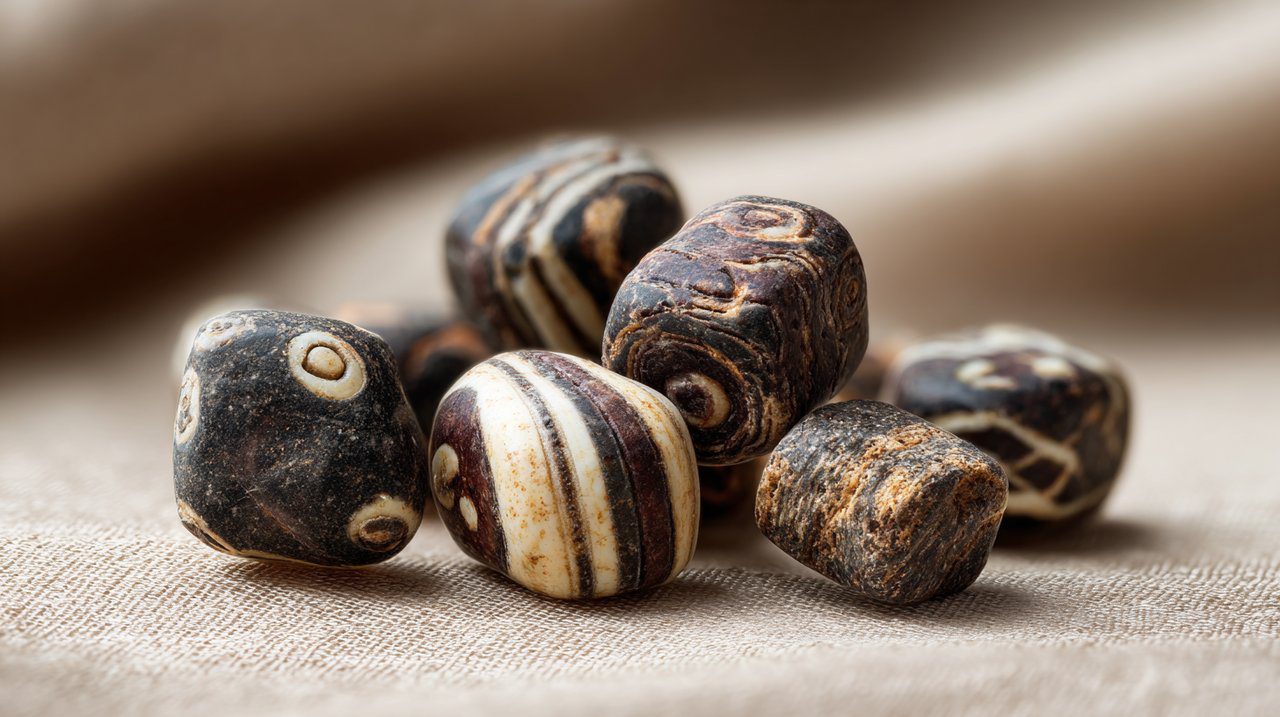
The dzi beads (gZi) occupy the highest tier of Tibetan beads. These agate cylinders are etched with patterns believed to possess protective properties. Identifying authentic pieces requires looking for physical markers of age and use.
Genuine ancient beads often show ‘cinnabar spots’—tiny red iron-oxide eruptions from within the stone—and ‘weathering marks’ that resemble small circular scales. Pressing a thumb against these textured surfaces grounds the nervous system. The cold resistance of the agate interrupts tension, converting adrenaline into focus.
- Nine-Eyed Dzi: This configuration is designed for comprehensive protection and the accumulation of merit.
- Three-Eyed Dzi: Represents the three stars of luck—happiness, honor, and longevity—and the three jewels of Buddhism.
Iron and Emotional Boundaries
When navigating high-conflict environments, items made of meteoric iron serve as fierce psychological boundaries. The high thermal conductivity of cold iron against the skin awakens inner resilience.
This physical jolt allows the wearer to maintain strict emotional distance from toxic interactions. The material acts as a literal heat sink for erratic emotional energy.
Silver and Purification
Silver is the primary metal used for its perceived ability to reflect negative energy. Tibetan silversmiths use techniques like repoussé and filigree to create complex motifs by hand. This manual process ensures that the metal carries the intention and skill of the artisan.
The Rabney Protocol
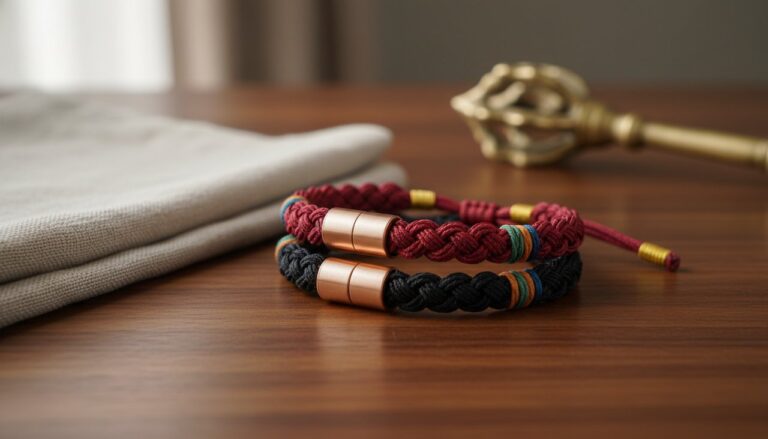
Consecration transforms raw materials into a grounding force. This protocol ensures the object is structurally prepared to anchor attention. While factory-made jewelry has a lightweight, sterile finish, these pieces are cast using a live fire to ensure the alloy cools with a heavy, cold tension.
During purification, practitioners treat the piece with Men-drub, a specialized herbal preparation. This creates a muted, matte luster. The resulting rough friction pulls awareness out of a racing mind and back into the body.
The Tim-pa protocol involves tightly packing the internal cavity of a piece with crushed minerals and botanicals. There is zero room for internal movement. This density provides immediate feedback when worn near the heart on a meditation necklace. The unyielding weight acts as a gravitational anchor to regulate breathing.
Symbols and Sacred Objects
Every curve and color in this tradition is a visual prayer. These motifs function as protective talismans and reminders of Buddhist philosophy.
Buddhist Iconography
- The Six-Syllable Mantra: Often engraved on rings, this mantra embodies compassion and is used to purify negative karma.
- Vajra (Dorje): A symbol of indestructibility and spiritual power, frequently worn as a potent pendant.
- Lotus Flower: Represents the emergence of clarity from the mundane world.
Gau Boxes
A Gau box is a portable amulet container. These silver or copper boxes are designed to hold sacred objects, such as blessed pills, relics, or mantras. The Gau acts as a personal shrine, channeling focus and providing a mobile spiritual sanctuary in a world of constant motion.
Practical Application
Selecting a piece should be an act of intention. Understanding the origin of the metalwork deepens the connection to its functional purpose. Authentic materials, such as the unique texture of old turquoise, are essential for the desired physiological feedback.
Purchase from vendors who provide clear provenance and guarantee authenticity. Supporting fair trade practices ensures the equitable treatment of artisans who maintain these specialized traditions.
Daily care involves recognizing the object’s sacred purpose. Store pieces separately to maintain their structural integrity. Periodically cleansing items near natural elements helps maintain their resonance.
Selection should match your immediate emotional load. On days of high volatility, the unyielding density of a heavy iron cuff provides a literal anchor for the nervous system. When the goal is meditative focus, the cool, matte texture of a Rabney-consecrated turquoise bead offers the tactile feedback necessary to maintain presence.