How Traditional Tibetan Clothing Works

On a sun-drenched street in Lhasa, a young Tibetan woman navigates the afternoon crowd. She wears a tailored chuba made of lightweight wool, paired with modern sneakers, a smartphone in hand. The heavy turquoise pinned to her hair catches the light, while the hem of her robe brushes against the pavement. This is not a static costume preserved for tourism; it is a living, adapting wardrobe that reveals how contemporary utility and ancient identity do not merely coexist, but actively shape one another.
To understand Tibetan attire is to look beyond the surface of vibrant colors and heavy ornaments. These garments are highly engineered systems of survival and identity. Each fold, fabric choice, and color is a calculated response to the extreme demands of the high-altitude environment, balanced with deep spiritual devotion.
The Functional Engineering of the Chuba
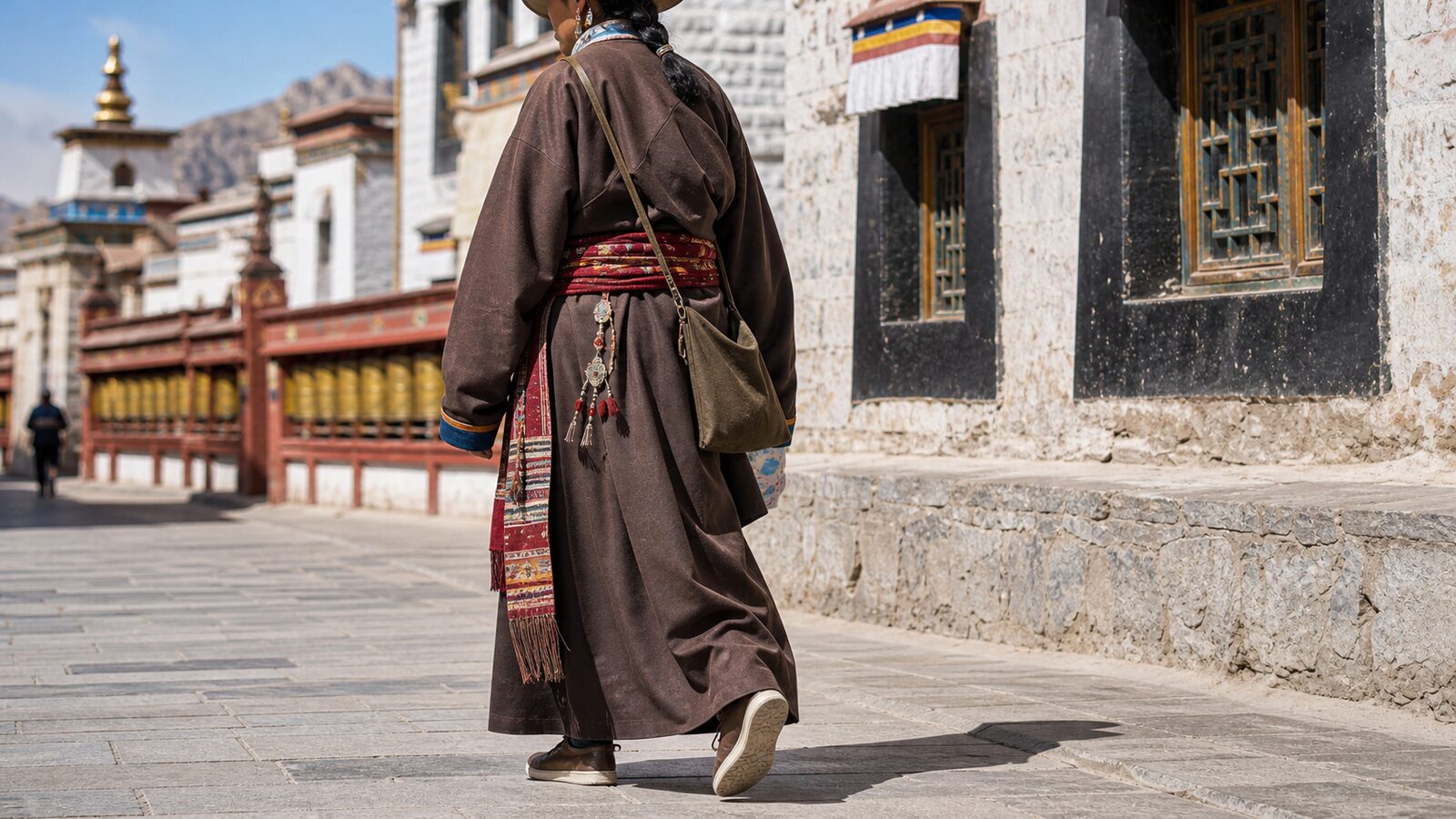
The defining piece of the plateau wardrobe is the chuba, a long, wide-cut robe wrapped around the body and secured at the waist with a sash. Worn by both men and women, this single garment historically served nomadic communities as a shelter, a sleeping bag, and a tool belt all at once, illustrating a philosophy of extreme efficiency.
The design is a masterclass in functional engineering. The loose cut and wide armholes allow for unrestricted movement, whether navigating steep mountain passes on foot or riding horseback. On the high-altitude plateau, where temperatures swing violently between sun and shade within minutes, the robe acts as an adjustable microclimate.
During the heat of the afternoon, the wearer slips one sleeve off to let it drape loosely, preventing overheating. At night, the heavy wool is pulled back over both shoulders, sealing in body heat against sub-zero winds. The pouch formed above the sash—known as the lha-ba—serves as a spacious pocket, allowing nomads to carry wooden bowls, dried cheese, and tools hands-free. Through this simple adjustment, the garment evolves from daily protection to active utility.
Materials of the High Altitude
Plateau survival dictates the material palette. Traditional garments rely almost entirely on resources harvested from local livestock: sheep wool, thick yak hair, and durable animal skins.
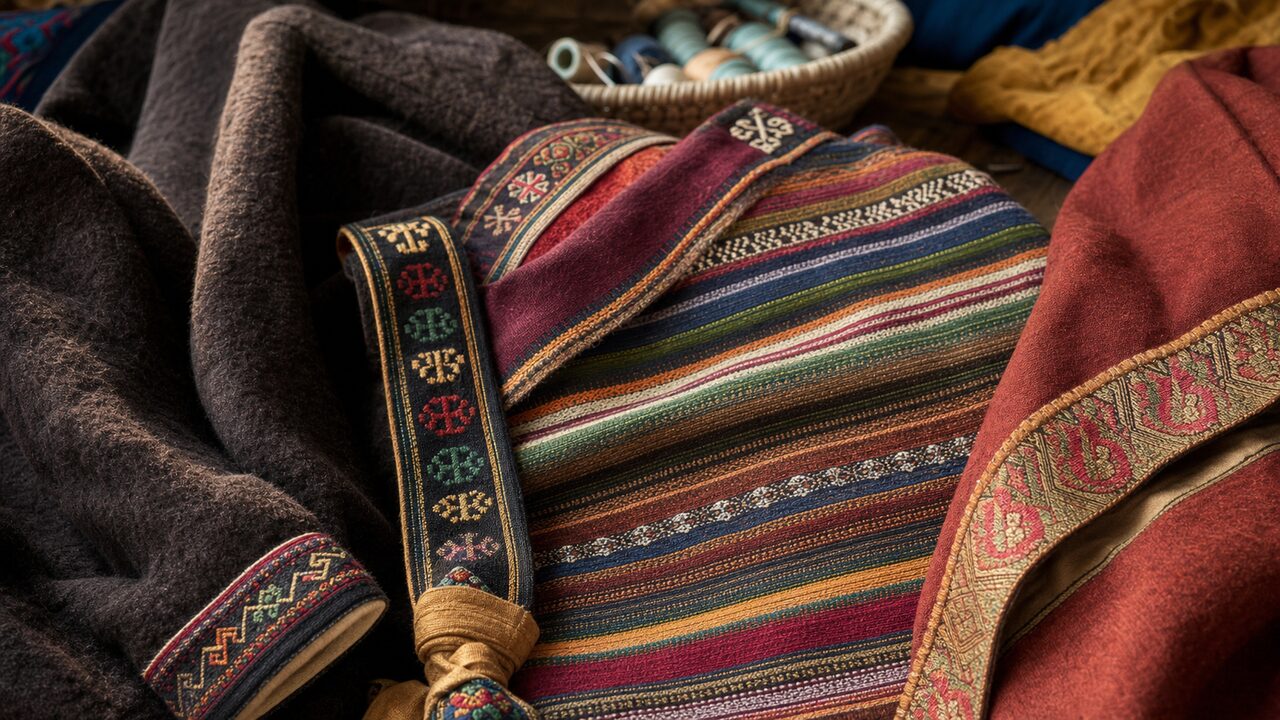
The transformation of these raw materials is a labor-intensive craft. Wool is hand-spun and woven into specialized textiles like pulu, a dense, water-resistant fabric that blocks the biting winds of the high valleys.
- Wool and yak fiber set the daily baseline. They insulate, breathe, and shrug off light rain.
- Sheepskin and leather take over where wool surrenders, in the sub-zero nights of the nomadic ranges.
- Silk and brocade arrive by trade, not by herd, and are saved for festivals and ceremony.
- Metalwork and stones do double duty. They anchor garments against high winds while signaling lineage.
What Tibetan Clothing Colors Mean
Color on the plateau is a silent system of communication. Rather than arbitrary aesthetic choices, colors are deeply tied to the surrounding landscape and Buddhist cosmology, acting as visual markers of a shared worldview.
Each hue carries specific geographic and spiritual weight. Deep blues represent the expansive sky, while white symbolizes purity and auspicious beginnings. Warm yellows signal spiritual devotion and are closely tied to monastic spaces.
The geometric patterns on collars and hems, such as the endless knot, are not merely decorative. They serve as subtle cultural markers, anchoring the wearer within a specific lineage and community history without needing spoken words.
Regional Styles of Tibetan Dress
The vastness of the plateau has naturally led to distinct regional styles. Kham, Amdo, and Central Tibet each dress to the demands of their own geography, trade routes, and ways of living.
- Kham: Inhabitants of this eastern region wear bold, expressive styles. Their heavy robes are trimmed with thick fur and accessorized with large silver, coral, and turquoise jewelry, reflecting a history of active trade and movement.
- Amdo: The northern nomadic pastures require raw utility. Amdo dress emphasizes durable sheepskin robes designed to withstand physical labor and high winds.
- Central Tibet: Centered around agricultural and urban hubs like Lhasa, this style favors refined tailoring, lighter fabrics, and the pangden—a colorful striped apron worn by married women.
Above these regional silhouettes sits another, quieter map. The jewelry a family wears records its wealth, its marriages, and the trade routes its ancestors once traveled.
Adornment as History and Trade
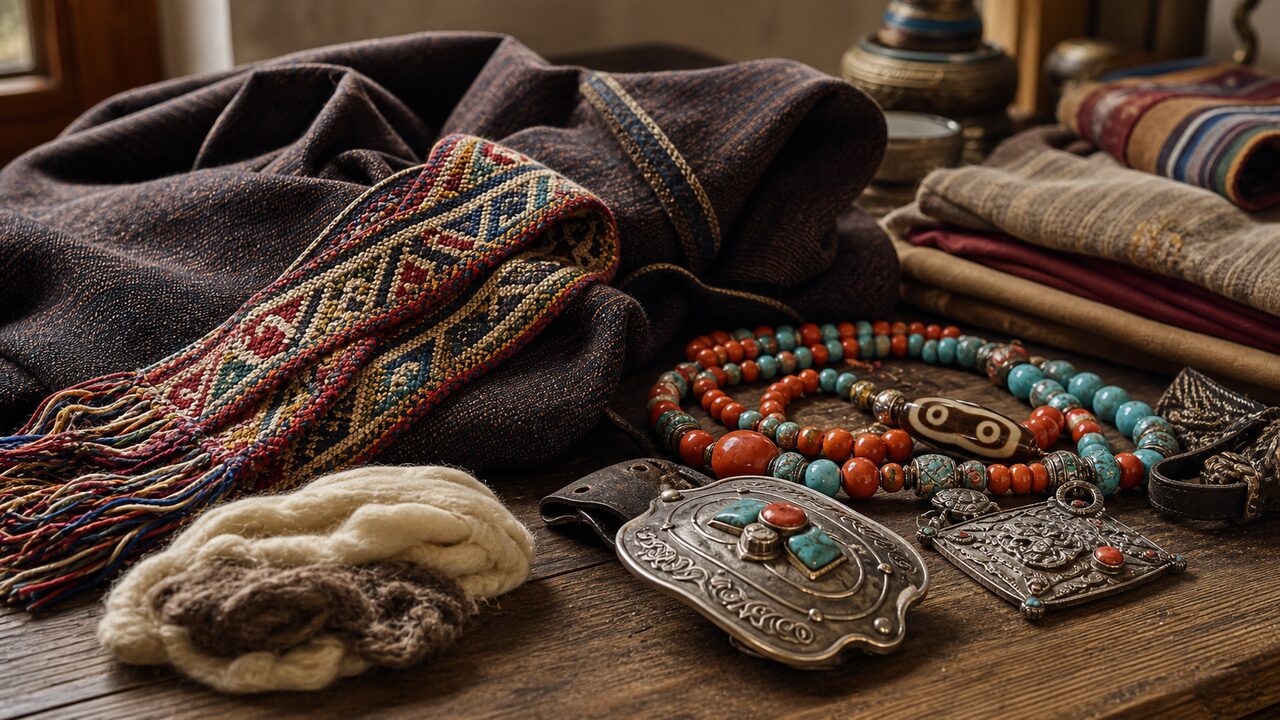
Jewelry on the plateau is never merely decorative; it is a portable ledger of family wealth, regional trade, and protection.
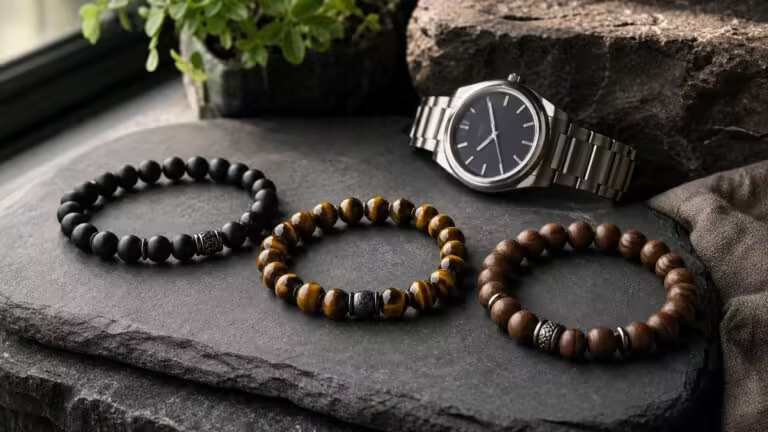
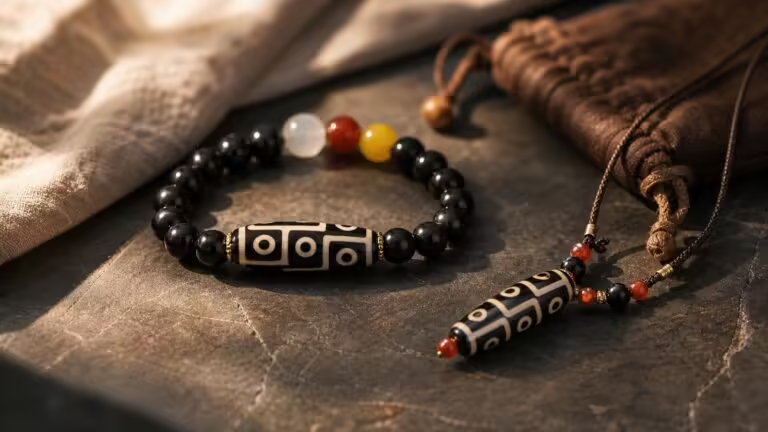
Among these ornaments, Dzi beads are the most prized. These etched agate beads, passed down as ancestral heirlooms, are worn close to the body. They are valued not just for their rarity, but as physical connections to family lineage and protective warding. In daily wear, they are often paired with turquoise and coral beads, threaded on heavy cords that keep the precious stones secure during physical labor.
In contrast, the appearance of the Pixiu—a mythical Chinese creature associated with wealth—in modern Tibetan silverwork highlights centuries of cross-cultural trade. Rather than a native Tibetan symbol, the Pixiu entered the regional aesthetic via the ancient Tea Horse Road, where Han and Tibetan merchants exchanged tea, horses, and artisanal metalwork. Over generations, Tibetan silversmiths integrated this symbol into heavy silver belts and protective amulets, blending Han economic symbolism with traditional Tibetan metallurgy.
Beyond Adornment
While lay clothing celebrates regional variety and family status, monastic attire serves the opposite purpose: the systematic erasure of individual ego in favor of communal unity.
The monastic wardrobe is highly standardized. It consists of the shamtab (a pleated lower robe) and the zen (a long maroon shawl draped over the shoulder). During formal rituals, monks wear the chogu, a yellow ceremonial robe.
The deep maroon and saffron colors are deliberate choices, symbolizing renunciation and the heat of spiritual practice. By stripping away personal ornaments and regional markers, this attire shifts the focus entirely to discipline and shared path.
Modern Adaptation
Tibetan fashion is not frozen in time. Modern designers are actively adapting traditional structures to fit the realities of fast-paced urban environments.
A contemporary chuba might swap heavy, hand-woven wool for lightweight linen, or feature a cropped silhouette that removes the traditional bulk. Young Tibetans frequently pair classic silver buckles with denim, preserving their heritage in a way that feels natural rather than performance-based.
The shift is visible at the workshop level as well. The atelier Norlha, based in a nomad community in Amdo, spins khullu—the fine undercoat of the yak—into scarves and tailored pieces that keep the plateau’s materials while dropping the bulk of the old silhouette. The logic of the chuba survives in such work; only the weight has changed.
Analyzing Tibetan Garments
To read a Tibetan garment, treat it as evidence. Each layer answers a specific question, and most of the answers can be checked with your own hands and eyes:
- Hold the fabric to strong light to judge the weave. A well-made pulu shows almost no pinholes of light, and that density is exactly what makes it windproof and water-resistant on the open plateau.
- Read the fibers to tell daily wear from ceremony. Matted yak hair, worn sheepskin, and a sash darkened by use mark a working robe; silk brocade trim and unworn metalwork mark a festival one.
- Trace the stones to map old trade. Coral cannot come from a plateau a thousand kilometers from any ocean, so every coral bead testifies to long-distance exchange, just as a Pixiu motif in the silverwork points back to the Tea Horse Road.
- Check the closures and cut to date the garment. A hidden zipper, a cropped hem, or a linen blend behind a traditional cross-collar tells you the design has already crossed into the modern wardrobe.
References