Hamsa and Evil Eye: Their Protective Roles

A stone dropped into a still pond creates ripples that reach the far shore. Similarly, a look—a gaze heavy with envy—can disturb the quiet waters of our inner peace. For generations, we have sought ways to steady these waters, turning to the protection symbol as a way to anchor our intentions against the unseen winds of life—those moments of sudden doubt or the weight of a stranger’s gaze.
Each amulet we choose is like a piece of driftwood found on a beach; it carries a story of survival and a shape carved by time. Among these, the hamsa and the Evil Eye stand as silent sentinels, revered for their ability to shelter our personal energy from the storms of the outside world.
Ancient Echoes in the Modern Quiet
This section explores how ancient emblems remain relevant by addressing the unchanging human need for security. Just as a tree deepens its roots to withstand the gale, we find ourselves returning to forms that have survived the rise and fall of empires. These shapes are not merely decorations, but physical manifestations of a desire to feel secure in the face of the unknown.
Before we look closer at these symbols, it is helpful to see them as part of a larger map of energy practice. This understanding is explored more deeply in our guide on Spiritual Bracelet Meaning: Your Complete Guide to Energy Practice. When we look at these symbols, we see a shared human story of resilience.
We are vulnerable, yet we are also capable of creating beauty that shields us. It is a quiet dialogue between our inner fears and our outer strength. By giving form to our intentions, we find a way to walk through the world with a bit more grace.
The Human Drive for Spiritual Shelter
The impulse to seek shelter through symbolic objects flows across every border and through every era. From the earliest markings on cave walls to the silver charms of today, we have always tried to call upon a power greater than our own. We craft objects to deflect harm and invite balance back into our days.
This attraction begins with a simple realization: not all shadows are cast by things we can touch. Our defenses, therefore, must also exist in the realm of the spirit. Consider the feeling of walking into a crowded room and sensing a sudden chill; it is in these moments that we reach for a tangible reminder of our own boundaries.
Historical traditions suggest that our minds seek a physical anchor for invisible fears, much like a climber reaches for a sturdy root. By turning a shapeless anxiety into a tangible form, we regain a sense of agency over our own internal landscape.
There is a soft ritual in the act of choosing a symbol. When a piece feels right against the skin, it is as if a missing piece of our own energetic puzzle has finally been found. It offers a steadying breath in a world that rarely stops to rest.
The Distinction Between the Hand and the Eye
While these two often walk together, they are like the sun and the moon—related, yet performing different roles in the sky. To understand their presence is to recognize how they address different aspects of our wellbeing. One looks outward to deflect, while the other remains open to receive.
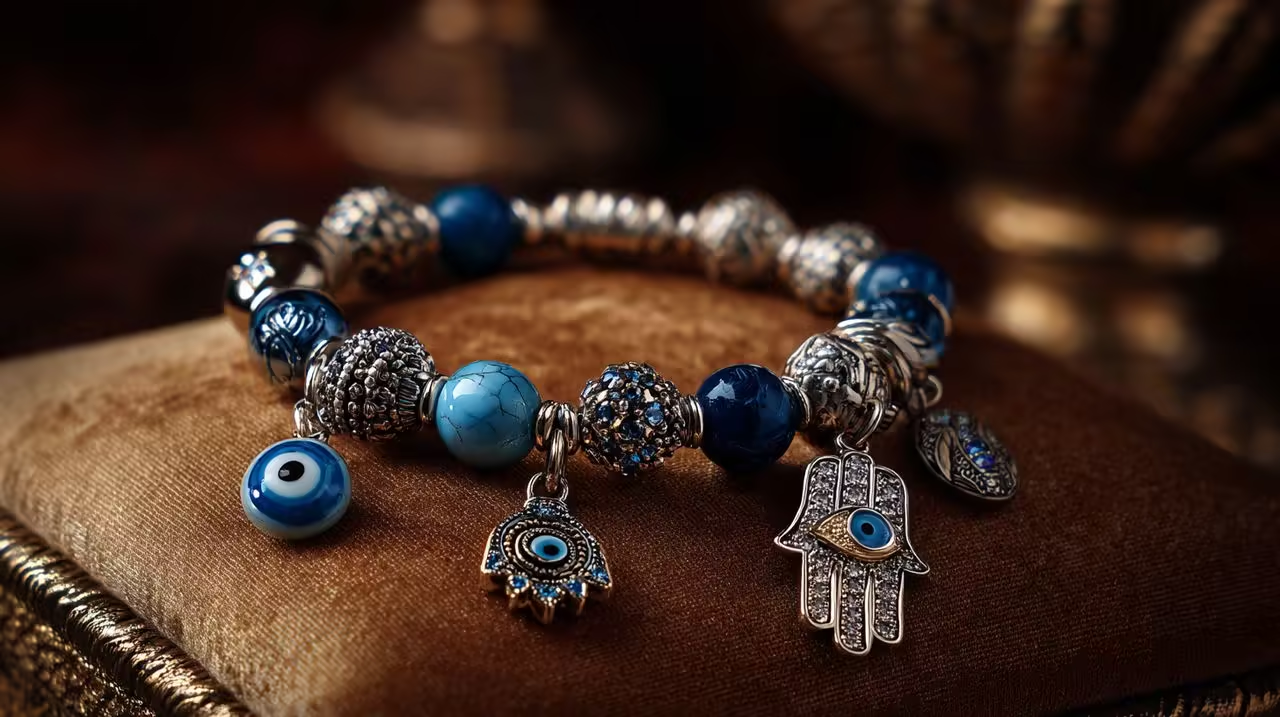
The Evil Eye is not the object itself, but a belief in the power of a glance. It is the idea that envy or ill-will can travel through the eyes and disturb another’s fortune. The blue eye we see on a nazar bracelet is a mirror, designed to catch that heavy gaze and reflect it back or absorb its weight before it reaches the soul.
The Hamsa Hand, however, is a gesture of peace and divine presence. While it certainly wards off negativity, its primary nature is one of blessing. It is the open palm of a friend, offering strength and calling forth the good things that are meant for us.
Where the eye is a shield that deflects, the hand is a vessel that receives. Together, they create a complete circle of defense and invitation. Understanding this balance allows us to move through life with both caution and an open heart.
The Hamsa Hand as a Silent Guardian
The Hamsa Hand is a form that feels familiar to the soul, acting as a universal symbol of hope across diverse cultures. Known to many as the hand of fatima or the Hand of Miriam, it represents a universal reaching for the divine. It is an ancient shield that whispers of patience and grace.
Its presence across so many different faiths suggests that, at our core, we all speak the same language of peace. It is a reminder that we are never truly walking alone in our search for safety. The hand stands as a testament to our collective desire for a benevolent watchful eye.
Historical Pathways of the Palm
The journey of the Hamsa began long ago in the fertile lands of Mesopotamia. From those early sands, it traveled through Phoenician and Egyptian cultures, changing its artistic dress but never its heart. According to historical records, it has always been a sign of a benevolent power watching over the traveler.
In various traditions, it took on the names of sacred women—Fatima, Miriam, Mary—embodying the protective and nurturing qualities of the feminine spirit. It is a symbol that has been held tight in the palms of people facing uncertainty for thousands of years. This shared history acts as a bridge between different beliefs.
Scholars sometimes view these shared symbols as the “folkloric glue” of the ancient world. They suggest that the Hamsa provided a common ground where different cultures could find a shared sense of safety. Our need for protection is often stronger than the walls we build between us.
The Meaning in the Anatomy of the Hand
Every line of the Hamsa is like a leaf on a tree, designed with a specific purpose. Its structure is a map of spiritual intention:
- The five fingers: Often represent the senses, suggesting a shield that covers every way we experience the world.
- The symmetrical shape: Usually featuring two thumbs, this represents the balance and harmony we strive to achieve within ourselves.
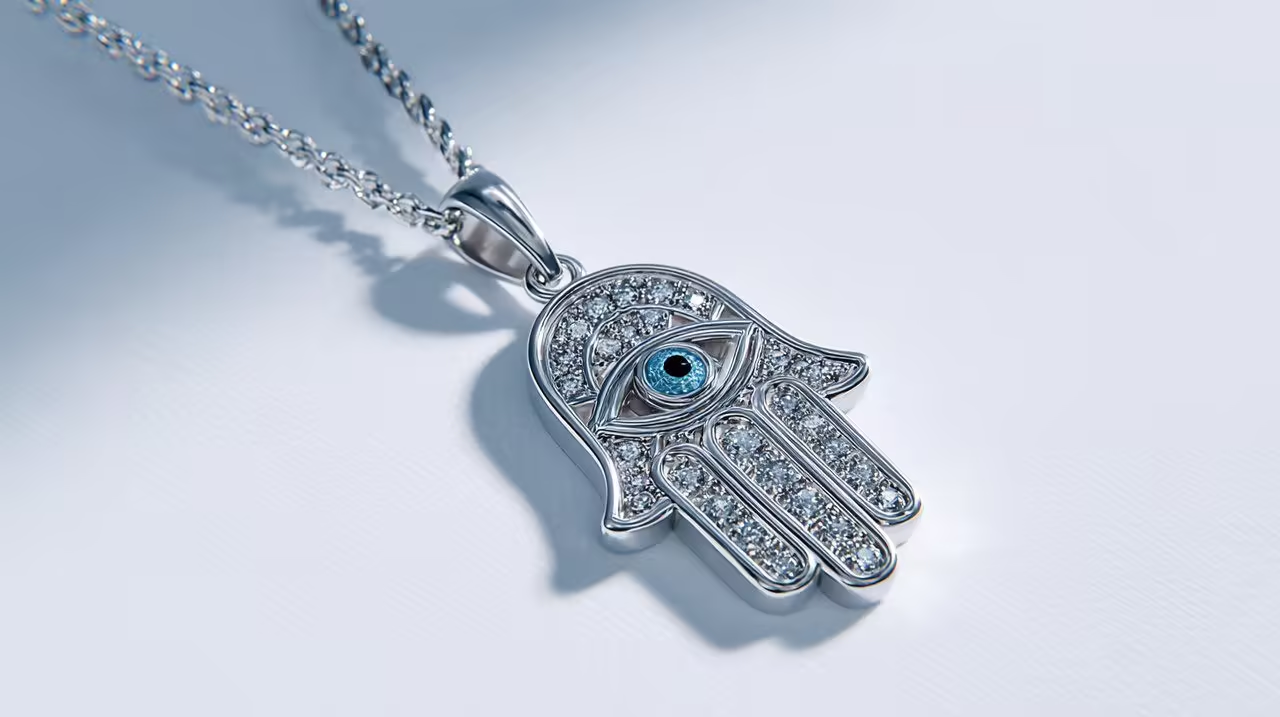
- The central eye: Acts as a vigilant scout, looking out for the ripples of envy before they can reach the heart.
When these elements combine, the Hamsa becomes more than a shape. It becomes a focus for our own inner resolve to stay centered and clear. It is a reminder to keep our own energy gathered and protected.
Directional Energy of the Upward and Downward Hand
The way the Hamsa faces is like the direction of the wind; it changes the way the energy moves. An upward-pointing Hamsa acts as a firm wall. Imagine a moment when you must say “no” to a draining request or a toxic environment; this is the energy of the upward hand, signaling a boundary that negative forces cannot cross.
A downward-pointing Hamsa is like a hand reaching into a stream to gather water. It is focused on manifestation and the grounding of blessings. This orientation is about letting the good things of the earth flow into your life, fostering growth and abundance like a garden in spring.
Choosing a direction is a way of checking in with your own needs. Do you need a shield today to protect your peace, or do you need a cup to hold the rain? Both are necessary for the soul to thrive and remain resilient.
The Gaze of the Evil Eye
This section examines the ancient fear of the malevolent gaze and the colorful ways humans have sought to deflect it. The fear of a heavy look is a very old story, told from the Mediterranean to the mountains of Asia. It is the recognition that human emotion, especially envy, has a weight that can be felt.
We have all felt the discomfort of a look that feels too heavy or a compliment that leaves a chill behind. This belief reminds us to walk with a certain humility. In some cultures, it was thought that boasting too loudly would invite the “eye” of fate to balance the scales. It is a lesson in maintaining a quiet, inner equilibrium.
Deflecting the Unseen Ripple
The blue eye symbol is a fascinating countermeasure. Its vibrant colors—the deep indigo of the night sky and the bright white of the stars—are meant to draw the attention of a wandering gaze. It acts as a distraction, catching the evil eye protection energy so that it never reaches the person wearing it.
Anthropologists sometimes describe this as a social mechanism that encourages community harmony. By acknowledging the power of envy, people were reminded to be mindful of their neighbors. It is a spiritual way of asking us to look at one another with kindness rather than competition.
In our own lives, wearing this symbol is a way of saying that we value our peace too much to let it be disturbed by the passing thoughts of others. It is a boundary made of glass and color, reflecting away what does not belong to us.
The Strength of the United Symbols
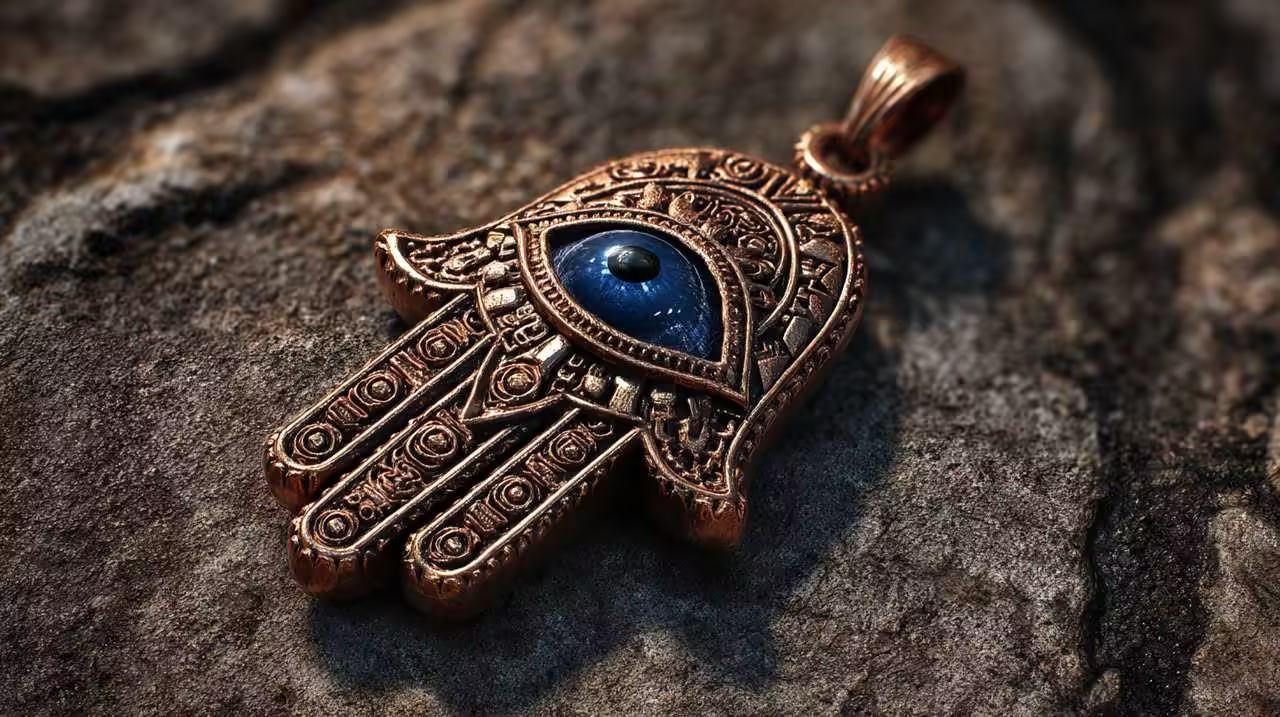
When the Hamsa and the Eye are joined, they form a partnership of great depth. This is not a redundant pairing; it is a layering of different types of wisdom. One provides the broad roof of divine grace, while the other watches the gate to ensure only light enters.
The eye tucked into the palm of the hand suggests that even in our most blessed states, we must remain aware. It is the union of being open to the world and being protected from its sharper edges. This balance is why so many find comfort in these combined forms, as they offer a complete sense of spiritual security.
Walking with Ancient Wisdom
The power of these symbols doesn’t come from the metal or the stone, but from the intention we breathe into them. In a world that often feels loud and chaotic, they are small islands of stillness. They remind us that we have the right to protect our light and keep our inner waters calm.
Whether you choose a charm for your wrist or a symbol for your home, let it be a reminder to return to your own center. These ancient patterns are like the stars—they don’t change the path, but they help us find our way through the dark. They are companions on a journey toward deeper self-awareness.
As you move through your day, remember that the most powerful shield is a heart that remains at peace. Use these symbols as gentle reminders that you are held in a tradition of protection that is as old as the mountains and as constant as the tides.