Dzi Beads: Meaning, Benefits, and Best Practices for Wear

The Silence of Himalayan Stone
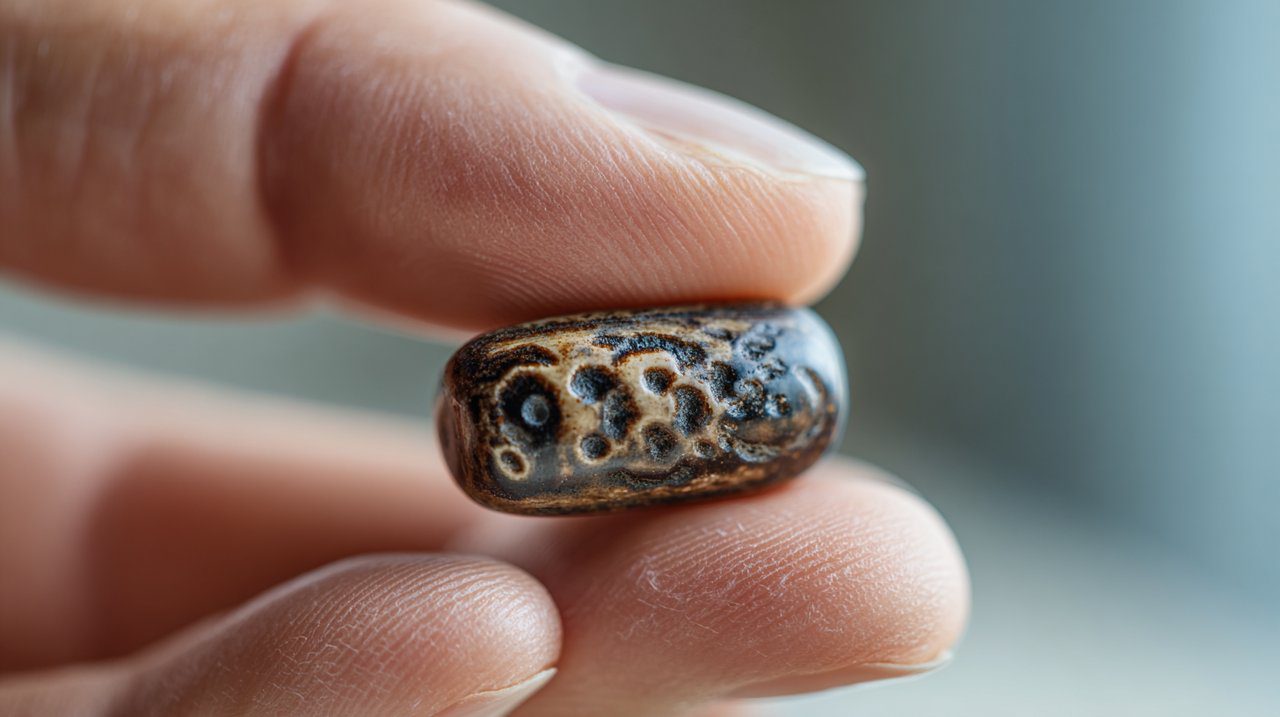
Holding a Tibetan Dzi bead for the first time is a sensory experience. The stone feels remarkably cool against the skin, carrying a weight that seems to ground the restless mind. In the quiet corners of a monastery, amidst the lingering scent of sandalwood smoke, these beads are not just ornaments but silent companions in a long spiritual lineage.
These distinctive stones are tangible echoes of high-altitude heritage. Deeply embedded in the culture, they are considered some of the most potent ancient spiritual practices still alive today. For centuries, they have been passed down as family heirlooms and sacred protectors within the tradition of spiritual jewelry.
Origins and the Art of Etched Agate
The history of Dzi beads is a blend of archaeological fact and soaring legend. Findings from the Changthang Plateau suggest a lineage reaching back over 2,500 years. This timeline aligns them with the sophisticated bead-making traditions of the Indus Valley Civilization.
While legends speak of beads falling from the heavens as celestial gifts, science reveals a masterful ancient technology. Authentic Dzi beads are crafted from natural chalcedony or agate, a material often grouped with root chakra stones for its stabilizing presence.
The iconic white patterns are the result of a precise two-stage process. First, a paste made from alkaline plants—historically species like Salsola kali (barilla plant)—was applied to the stone’s surface. This was followed by meticulously controlled high-temperature firing.
This heat-induced chemical reaction changed the stone’s micro-structure, creating opaque white designs that permeate deep into the agate. It is a testament to early Himalayan ingenuity, where chemistry and art merged to create permanent sacred geometry. This same appreciation for material can be found in the history of the red agate bracelet. Red Bead Bracelet: Symbolism, Style, and Significance
Decoding the Eyes for the Modern World
The ‘eyes’ on a Dzi bead are not merely decorative. They represent a symbolic language intended to guide the wearer’s intention. In a modern context, these patterns can function as powerful mental triggers for navigating high-pressure environments.
- One-Eyed Dzi: Symbolizes clarity and singular focus. In a frantic workplace, it serves as a visual anchor for Cognitive Reframing, helping you strip away distractions to see the core objective.
- Three-Eyed Dzi: Represents the harmony of body, mind, and spirit. It is traditionally linked to prosperity and health, acting as a reminder to maintain balance between professional ambition and personal well-being.
- Nine-Eyed Dzi: The most revered pattern, representing total protection and achievement. It serves as a comprehensive psychological anchor for those undergoing major life transitions or seeking significant personal growth.
6- Six-Eyed Dzi: Known for alleviating sorrow, this pattern is a perfect tool for a Pattern Interrupt. When caught in a cycle of stress or negative self-talk, touching the bead can break the momentum and restore calm.
This system of meaning mirrors how we interpret other symbols in gemstone meanings. Just as one might look for guidance in angel numbers, the eye count of a Dzi bead provides a specific focal point for the day’s intentions.
The Function of a Psychological Anchor
The primary benefit of a Dzi bead lies in its role as a functional tool for mindfulness. Rather than a passive charm, it acts as an active partner in your daily routine. Its physical presence on your wrist or neck creates a tactile loop between your body and your goals.
When you feel overwhelmed by a deadline, the cool touch of the agate serves as a physical trigger. This sensory input prompts you to take a deep breath and return to a centered state. It is a practical application of ancient wisdom for modern mental fortitude.
This use of jewelry as a focal point is a global phenomenon. We see similar intentions in the use of an evil eye bracelet or the Pixiu charm. Each culture uses these items to bridge the gap between internal aspirations and the external world.
Authenticity Markers and Visual Evidence
Navigating the Dzi market requires an eye for specific physical details. Trustworthiness is built on evidence, not just abstract claims of age. Collectors look for unique visual signatures that modern mass-production cannot easily replicate.
Natural Weathering Patterns (Feng Hua Wen) are essential markers of antiquity. These are irregular, crescent-shaped or ‘horse-hoof’ marks on the surface. Unlike artificial cracks, these are smooth and rounded at the edges, formed by decades of friction and environmental exposure.
You may also observe Cinnabar Spots (Zhu Sha Dian). These are not actually made of cinnabar but are iron oxide inclusions (hematite) within the agate. Over years of contact with skin oils and body heat, the iron (Fe2+ to Fe3+) oxidizes further, making these deep red or black spots more vivid and visible through the stone’s surface.
These details are the hallmarks of cultural heritage jewelry. A genuine piece will feel oily or ‘waxy’ to the touch—a patina developed through generations of handling and wear.
Wearing and Daily Integration
Integrating a Dzi bead into your life is a matter of personal alignment. Many prefer direct skin contact to maximize the tactile connection. Whether worn as a pendant or as part of a Tibetan mala, the key is consistency.
Deciding which wrist to wear your bead on can depend on your specific energetic goals for the day. Which Hand for Your Crystal Bracelet: A Guide to Energetic Flow
To maintain the bead’s clarity, periodic cleansing is recommended. You can use the smoke from Tibetan prayer wheels incense or leave it under the soft light of a full moon. These rituals are less about the stone and more about refreshing your own commitment to the intentions the bead represents.
A Living Heritage
Dzi beads are more than artifacts from a lost time. They are living testaments to the human need for protection and focus. By wearing one, you are participating in a lineage that stretches back to the very roots of Himalayan culture.
In a world of fast-moving trends, these stones offer something enduring. They invite you to slow down, feel the cool weight of the agate, and reconnect with the quiet strength within yourself. What intention will your bead hold for you today?