Cinnabar Jewelry: A Legacy of Artistry and Allure

Certain objects carry a signal that transcends their physical form, acting as quiet echoes of historical wisdom. Cinnabar jewelry is precisely one of those. With its unmistakable deep red hue and meticulously carved surfaces, it functions as more than a mere accessory. It represents a tangible link to ancient traditions and a study in human ingenuity. This focus on intention and the energy we carry is a central theme in my broader analysis of Spiritual Bracelet Meaning: Your Complete Guide to Energy Practice, where I examine how wearable art interacts with our mental states.
What I find most compelling about cinnabar is the logic of its transformation. It begins as mercury sulfide, a raw mineral. Through a demanding, multi-stage process of grinding and suspension in natural lacquer, it undergoes a complete metamorphosis. This is not a sudden magic trick but a controlled artisan process that yields a stable, lustrous polymer. It serves as a prime example of how raw earth can be refined into an object of lasting psychological value.
The Meticulous Evolution of Lacquer Art
Creating these pieces is less about assembly and more about the slow, deliberate layering of time. During the Ming and Qing dynasties, this technique reached its peak, as artisans realized that layering provided a unique depth for storytelling. Understanding the sheer effort involved helps us appreciate why these items have remained status symbols for centuries.
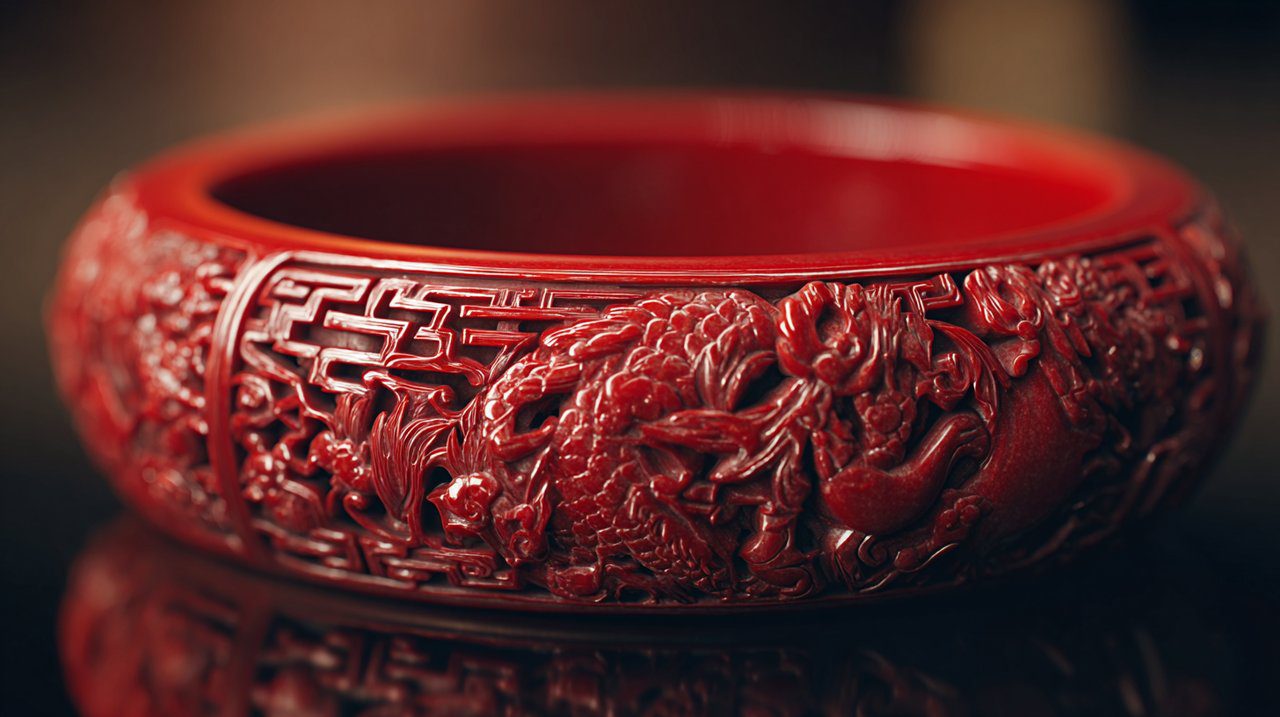
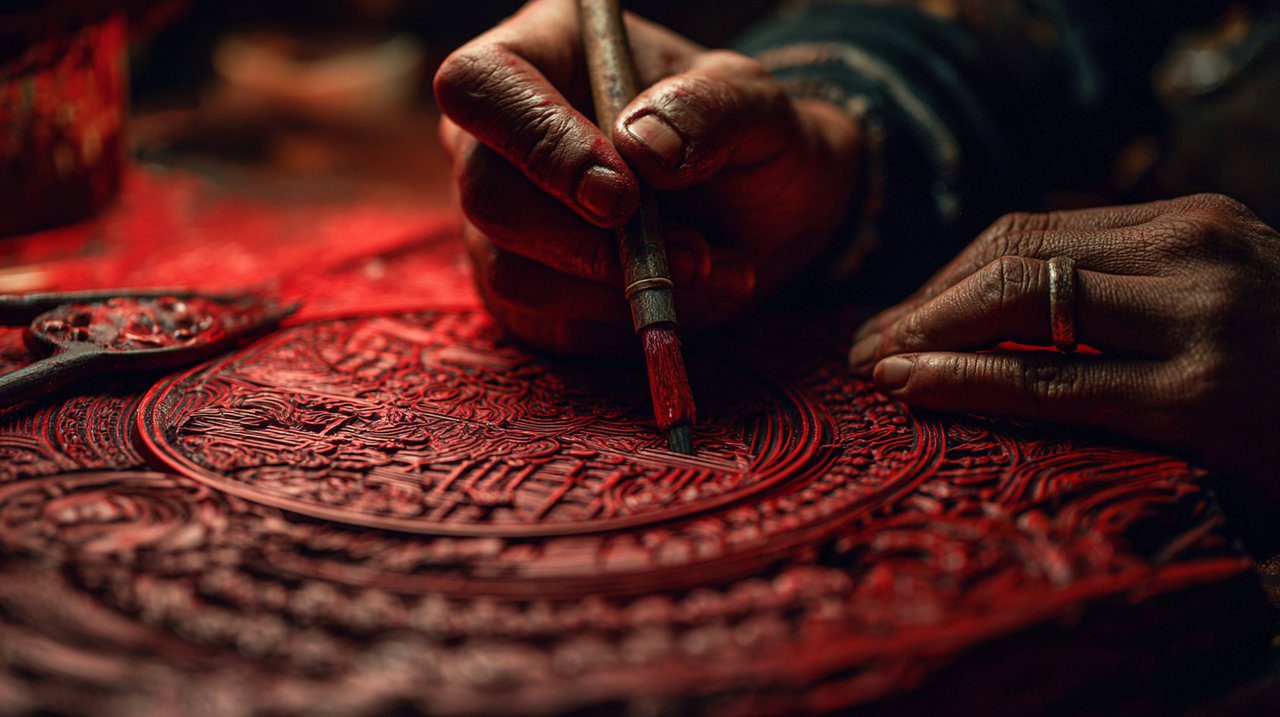
The journey starts by grinding raw cinnabar into a fine powder, which is then blended with the sap of the lacquer tree. The core technique requires building up hundreds of paper-thin layers onto a base of wood or metal. This is a test of patience; achieving the necessary thickness to allow for deep carving can take several months. Each layer must dry and be polished before the next is applied, making the final piece a literal physical record of time.
A common concern involves the safety of the mineral given its mercury-based origin. In high-quality lacquerware, the natural resin acts as a powerful, permanent binding agent. Once the lacquer cures and hardens into a durable polymer, it effectively seals the cinnabar powder. This creates a finished surface that is entirely safe for daily wear, turning a volatile mineral into a stable piece of history. This level of material mastery is comparable to the precision seen in authentic Tibetan bracelets.
Once the lacquer reaches the ideal thickness, the true narrative begins. Master carvers use specialized knives to etch symbols into the surface. These are not random decorations; they are often auspicious archetypes meant to communicate specific values to the observer. The skill required to turn a flat surface into a three-dimensional story shows a level of focus similar to the intricate patterns found on dzi beads.
Consider the psychological reminders embedded in these common symbols:
- Dragons: These represent cosmic energy and the internal authority needed to lead one’s own life effectively.
- Phoenixes: Often appearing with the dragon, they symbolize the resilience required for personal renewal and growth.
- Lotus flowers: A visual metaphor for mental clarity, reminding the wearer that beauty can emerge from challenging environments.
- Mythological figures: These characters often embody archetypes of protection, with stories frequently linked to the Chinese zodiac and ancestral wisdom.
Color Psychology and the Arousal Effect of Red
The magnetic pull of the color red is not accidental; it is rooted in evolutionary biology and how our brains process visual stimuli. This specific shade of cinnabar has commanded attention across every major civilization. It is a color that the human eye is literally hard-wired to prioritize.
From a psychological perspective, red is a primal trigger associated with energy, vitality, and physiological arousal. It increases heart rate and heightens alertness. When you wear cinnabar, you are utilizing this biological response to create a visual anchor. It serves as a constant nudge to maintain high energy and focus on your immediate goals.
Historically, cinnabar artifacts were reserved for high-ranking officials. This was not just a display of wealth, but a strategic use of color psychology to project authority and command the attention of the room.
I view this practice as a form of positive suggestion. Just as the red agate properties are often linked to grounding and physical confidence, the bold red of cinnabar acts as a cognitive cue. It is a tool for the mind that happens to look like an ornament for the body. This explains its enduring popularity even in our modern, rational era.
Modern Integration of Ancient Intention
While the roots of this craft are thousands of years old, the aesthetic remains strikingly relevant for the contemporary observer. Its bold texture and matte finish offer a distinctive contrast that fits well within a minimalist wardrobe. It provides a tactile connection to the past without feeling like a costume.
For those who value craftsmanship over mass production, cinnabar offers a unique human element. Every indentation on the surface carries the weight of the carver’s intent. Whether you are wearing a single pendant or using a strand of mala beads for meditation, the appeal lies in the human effort required for creation. Owning such a piece is an act of preserving a specific artistic heritage.
To ensure the longevity of these items, practical maintenance is required. Because the lacquer is an organic polymer, it should be kept away from harsh chemicals or extreme heat. A gentle wipe with a soft cloth is all that is necessary to preserve the finish. This mindful care ensures that the legacy of the piece remains intact for the next generation.
A Bridge Between Past and Present
Cinnabar jewelry stands as a bridge between historical artistry and modern psychological practice. It offers a window into ancient skills and demonstrates how specific materials can carry layers of meaning across centuries. It serves as a reminder that true beauty often results from the intersection of natural elements and disciplined human skill. Choosing to wear cinnabar is an invitation to acknowledge the subtle, powerful influences of the objects we keep close to our skin.