How a Wounded Tree Becomes the World’s Most Precious Wood

Aloeswood begins with an apparent contradiction: the pale wood of a healthy Aquilaria tree has little of the dark resin that made agarwood, oud, and Japanese jinkō famous. The valued material develops only after the tree responds to injury and biological stress.
The finest grades, including the Japanese category known as kyara, have long occupied an exceptional place in incense culture. Their value comes from rarity, aromatic complexity, provenance, and grading—not from every piece of dark wood being inherently precious.
Where Aloeswood Comes From
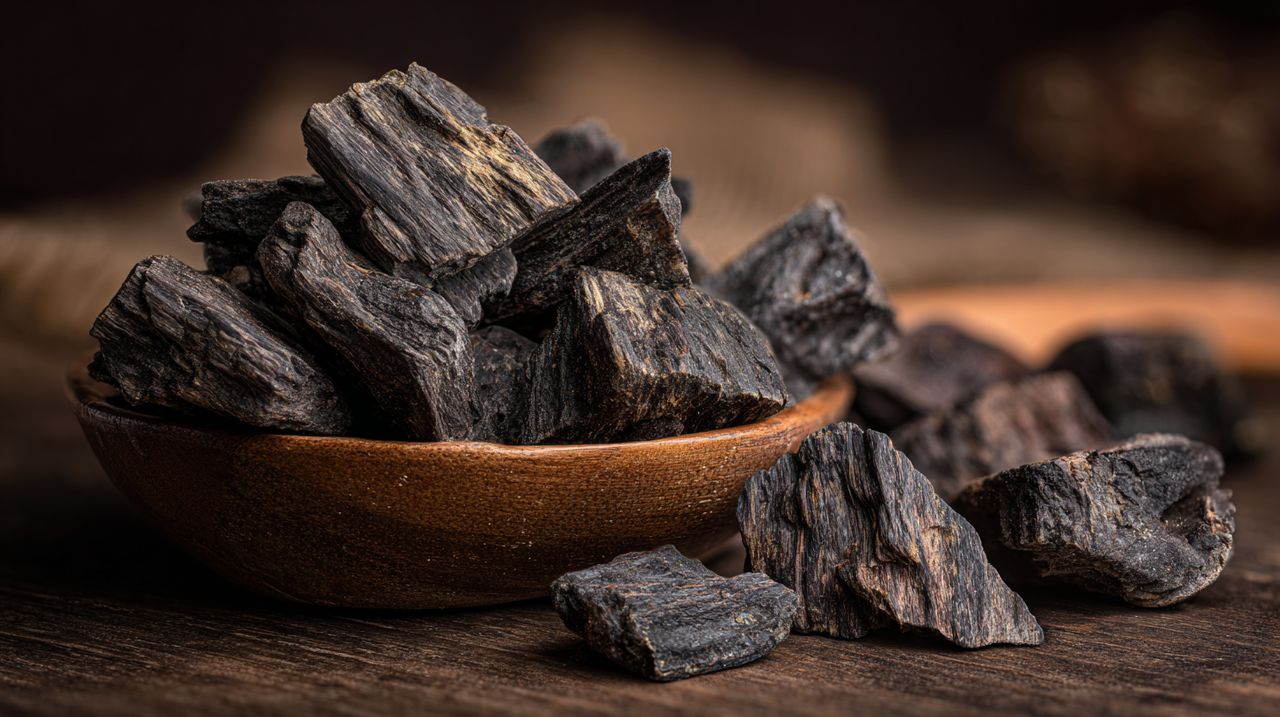
Aloeswood, agarwood, and oud are common names for resin-impregnated wood produced by trees in Aquilaria and related genera. The resin forms as part of the tree’s defense response, typically around wounded or stressed tissue.
How a Tree Forms Agarwood
- The wood is injured. In nature, damage may come from insects, broken branches, weather, or other physical stress.
- Microorganisms enter the wound. Researchers have identified many fungi and bacteria associated with resin formation; it is inaccurate to reduce the process to one mold species.
- The tree deposits defensive compounds. Resin accumulates in and around the affected wood, gradually changing its color, density, and aroma.
- The material matures unevenly. Resin concentration varies within a tree, so harvested wood must be sorted rather than treated as one uniform grade.
A peer-reviewed review of agarwood induction describes physical wounding, biological inoculation, and other methods used to stimulate this defense response. It also notes that different methods and microbial cultures can produce localized and inconsistent results.
Natural Formation and Cultivated Induction
Wild formation is slow and unpredictable. Plantation growers can instead drill or wound cultivated trees and introduce biological inoculants, encouraging resin to form around controlled sites. This does not make cultivated agarwood “fake”; it describes a different route to the same kind of plant defense response.
Nor does inoculation guarantee a particular grade. Species, tree health, induction method, time, resin distribution, and post-harvest sorting all influence the result. Wild material can be poor, while carefully managed plantation material can be aromatic and useful.
This distinction matters for sustainable sourcing. Aquilaria malaccensis entered CITES Appendix II in 1994, and the remaining Aquilaria species and Gyrinops species were added in 2004. The CITES listing history hosted by Species+ explains the trade controls and their application to agarwood products.
For a buyer, “plantation-grown” is only the beginning of a sourcing claim. Ask for the botanical species when known, country of origin, whether the material was cultivated or wild-sourced, and any documentation required for cross-border trade. Sustainable sourcing depends on traceability and legal harvest, not the word “natural” on a label.
Why Aloeswood Commands High Prices
Agarwood is often called the “wood of the gods” or the “diamond of wood,” but market value varies enormously. Ordinary plantation chips, carving stock, distilled oil, old wild wood, and named incense grades are not interchangeable.
The transformation is real, but the market story needs restraint: injury can lead to resin, yet rarity, quality, and price must still be demonstrated piece by piece.
Aloeswood Across Religious Traditions
Agarwood has moved through trade routes as incense, perfume material, oil, wood, and beads. Different communities gave it different meanings; a shared material does not imply one universal spiritual doctrine.
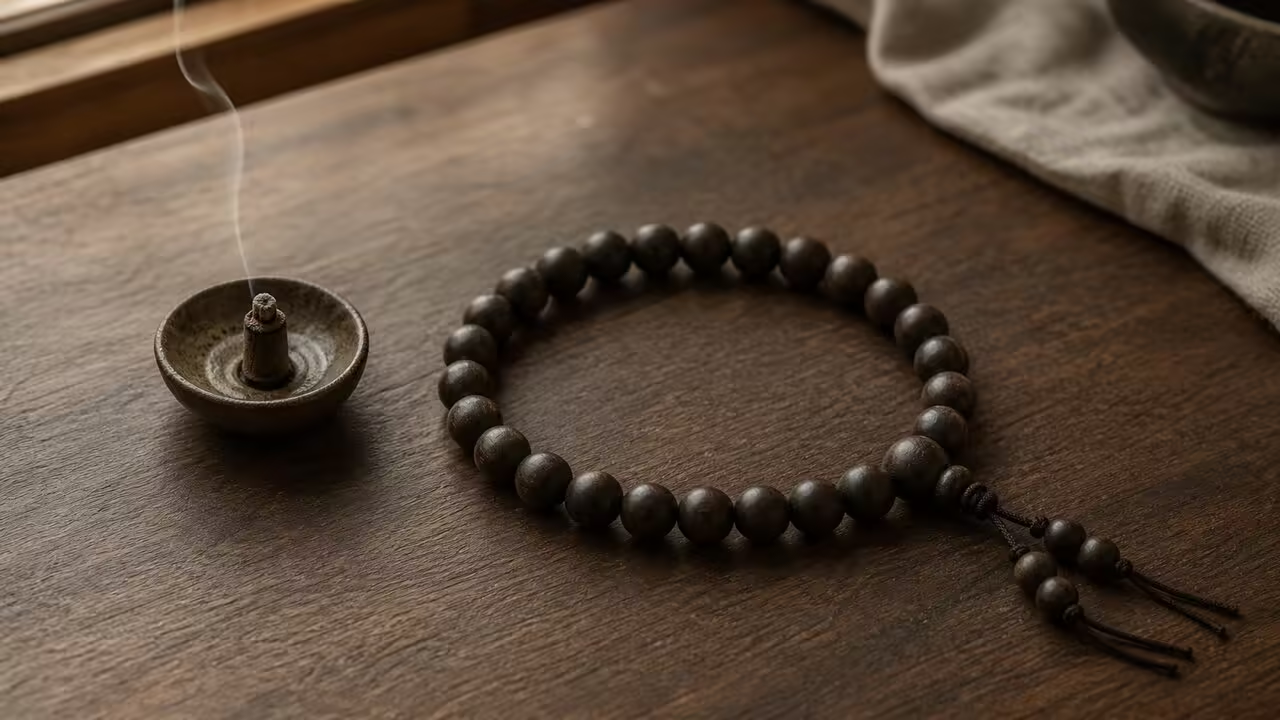
- Buddhist contexts: Practitioners may offer incense before an image, scent a temple space, or count recitations with wooden beads. The fragrance can mark the transition into formal practice.
- Islamic contexts: Oud is used as incense and personal fragrance, including in domestic hospitality and religious occasions. Practice varies across communities and regions.
- Hindu contexts: Fragrant wood or incense may be offered during puja, waved before a deity, or used while preparing a space for prayer.
- Christian texts and traditions: “Aloes” appears in biblical passages connected with fragrance, garments, and burial preparation. Historical identification of every ancient plant name is not always certain, so it is better treated as textual tradition than modern product certification.
Words such as “grounding,” “purifying,” or “elevating” describe religious interpretation and personal experience. They are not measurable properties of the wood. The observable mechanism is simpler: scent and repeated gestures can become cues that help a practitioner return attention to a chosen ritual.
Using Aloeswood in Personal Practice
Meditation and Mindfulness
A restrained fragrance can serve as an olfactory anchor: notice the aroma, recognize when attention has wandered, and return to the breath or recitation. This is a practice technique, not a medical treatment.
Prayer beads or an aloeswood bracelet add a tactile cue. Moving one bead at a time can support counting, while wearing the strand afterward may act as a quiet reminder of the intention set during practice. The object does not create the intention on its own.
Fragrance and Well-Being
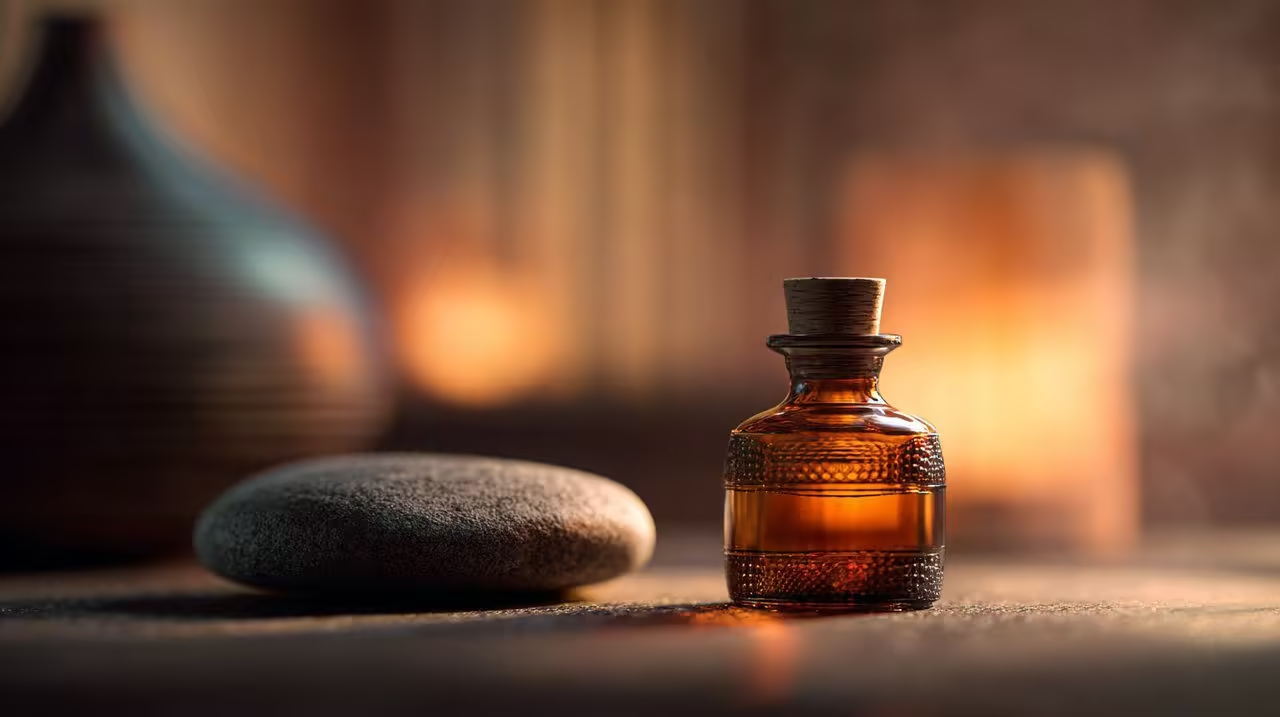
Some people find oud or agarwood aromas calming because they associate the scent with quiet spaces and repeated rituals. That subjective response should not be presented as a promise to treat anxiety, insomnia, or another health condition.
Essential oil also differs from solid wood. Distillation, dilution, aging, storage, and added fragrance materials all change what reaches the nose. A soft opening or a strong first impression cannot authenticate an oil by itself.
How to Evaluate Aloeswood Claims
| Check | Useful evidence | Weak evidence |
|---|---|---|
| Identity | Botanical species or a clear statement when species is unknown | “Sacred wood” with no material name |
| Origin | Country, cultivated or wild source, and seller traceability | “Ancient forest” or “rare” without documentation |
| Trade compliance | Relevant CITES or import documentation when required | A sustainability logo with no issuing body |
| Wood construction | Natural grain continuing through drilled holes and cut surfaces | Dark coating confined to the surface |
| Oil composition | Ingredient disclosure, dilution level, batch information, and analytical documentation for high-value purchases | Judging authenticity only by color or first smell |
Do not rely on a home burn test. Combustion behavior varies with chip size, moisture, resin content, and added materials, and burning an unknown product creates unnecessary smoke. For valuable wood or oil, documentation and specialist analysis are stronger evidence than a dramatic sensory trick.
A Material Shaped by Context
Aloeswood sits at the intersection of plant defense, skilled grading, international trade, fragrance culture, and religious practice. That complexity is what makes it interesting. It also explains why a single label—wild, cultivated, kyara, oud, spiritual, or authentic—never tells the whole story.
The most responsible way to approach it is to separate three questions: how the resin formed, how the material was sourced, and what meaning a community or individual gives it. Keeping those questions distinct protects both the reader and the material from exaggerated claims.
Frequently Asked Questions
What is aloeswood and how does it form?+
Aloeswood, agarwood, and oud refer to resin-impregnated wood formed when Aquilaria or related trees respond to injury and biological stress. Many fungi and bacteria may be involved; the process should not be attributed to one mold species. Resin accumulates unevenly around affected tissue over time.
Why is aloeswood considered the 'diamond of wood'?+
The phrase describes the exceptional value of certain agarwood grades, but prices vary widely. Species, resin concentration, aroma, provenance, age, grading, and legal sourcing all matter. Ordinary plantation material and rare named incense grades are not interchangeable.
What is the spiritual significance of aloeswood?+
Aloeswood has cultural and religious importance in Buddhist, Islamic, Hindu, and some Christian textual traditions. It may be used as incense, fragrance, an offering, or prayer beads. Ideas such as grounding or purification describe belief and personal practice, not scientifically measurable powers of the wood.
How is aloeswood used in practical applications?+
Aloeswood is used as incense, fragrance oil, carved wood, and beads. In meditation, aroma or touch can serve as an attention cue. These uses should not be presented as medical treatments. Buyers should prioritize species and origin information, legal sourcing, ingredient disclosure, and documentation over home scent or burn tests.