How to Style Traditional Tibetan Clothing for Everyday Elegance

How does one bridge the gap between ancient spiritual heritage and the demands of a modern, metropolitan lifestyle? Dressing is rarely just about aesthetics; it is a silent dialogue between our inner identity and the external world. Traditional Tibetan clothing, characterized by its distinct structural logic and architectural silhouettes, offers a unique opportunity to express this connection without appearing as if one is wearing a costume.
Before examining these specific strategies, it is helpful to view them within a larger context. This analysis is part of our comprehensive resource on , where we explore the intersection of traditional heritage and contemporary design.
Philosophical Foundations of Zang-Rong
Balance is not an accident of aesthetics; it is the deliberate result of cultural synthesis. Achieving a successful Tibetan style pairing requires an understanding of ‘Zang-Rong’ (藏融). This concept represents a state of integration where the wearer respects the cultural origin while adapting it to a new environment.
Tibetan garments are functional vessels of spiritual belief and communal identity. When we integrate a piece into a modern outfit, we are not just adding fabric; we are inviting a specific energetic resonance into our personal narrative. This philosophy dictates that every choice—from a heavy wool robe to protective jewelry—should serve to ground the wearer’s presence.
“Style is a reflection of internal equilibrium. Zang-Rong teaches us that true elegance occurs when the weight of tradition stabilizes the fluidity of the modern moment.”
To achieve this balance, we analyze six strategic areas: structural layering, textile authenticity, symbolic accessorizing, color harmony, silhouette contrast, and spiritual intentionality. These methods ensure that daily Tibetan wear remains sophisticated and relevant.
Structural Layering Techniques
The foundation of any silhouette lies in its structural integrity. The chuba is the definitive anchor of Tibetan attire. Originally intended for the nomadic life of the plateau, its functional design translates effectively into urban environments, providing a dignified frame for simpler contemporary pieces.
Consider these specific combinations to achieve a precise look:
- The Urban Minimalist: Layer a neutral-toned, sleeveless chuba over a black cashmere turtleneck and slim-fit charcoal trousers.
- The Modern Professional: Use a shortened chuba vest over a crisp white button-down, cinched with a leather belt to define the waist.
- The Evening Silhouette: Drape a silk-lined chuba over a monochromatic slip dress for a look that balances volume and grace.
This approach allows the chuba to function as a statement piece that commands attention through its structure rather than its novelty. It transforms a basic ensemble into an intentional and grounded outfit.
Material Authenticity and Craftsmanship
Materials serve as the physical medium for spiritual expression. In Tibetan culture, fabric choice is rarely accidental; each material carries a specific history. By selecting authentic textiles, you refine the outfit from a mere visual arrangement to a tactile experience of heritage.
Look for specific elements that denote craftsmanship and how they can be reimagined:
- Nambu: Traditionally used for robust robes, this hand-woven wool can be tailored into a structured modern blazer or a matte-finish vest.
- Brocade (Gochen): These silk fabrics feature motifs like the eternal knot. Use them as subtle linings or decorative panels to add a reflective quality to evening wear.
- Pangden: The striped patterns of the traditional apron offer a geometric contrast when reimagined as a scarf or a side-stripe on wide-leg trousers.
A single piece of high-quality brocade acts as a focal point for the entire look. Avoid cluttering the visual field; allow one exceptional textile to tell the story while keeping the surrounding garments understated and clean.
Symbolic Accessorizing Strategies
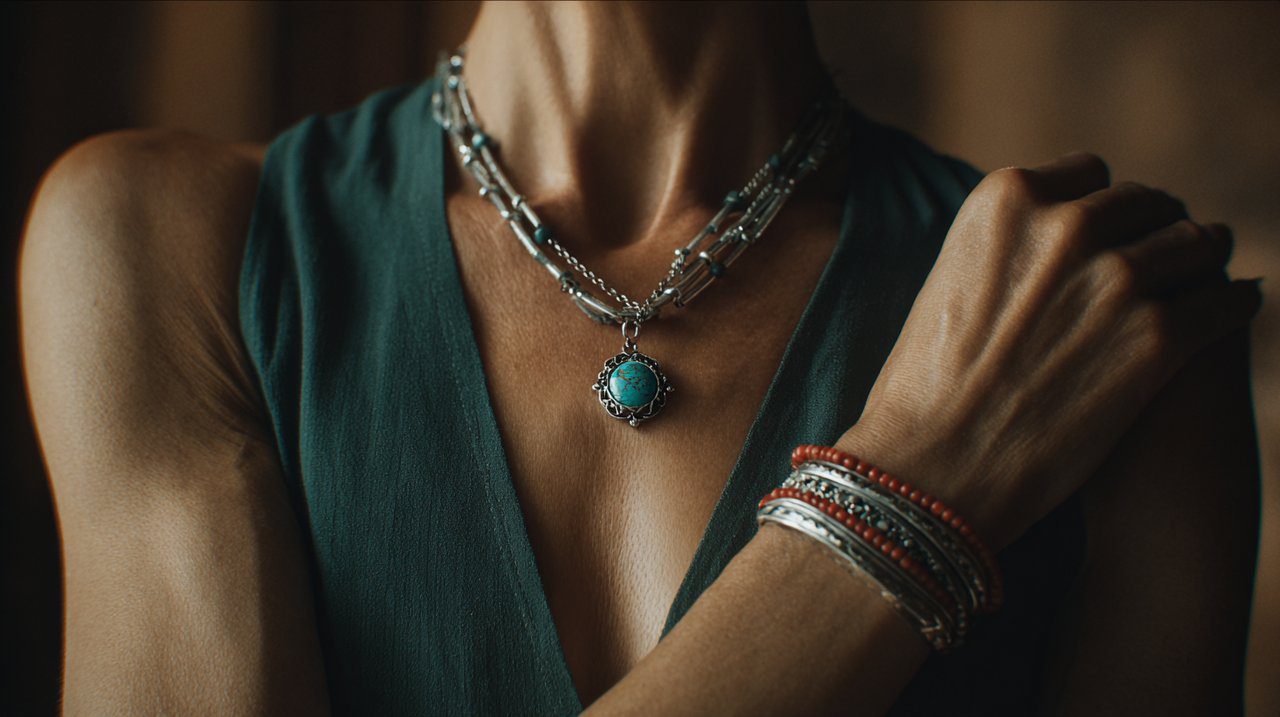
Tibetan jewelry functions as more than decoration; these pieces are often protective amulets or tools for mindfulness. Materials like turquoise, coral, and silver are chosen for their ability to balance the wearer’s energy. In a modern context, choose items that carry significant personal meaning.
Consider the visual and emotional impact of these specific items:
- A single dzi beads pendant provides a focal point of ancient protection against a minimalist backdrop.
- A set of prayer beads wrapped around the wrist serves as a private reminder of mindfulness during a high-stakes meeting.
- A Tibetan bracelet made of silver can be paired with a modern watch to bridge the gap between tradition and utility.
By pairing a substantial turquoise necklace with a minimalist blazer, you create a point of visual resonance that feels sophisticated. These items transform clothing into a tool for internal stability.
Elemental Color Coordination
Colors in the Tibetan tradition are elemental signatures, not merely decorative choices. Deep madder reds, ochre yellows, and malachite greens represent the elements of fire, earth, and wind. Mastering these tones is essential for achieving sophisticated daily wear.
Construct your look using a foundation-and-accent strategy. Start with a base of earthy neutrals—slate grey, sand, or deep navy. Introduce a single vibrant Tibetan hue to create energy. For example, combine a madder red silk scarf with charcoal tailored trousers, or accent a beige linen dress with Red Agate stone beads to invoke a sense of vitality.
Synthesis of Modern Silhouettes and Traditional Accents
The tension between the old and the new creates a compelling visual dialogue. This method involves taking a strictly modern silhouette and introducing a singular, undeniable Tibetan element. This ensures that the traditional item is viewed as a deliberate design choice rather than a costume.
Consider these modern pairings for a powerful style statement:
- A structured bomber jacket featuring subtle Nambu wool panels on the sleeves.
- A pair of oversized wide-leg pants styled with a traditional woven belt.
- A sleek tailored jumpsuit accented with a Tibetan-inspired bolero jacket.
This approach respects the garment’s history while proving its relevance in a globalized fashion landscape. It is a commitment to carrying the wisdom of the plateau into every step of a modern journey.
Alignment of Internal Intent
The final layer of styling traditional Tibetan clothing is the internal state of the wearer. In the Zang-Rong philosophy, what you wear should align with your intention for the day. Are you seeking clarity, grounding, or protection? By choosing items with specific symbolic weight, your wardrobe becomes a tool for spiritual alignment.
Whether it is the grounding energy of a Tibetan bracelet or the focus provided by prayer beads, these elements transform clothing into a mindful practice. True elegance is the result of this deep integration. By moving beyond surface-level imitation, you create a style that is as substantial as it is beautiful.