Why Your Good Luck Bracelet Isn’t Working: Fixing Common Errors

You clasp a beautiful stone around your wrist, hoping for a sudden shift in fortune, yet you still feel overwhelmed by daily anxieties. This disconnect happens when we expect a passive object to do the heavy lifting for our mental well-being.
Science actually supports the use of physical anchors. A landmark 2010 study in Psychological Science demonstrated that participants who activated a personal lucky charm saw a 35% increase in task persistence. The improvement did not come from magic, but from a measurable drop in anxiety and a surge in self-efficacy. To achieve these results, you need to understand the mechanics of how these pieces interact with your nervous system.
Where Are You Going Wrong?
If your piece feels lifeless, you are likely falling into one of several physical or psychological traps. Fixing these missteps is the vital first step toward genuine sensory grounding.
- Structural Stacking Conflicts: Piling a Mohs 7 stone like amethyst next to a softer Mohs 3.5 malachite is not just a stylistic choice. This hardness delta causes micro-fracturing under normal daily friction, creating surface stress that dulls both the stone and your tactile connection.
- Chemical Pitting: Exposing porous materials like lapis lazuli to commercial hand sanitizers silently destroys them. Surfactants like SLES seep into the grain boundaries, stripping away stabilizing oils and causing irreversible chemical oxidation.
- Talismanic Habituation: Wearing your piece constantly for three weeks straight causes your prefrontal cortex to filter it out as background noise. When the exposure frequency is too high, the physical anchor loses up to 60% of its capacity to trigger a calming response.
Why Does Touch Matter More Than Belief?

The true value of healing crystals lies in their immediate physical feedback. When your mind spirals into a dissociative anxiety loop, words of affirmation often fail. You need a tactile shock to pull your awareness back to the present moment.
Different minerals execute this grounding differently based on their thermal conductivity. Natural nephrite jade possesses a thermal conductivity of up to 3.0 W/m·K, allowing it to draw heat away from your skin significantly faster than standard red carnelian.
This rapid thermal exchange creates a sudden, distinct cooling sensation. When the temperature drop exceeds 10°C, it successfully activates your skin’s thermoreceptors, forcefully redirecting your neural pathways away from panic and back into physical reality.
The chill of the stone serves as a sudden, physical anchor in a storm of overthinking.
Building Your Daily Tactile Routine
Intermittent, mindful engagement prevents your brain from habituating to the stone. You need to create deliberate moments of contact throughout your day to maintain its calming effectiveness.
When you wake up, let your fingers trace the cool surface of the beads to center your thoughts before stepping out of bed. During a tense afternoon meeting, deliberately press your thumb against a focal stone to trigger a slow, stabilizing breath.
Remove the piece at night to reset your sensory baseline. If you are looking to deepen this structured approach to mindfulness, learning the traditional pacing of bead work can completely transform your daily rhythm How to Practice With Mala Beads
Choosing the Right Physical Feedback
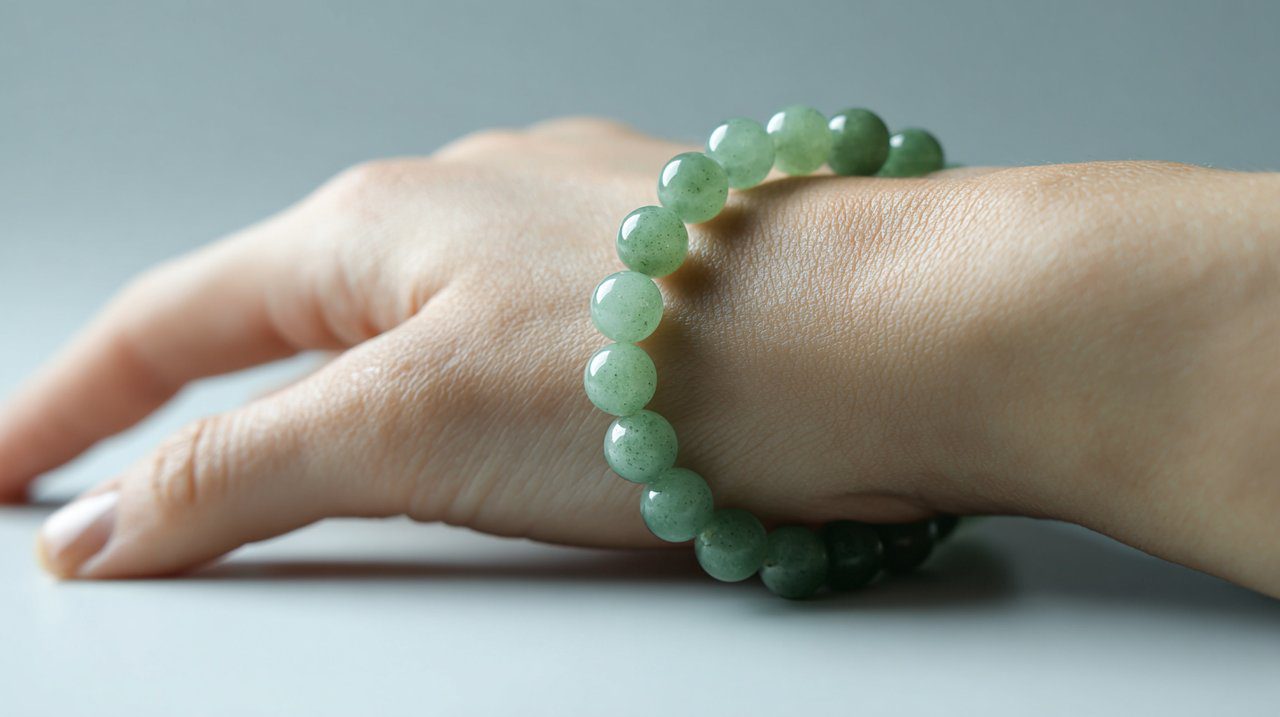
Selecting a material based on internet trends often results in a sensory mismatch. The weight, texture, and visual density of the piece must directly address your current mental hurdles.
If your days feel chaotic and unmoored, the heavy, dense aesthetic of root chakra stones sends an immediate signal of structure to your nervous system. For those focused on personal evolution, the slow physical changes in organic materials offer beautiful reassurance.
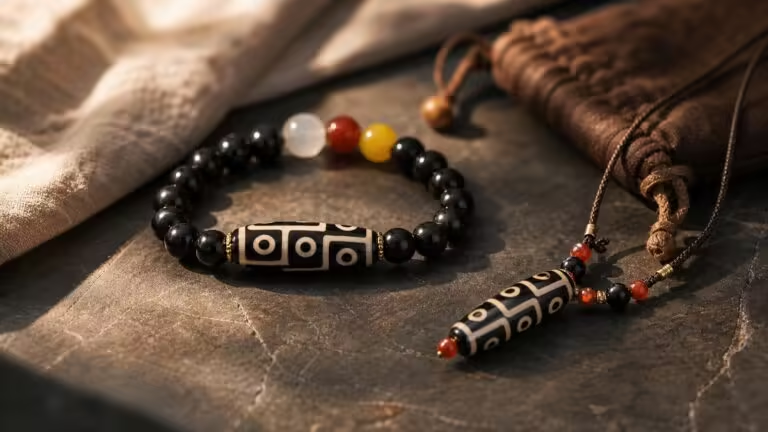
Authentic dzi beads, for example, can develop tiny red dots over years of contact with your skin’s natural oils. These subtle shifts serve as a living, visual record of your ongoing journey and quiet dedication.
The Science of Lasting Tranquility
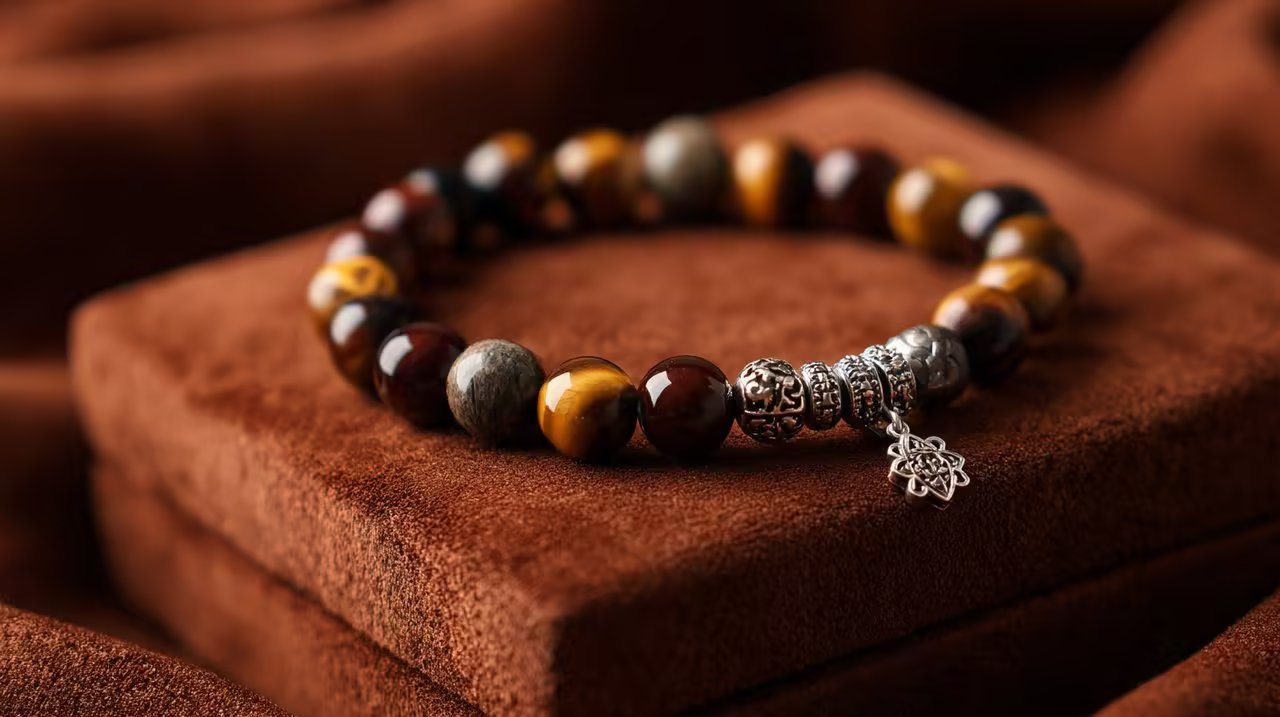
Expecting immediate serenity from a new accessory will only lead to frustration. Psychological models, specifically Lally’s 2009 habit formation research, show that it takes an average of 66 days to reach the asymptote of automaticity.
This means you need over two months of consistent, tactile cueing before a calming response becomes a natural reflex. This steady, deliberate timeline perfectly mirrors the traditional philosophy behind a tibetan mala.
The repetitive motion of moving from one bead to the next is a physical practice in patience. Each passing day of mindful contact adds a microscopic layer of resilience to your mental baseline.
Celebrate the small, quiet moments of grounding rather than waiting for massive emotional shifts. Let the subtle weight on your wrist serve as a gentle, persistent guide toward a calmer mind.