How to Build a Foundational Meditation Practice

You sit at your desk, screen glaring, as a relentless stream of notifications demands your immediate attention. Your chest feels tight, and the day is only half over. We intuitively know we need a quiet pause, yet the idea of sitting still often feels like adding another chore to an exhausting day. A foundational meditation practice is not a mystical escape from reality; it is a gentle homecoming.
True practice simply allows you to breathe amidst the modern noise. To navigate this daily rush, we rely on physical or mental focal points that instantly tether your scattered attention back to the present moment.
Before setting up your physical space, remember that this foundational routine is part of our comprehensive guide. Visit that central hub to find curated resources and specific physical anchors for every stage of your internal work.
What Meditation Actually Is
Many beginners mistakenly believe that sitting quietly requires a completely blank mind. This unrealistic expectation quickly leads to frustration and a sense of failure. True practice centers on focused attention and gentle awareness, rather than forceful suppression.
In zen buddhism, the essence of just sitting, known as Shikantaza, clarifies this approach. It is not about achieving a specific state or emptying the mind. Instead, it is a practice of simply being present with whatever is unfolding, right here, right now.
This framework, deeply rooted in buddhist philosophy, offers a welcoming entry point for meditation for beginners to cultivate inner peace. It treats the present moment as a space of simple existence rather than a problem to be solved.
In many ancient spiritual practices, particularly Tibetan teachings, thoughts are not enemies to be vanquished. Think of your wandering mind like colorful prayer flags snapping violently in a high mountain wind. You cannot command the wind to stop, but you can simply observe the fabric moving.
Ancient texts like the Visuddhimagga frame this pure observation through the concept of Parimukha, or establishing mindfulness at the forefront. You act as a city gatekeeper at the sensory threshold of your upper lip.
Do not chase the breath into the body or follow it out to the lungs. Instead, anchor your awareness strictly on the physical friction of air passing the nostril edge. Notice the physical pressure of the cool inhale and the warm exhale.
As your concentration deepens, this friction naturally transitions into a pure, luminous perception. This shift in perspective forges immediate mental resilience. Once you accept the natural flow of your mind without chasing every thought, you can begin setting up the physical foundation of your practice.

Preparing Your Quiet Space
Just as a gardener prepares the soil, creating a dedicated environment is vital for your daily sitting. You are essentially crafting a stillness sanctuary. In traditional Eastern aesthetics, this area acts as an external mirror of the calm state you wish to cultivate internally.
Start by actively clearing away any clutter. This deliberate act of preparation signals your brain that it is time to slow down, honoring your intention to be present. Returning to this specific corner gently reminds your body of the stillness you seek. Setting up your meditation environment requires only a few clear steps:
- Select an undisturbed spot. Identify an area where you can remain completely alone for a few minutes. A decluttered space directly supports a highly focused mind.
- Place a meaningful anchor. Consider adding a specific item, such as a small statue or a smooth stone. This object holds the energetic imprint of your practice, quietly acknowledging the tradition you engage with.
- Ensure structural support. Use a firm cushion or chair to elevate your hips. Proper pelvic tilt prevents lower back strain. This alignment allows the body to relax while the mind stays alert.
- Engage the senses. Traditional manuals of incense recommend observing the smoke of cooling agarwood or warming sandalwood. Keep your gaze half-closed and watch the thin, straight line of smoke rise and dissipate.
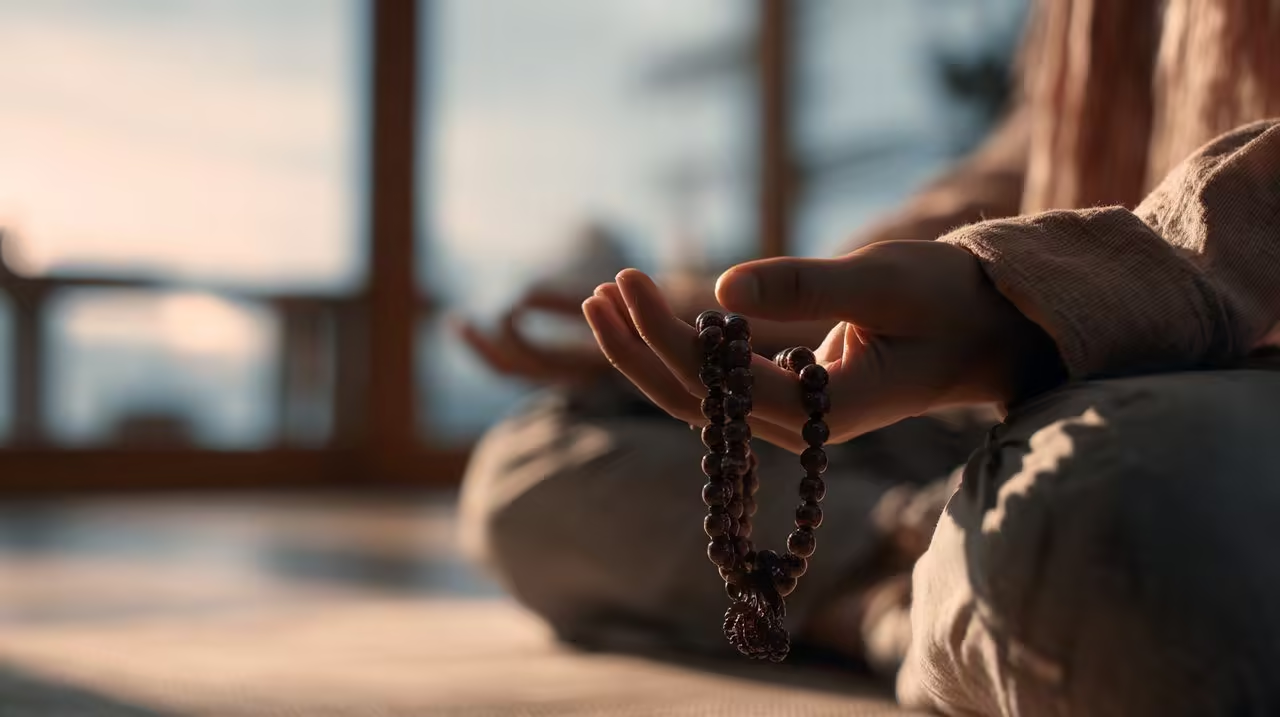
- Grasp a tactile anchor. Rather than hanging mala beads as mere decoration, rest them in your hands. Use your thumb to gently pull each wooden sphere. This distinct physical friction actively draws your attention back to the present moment.
Once your physical environment is securely set, learning how to position your body is the next crucial step.
Finding Your Seat
Physical discomfort often discourages beginners from maintaining a daily routine. The goal is to find a posture of peace that balances physical stability with deep relaxation.
In traditional Himalayan aesthetics, the cross-legged posture represents the sacred geometry of a mountain. You sit firmly rooted at the base, yet reaching upward with ease. This physical stability directly supports mental tranquility, making it a foundational mindfulness sitting technique within zazen meditation.
If sitting on the floor causes knee or back pain, a standard chair works just as well. The key adjustments are straightforward:
- Plant both feet flat on the floor. Avoid crossing your ankles or tucking your feet under the chair — this closes off circulation and creates subtle tension you will feel within minutes.
- Sit toward the front edge of the seat. Resting fully against the backrest tends to encourage slouching. Moving forward allows your pelvis to tilt naturally, which supports the spine without effort.
- Let your hands rest on your thighs. Palms down tends to feel more grounding; palms up tends to feel more open. Neither is wrong — choose what your body reaches for today.
Focus on keeping your spine naturally erect rather than rigidly straight. Paying mindful attention to your meditation posture minimizes muscular effort while opening the chest cavity. It allows the diaphragm to expand fully, sending immediate safety signals to your nervous system.
A subtle but crucial detail in the traditional Vairochana posture involves the precise placement of your hands, eyes, and tongue. These specific physical engagements actively regulate your internal energy flow.
- Close the energy circuit. Rest your right hand gently over your left in your lap. Let the tips of your thumbs lightly touch to form a teardrop shape.
- Soften your gaze. Gently lower your eyelids halfway. Let your eyes rest on the floor exactly four finger-widths ahead of you.
- Position your tongue. Lightly press the tip of your tongue against the roof of your mouth, just behind your upper teeth. This specific lock prevents vital energy from scattering upward.
- Tuck your chin slightly. Gently lower your chin toward your throat to create a subtle pressure valve. This prevents upward-moving energy from rushing to the head and causing mental agitation.
The Wandering Mind
Imagine your awareness as a still, deep pond, and your thoughts as ripples on its surface. Some ripples may be small, others large, but the pond itself remains unchanged beneath. Thoughts are merely surface currents—natural, transient, and harmless.
During mindfulness exercises, the practice is not to stop these ripples, but to observe them without getting entangled in their narratives. This is the crucial distinction between non-judgment and non-entanglement. You recognize thoughts as mere mental events, like clouds passing, without grasping their content or emotional charge.
Through this practice, a natural sense of mental clarity emerges. This profound understanding mirrors core enlightenment concepts, focusing on seeing things exactly as they are, unclouded by mental constructs.
You never beat a wild horse into submission; you gently guide it back to the dirt path. Distraction is an expected part of the process. The true practice lies in the gentle act of returning your attention when it wanders.
Noticing this distraction and guiding your focus back is an act of self-compassion. It is a quiet moment of re-anchoring, not merely a harsh correction of an error. Each gentle redirection builds your capacity for self-awareness practices.
To deepen this state, adopt the philosophical concept of “One Taste,” which treats all sensory input equally. Instead of fighting against external disruptions, observe them as a dynamic background.
Imagine your neighbor begins a loud wall renovation, or heavy traffic rumbles right outside your window. Rather than mentally labeling these sounds as annoying interruptions, actively strip away the narrative.
Treat the roar of an engine or the strike of a hammer as a neutral wave of energy washing over you. By refusing to categorize sounds as good or bad, the surrounding environment fully integrates into your quiet practice. It acts much like a cool lotus blossoming amidst the fire of city life.
Selecting Your Focal Point
Because your needs constantly change, selecting a specific focal point that matches your current state matters more than forcing a consistent technique. The following elements build a layered foundation, moving naturally from the rhythm of your breath down to the tangible weight in your hands.

The Primal Breath
Ancient texts often describe the breath as a wild horse and the restless mind as its rider. To steady the rider, we must first calm the horse. If you feel physically tense, rely on structured breathing techniques to regain control. The 4-7-8 method provides immediate physiological relief.
Inhale quietly through your nose for four seconds, hold the air in your lungs for seven seconds, and exhale completely through your mouth for eight seconds.
This rhythm gently coaxes the body out of its defensive tension. It allows the physical clamor to soften and recede. Once your chest feels lighter, you can drop the counting and simply observe the subtle, natural rise and fall of your breath.

The Earthly Body
When your thoughts move at an alarming speed and the future feels overwhelming, direct physical observation acts as your stabilizing force. This practice focuses on bringing your full attention to the physical sensations of the present moment — what practitioners call proprioceptive awareness, the felt sense of where your body is in space.
Mentally rest your awareness on the ground. To amplify this connection, try holding a string of wooden prayer beads. As your fingers lightly trace the porous sandalwood, the subtle friction generates a faint, comforting warmth.
This tactile feedback anchors your scattered energy directly into your hands, pulling anxious heat away from your chest. Instead of getting lost in hypothetical future worries, your mind tracks the steady, granular glide of the wood.
Over time, this straightforward attention helps you respond to daily stressors with a steady, balanced mind. You train your awareness to pause and process physical reality before reacting to mental spirals.
The Radiant Heart
If you feel drained or disconnected from others, offering yourself silent kindness serves as a direct remedy. Use a quietly repeated phrase to cultivate self-acceptance, such as wishing yourself safety and ease.
To anchor this intention, rest a dense stone in your palms. In modern urban life, we desperately need something tangible to pull us out of the digital ether and back into our physical bodies.
Red agate is a useful companion here. Pick it up and hold it still. Notice how the surface registers as cool against your skin — that initial contact is distinct, almost sharp in its clarity. As you continue to hold it, feel the temperature gradually equalise, the stone warming slowly to match your palm. That transition — from cold to held — gives the nervous system something real and unhurried to follow.
When anxious energy tends to gather in the chest or head, the simple weight of the stone in your hands offers a different center of gravity. Generations of people across many traditions have found that holding a dense, grounded object during moments of emotional turbulence quietly redirects that restlessness downward, toward the hands, toward the body, toward the present.
As you trace its smooth surface, let the cool weight translate the mental wish for self-compassion into a physical sensation of being securely held.
Small Daily Rituals
Cultivating a calm mind is like tending a garden. Small daily acts yield the most beautiful results over a long season.
For a sustainable routine, frequency matters far more than duration. Five minutes of presence every single day heavily outpaces an hour of forced sitting once a week.
These moments of mindfulness in daily life act as micro-rituals of engagement, effortlessly turning ordinary tasks into contemplative practices.
Morning Intention
How you begin your morning sets the entire trajectory of your day. Instead of immediately reaching for your glowing smartphone screen, take the first five minutes upon waking to simply exist.
Notice the heavy physical weight of your body sinking into the mattress. Pay attention to the specific angle and temperature of the morning light hitting your bedroom wall.
This conscious, slow transition grounds your energy before daily demands rush in. It allows you to act with deliberate purpose rather than blind reaction.
The Tea Ritual
Place a small stone near your kettle. It does not need to be significant or specially chosen — just something that does not belong to the ordinary clutter of the counter.
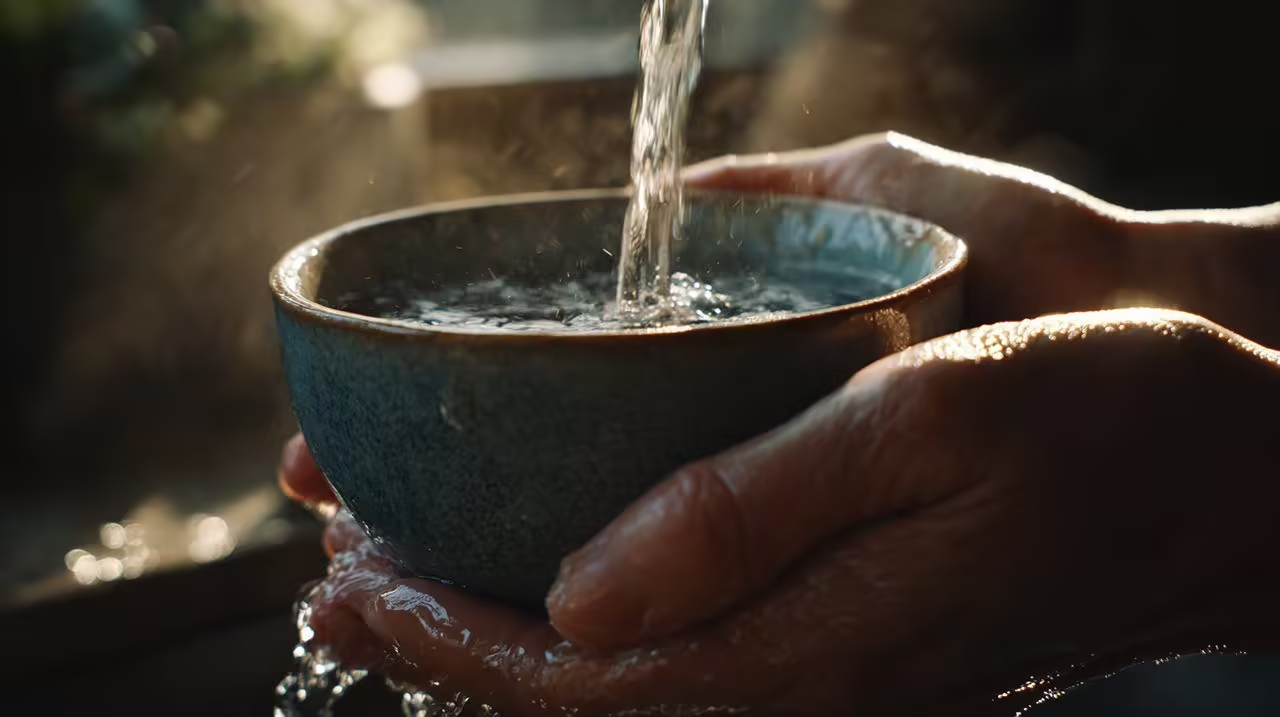
Each time you fill the kettle, the stone catches your eye. That small interruption in routine is enough. Press your hands against the warm ceramic mug. Feel the rough, coarse texture of the heavy clay beneath your fingertips and watch the steam curl upward.
When you take a sip, inhale the earthy, roasted aroma of the tea leaves. Let the hot liquid sit on your tongue for a second before swallowing. This mindful integration mirrors a gentle walking meditation, bringing the stillness of formal practice into active movement.
“The ordinary is the miraculous.” – Thich Nhat Hanh
Evening Closure
A deliberate evening routine helps process residual physical stress and prepares your brain for deep sleep. Before getting into bed, dedicate a few minutes to an intentional wind-down.
Perform a slow mental scan starting from your toes up to your jaw, actively relaxing any tight muscles you locate. You might also quietly recall three highly specific, small details you appreciated that day.
This acts as a definitive closing ritual, clearly signaling to your brain that the day’s labor is officially complete. These small daily acts eventually build the endurance needed for a sustained just sitting meditation practice.

Building Your Inner Foundation
Training your mind requires a gentle, persistent return to the present moment. Success is never measured by how peaceful a single session felt, but by your willingness to sit down again.
Patience here is not merely the ability to wait. It is a deliberate life attitude, a quiet refusal to let external chaos dictate your internal weather.
As you consistently return to your breath or the tactile reality of your spiritual jewelry, you forge a reliable inner center. This steadfast foundation supports a continuous spiritual growth journey, completely accessible and holding you steady no matter how violently the daily storms may rage.