How to Practice Meditation with Buddha Postures and Mudras

A Buddha statue is not merely a depiction. It is an argument expressed through the body. The posture, the hands, and the direction of the gaze all communicate a specific kind of awakening.
Learning to read these forms helps in two ways. It clarifies what you are seeing in Buddhist art, and it gives your own meditation practice a more stable physical vocabulary.
How to Interpret the Physical Postures of Buddha
Origins and Symbolic Language
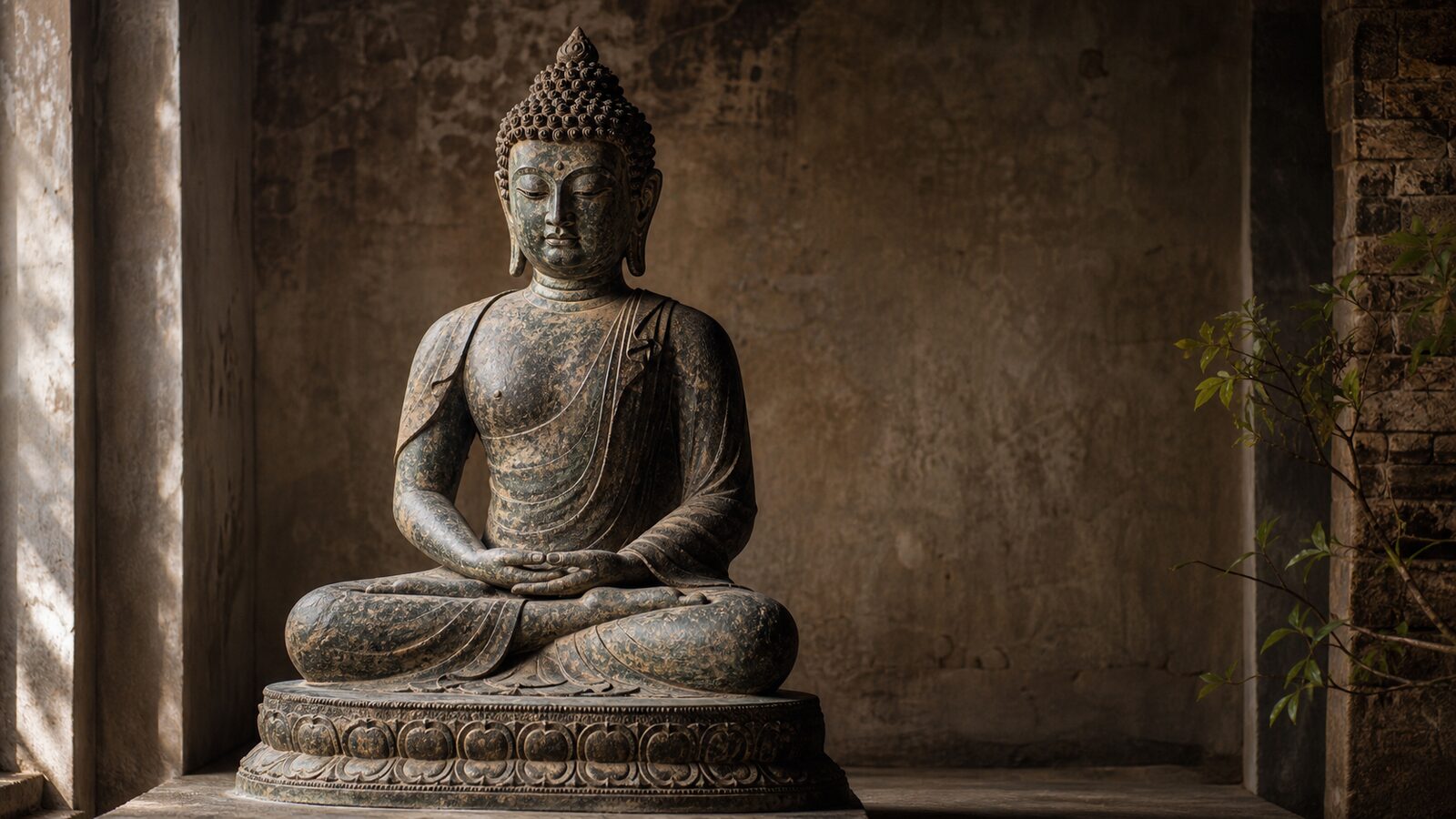
Buddha postures are visual teachings. Seated forms emphasize meditation and stability. Standing forms often suggest teaching, reassurance, or active compassion. Reclining forms usually point to Parinirvana, the Buddha’s final passing beyond the cycle of rebirth.
Standing images show presence moving outward into the world. The reclining Buddha, by contrast, is not a casual resting pose; it marks the completion of the path. Seated images, the most common form, are the architecture of stillness, and they are where art and practice meet most directly.
Different Buddhist traditions emphasize different visual languages. Theravada images often favor restrained seated or standing forms, while Mahayana and Vajrayana art may use a wider range of mudras, crowns, ritual implements, and symbolic figures. The shared principle remains the same: the body teaches before the text begins.
A posture establishes the ground. The hands refine the teaching.
The Expressive Hands
What Mudras Do
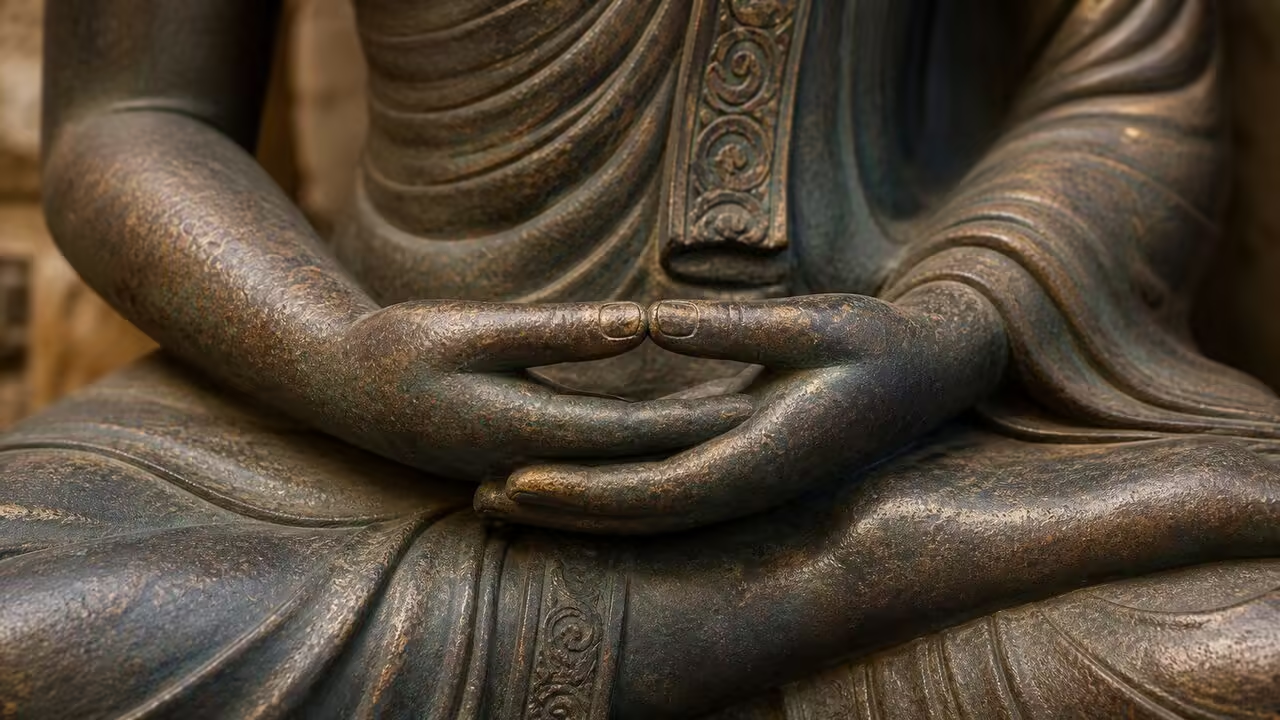
Mudras are symbolic hand gestures used across Buddhist art and practice. They are not decorative details. They identify the meaning of the image and often refer to a specific episode, quality, or teaching.
Understanding Buddha statue hand gestures turns a statue from a general symbol of peace into a more precise visual statement.
Key Mudras
Five gestures account for most of what you will meet in Buddhist art. Each one is tied to a moment in the Buddha’s story, and in Vajrayana iconography each is also linked to one of the Five Buddhas.
| Mudra | The gesture | What it means | Classic association |
|---|---|---|---|
| Bhumisparsha | The right hand touches the earth | Awakening; the earth called as witness to the Buddha’s resolve | The night of enlightenment at Bodh Gaya; Akshobhya |
| Dhyana | Both hands rest in the lap, palms up, thumbs lightly touching | Concentration and inward steadiness | Deep meditation; Amitabha |
| Dharmachakra | The hands form circles near the chest | Turning the wheel of the Dharma | The first sermon at Sarnath; Vairocana |
| Abhaya | The right hand is raised, palm outward | Fearlessness, reassurance, protection | Calming of the rampaging elephant; Amoghasiddhi |
| Varada | The hand extends downward, palm open | Generosity, compassion, offering | The granting of wishes and gifts; Ratnasambhava |
Practitioners often find Dhyana Mudra useful in moments of mental noise. Simply resting the right hand over the left gives the wandering mind a clear physical place to return.
From Statue to Practice
Choosing a Seat That Works
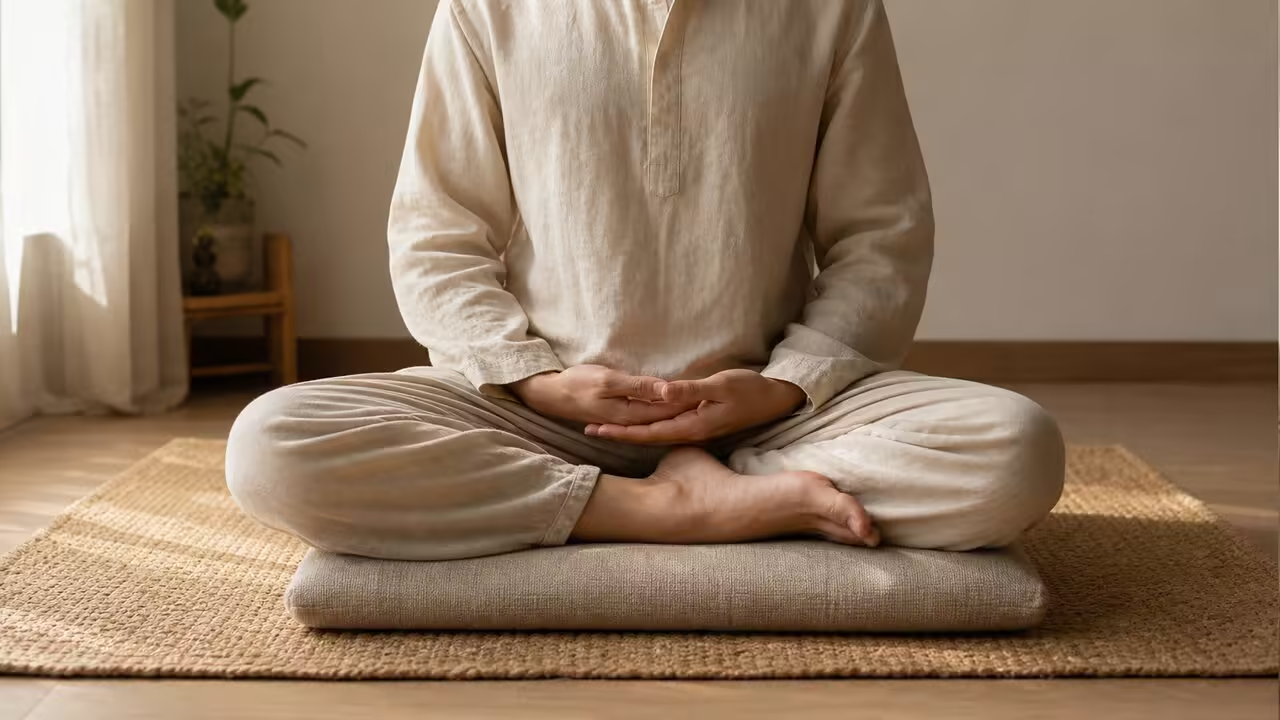
A meditation posture should support alertness without creating unnecessary pain. The goal is not to imitate a statue perfectly. The goal is to sit in a way that allows breath, spine, and attention to settle.
Each classic seat asks something different from the body, so pick by what your hips and knees can actually do today, not by what looks most traditional:
- Lotus Position (Padmasana): Both feet rest on opposite thighs. It is the most stable seat in the canon and the most demanding on hips and knees. Attempt it only if your hips are already open; forcing it teaches the body to dread sitting.
- Half Lotus (Ardha Padmasana): One foot rests on the opposite thigh. A workable middle ground. Place a small cushion under the lower knee if it floats, and alternate sides between sessions to keep the pelvis even.
- Burmese Position: Both legs fold in front of the body without crossing the feet onto the thighs. For most people this is the best starting point for longer sitting. If the knees do not touch the floor, support them with cushions to prevent groin strain and keep the pelvis stable.
- Seiza or Vajrasana: Kneel with a bench or firm cushion under the seat. The support takes pressure off the knees and lets the spine rise naturally, which makes this a good option when crossed legs go numb.
- Chair Meditation: Sit with both feet flat on the floor, away from the backrest if possible. This is not a lesser option; it is often the most sustainable posture for people with knee, hip, or back limitations.
Once the legs are settled, run a short check from the ground up:
- Keep the natural curve of the lower back rather than slumping or arching.
- Open the chest without puffing it.
- Drop the shoulders away from the ears.
- Relax the jaw and the muscles around the eyes.
- Angle the chin slightly downward so the neck stays long.
If the body fights the posture, the mind will spend the session negotiating discomfort.
Using the Hands for Focus
Many beginners quietly wonder how to hold their hands during meditation. The most direct answer is Dhyana Mudra. Place the hands in the lap, right over left, palms upward, soften the shoulders, and let the thumbs touch lightly rather than press together.
If sleepiness appears, open the chest and lift the sternum slightly. If anxiety appears, relax the jaw and feel the contact between hands, legs, and seat. The mudra becomes useful when it gives attention a reliable physical anchor.
Abhaya Mudra has a quieter use off the statue as well. When fear or insecurity rises during sitting, rest the right hand on the knee with the palm turned forward and let the gesture state what the mind cannot yet feel: nothing here needs defending. This is not a charm against danger. It is a way of giving the body a posture of steadiness so the nervous system has something to imitate.
What the Practice Changes
Buddha postures and mudras are not historical artifacts. They are living blueprints for steadier attention. Studying them clarifies Buddhist art; practicing with them clarifies the body’s role in meditation.
The most practical benefit is not mystical display. It is the ability to return: from scattered thought to breath, from tension to alignment, from vague intention to a form the body can actually hold.
You can test that claim before leaving this page. Settle into whichever seat your knees allow, rest the hands in Dhyana Mudra, and follow three minutes of ordinary breathing. Whatever you notice in those three minutes is the real subject of this article.
Reference
- Smarthistory: Mudras in Buddhist Art – supports the explanations of major Buddhist mudras, including earth-touching, meditation, teaching, fearlessness, and generosity gestures.