Wolf Tooth Necklace Meaning and How to Tell If Yours Is Real

There’s a raw, immediate weight to a wolf fang necklace that you don’t find with standard jewelry. It’s more than an ornament. For many people, it feels like a direct line to instinct and to a kind of resilience we don’t get much practice with anymore.
Wearing one and actually understanding what it represents are two different things, though. So is knowing how to tell a genuine wolf tooth pendant from a resin cast, or whether owning one is even something you’re allowed to do where you live.
This guide covers the actual symbolism behind the wolf tooth, where the tradition came from, and — more practically — how to verify authenticity and sourcing before you buy.
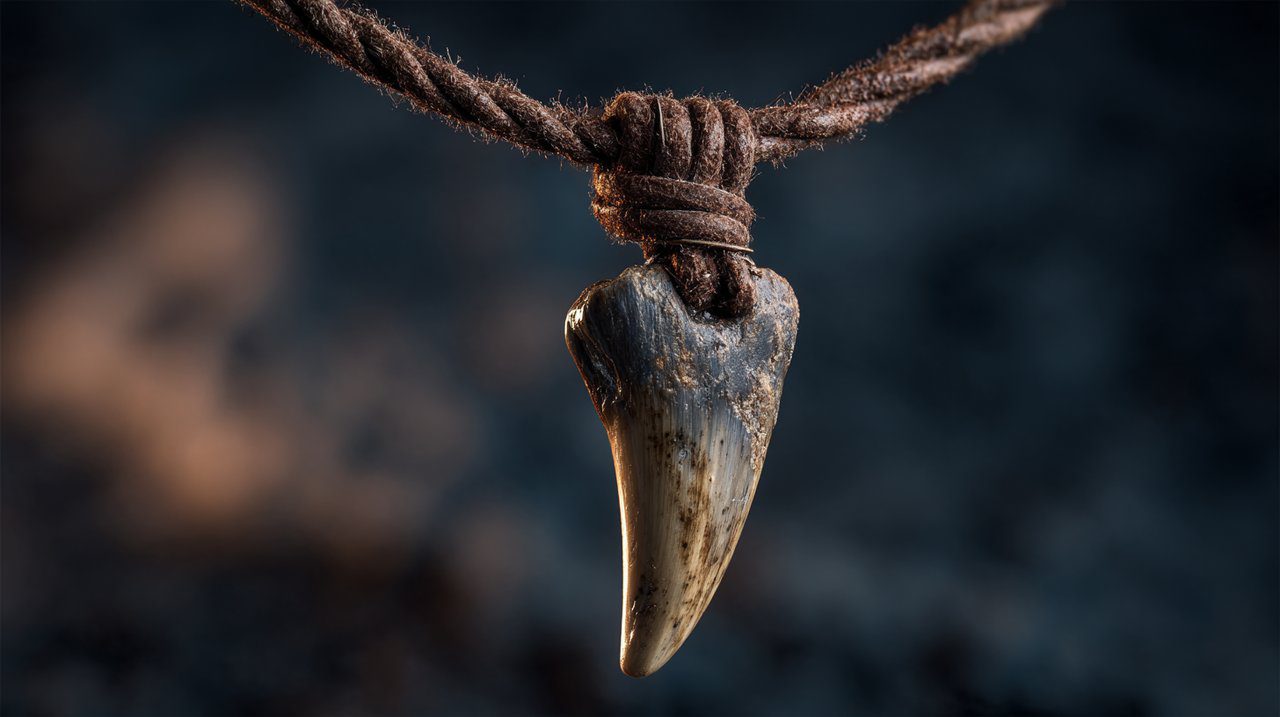
The History and Persistence of the Wolf Tooth
Humans have lived alongside wolves for as long as we’ve been building fires, and that relationship has always mixed wariness with respect. A wolf’s tooth isn’t just a piece of bone. It’s the primary tool the animal uses to survive.
Wearing one historically wasn’t about fashion. It was about keeping that animal’s persistence and sharp instinct close to your own skin.
Where the Tradition Started
The use of animal teeth as protective amulets goes back to the Upper Paleolithic. To early hunters, a wolf tooth likely represented a way to borrow the animal’s speed and resilience.
One of the clearest examples comes from the Sungir burial site near Vladimir, Russia, dated to roughly 30,000 to 34,000 years ago. Excavators found children’s burials decorated with hundreds of pierced fox and wolf teeth, arranged in patterns that suggest they were sewn onto clothing rather than scattered by chance.
That kind of deliberate placement tells us these weren’t decorative leftovers. They were treated as something worth burying with the dead.
- Shamans used wolf teeth in rituals meant to bridge the human world and the raw power of the wilderness.
- Among Siberian and circumpolar hunting cultures, these teeth were valued as a shield against both physical predators and spiritual threats.
A Cross-Cultural Icon
The wolf fang necklace still shows up today because the wolf represents something that doesn’t need much explanation. From Native American jewelry traditions to Norse folklore, the wolf stands for intelligence and community.
It’s an archetype of the survivor — smart enough to lead a pack, but capable of standing alone when it has to. That balance is something a lot of people are still trying to find in their own lives.
The wolf is a rare creature that is just as effective on its own as it is with its pack. People who choose to wear a tooth are usually looking for that same mix of fierce independence and deep loyalty.
What the Tooth Actually Represents
When you wear a wolf tooth pendant, the meaning is usually internal. It’s a quiet reminder of things we tend to lose track of in a modern setting — gut instinct, and the kind of resilience that doesn’t need a loud audience.
Courage and the Gut Instinct
We talk a lot about courage, but for a wolf, it’s just survival. It’s the ability to make a decision and commit to it without hesitating.
In my experience, people are often drawn to these pieces during transitions: a career change, a breakup, any stretch where they feel they’ve lost their edge.
The tooth works as a physical touchstone. When you’re overthinking a situation, the weight against your chest is a reminder to trust your first instinct, before you start second-guessing yourself.
Protection and Internal Boundaries
The idea of a wolf fang necklace as a protective amulet isn’t really about warding off “evil” in a supernatural sense. It’s usually about maintaining personal boundaries — the “guardian” aspect of the wolf, which knows exactly when to stand its ground and when to move on.
- Many Native American traditions view the wolf as a teacher, the one who knows the path and keeps the pack from losing its way.
- In Norse mythology, the wolf is both the untamed force that challenges the gods and a loyal companion to Odin — power that’s been mastered but not broken.
- On a practical level, wearing the tooth is a tactile way to remind yourself of your own capacity for self-preservation.
The Link to the Wild
Most of us spend our days in climate-controlled rooms, far removed from the dirt and the weather. A wolf tooth pendant provides a grounding connection to that missing piece of our environment — a small, sharp reminder that we belong to the natural world, even after years of building walls against it.
Authenticity and Sourcing
If you’re buying a wolf tooth for what it represents, the last thing you want is a piece of molded resin, or a tooth taken from an animal that was poached or mistreated. The market is full of resin casts and “wolf-style” replicas, so it helps to know what you’re actually looking at before you pay for it.
How to Spot a Real Wolf Tooth
Identifying real wolf teeth for sale means looking past the polished photos. Real bone and enamel have a specific feel and weight that synthetic materials can’t quite replicate.
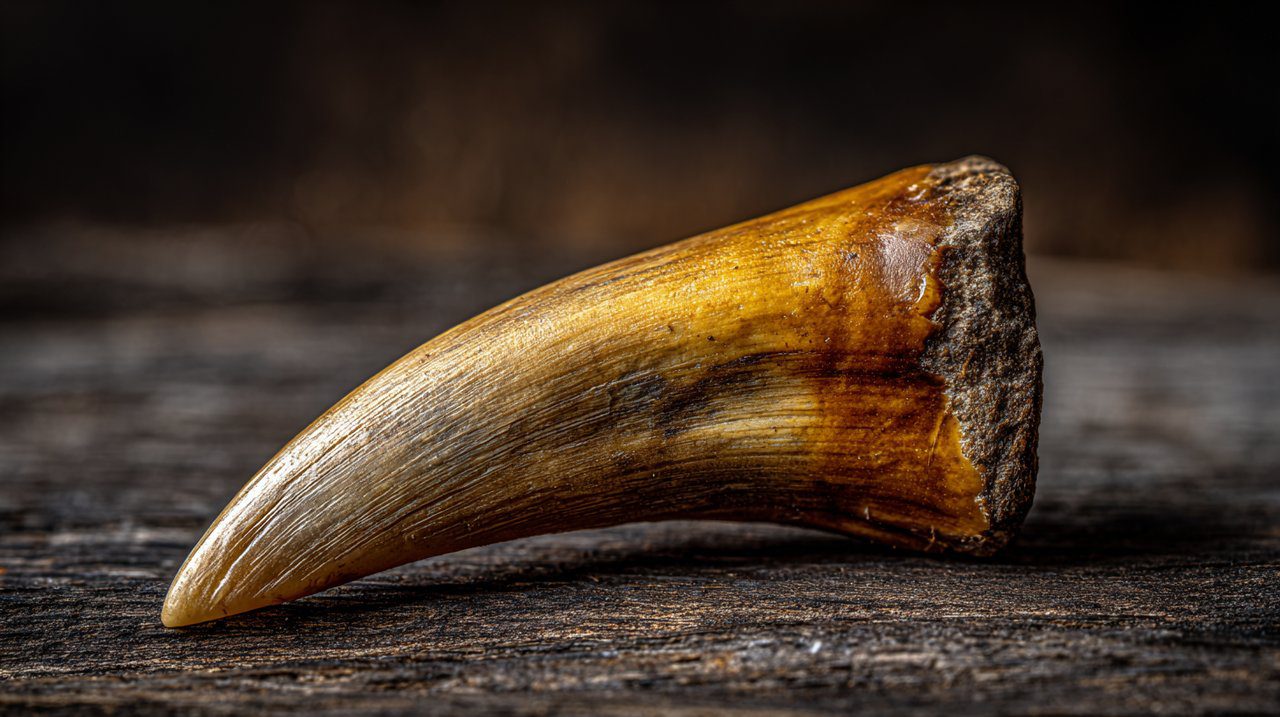
| Feature | Authentic Wolf Tooth | Resin or Fake |
|---|---|---|
| Shape | Long, thick at the base, with a slight natural curve. More robust than a domestic dog’s canine. | Uniform, “perfect” factory-mold shape. |
| Coloring | Off-white, cream, or slightly yellowed near the root, with faint vertical grain in the enamel. | Bright, even white with a smooth, pore-less surface. |
| Root area | Rougher, often irregular where it sat in the jaw. | Suspiciously clean or flat base, pulled from a cast. |
| Weight and feel | Dense for its size; stays cool to the touch longer than plastic. | Feels light or slightly hollow. |
If you’re looking at a high-value piece, it’s worth getting a second opinion from someone who handles bone carvings or natural history specimens professionally before you commit.
Ethics and Legality of the Trade
Canis lupus
Canis lupus is the scientific name for the gray wolf. The name matters because wildlife rules are applied to a particular species or population, not to a seller’s broad label of “wolf tooth.” The Mexican gray wolf and the red wolf, for example, have heightened protection in the United States, while wolf products elsewhere may be subject to different national or regional controls.
Owning a wolf tooth pendant is not automatically illegal everywhere, but the rules can differ by country, state, province, and population. Do not treat a seller’s description as proof that an item is lawful to possess or import. Before paying for a cross-border purchase, ask the relevant wildlife or CITES management authority what documentation is required for that exact species, origin, and route; a parcel can be held even when a seller says the item is “vintage” or “legal.”
It’s also worth clearing up a common myth: wolves don’t shed their canine teeth the way deer shed antlers. A genuine tooth almost always comes from an animal that died, which means the honest question to ask a seller isn’t whether the tooth was “found,” but how the animal died and whether they can document it.
In practice, legitimate sources tend to fall into a few categories.
- Regulated wildlife management programs: In regions where wolf populations are managed through licensed culls or population-control hunts, teeth are sometimes salvaged as a byproduct rather than discarded.
- Natural-mortality and roadkill salvage permits: Some wildlife agencies issue permits allowing teeth to be kept from animals that died of natural causes or vehicle collisions.
- Vetted secondhand and estate pieces: Older pendants from estate sales or established dealers carry less uncertainty than anything advertised as freshly “found in the wild.”
- Transparent sellers: A reputable seller will tell you, without hesitation, which of these categories their stock came from. Vagueness about origin is the real red flag — not the price.
Living With the Piece
Once you’ve found a genuine, ethically sourced tooth, it stops being a “find” and starts being something you actually live with day to day.
Selecting the Right Setting
Choosing how to mount or hang your necklace with tooth changes the whole feel of the piece. If you’re active, a delicate silver chain probably isn’t the move.
- Purpose: For internal grounding, a simple leather cord tucked under your shirt works well. For a more visible tribute to the animal, a silver setting reads better.
- The hand test: Beyond how it looks in a mirror, notice how it feels when you hold it. If the weight feels right when you’re holding it, that’s usually a better indicator than any aesthetic trend.
- Build quality: Check the bail and the wrap. A real tooth is organic; the setting should be secure enough that you’re not worried about it slipping out during a busy day.
Caring for an Organic Pendant
Because a wolf tooth pendant is organic, it needs different care than solid gold or plastic. Bone is porous and reacts to its environment.
- Physical care: Keep it away from harsh chemicals, perfumes, and heavy detergents, which can strip natural oils from the enamel or make the root brittle. A soft, dry or slightly damp cloth is usually all it needs.
Making the Symbol Part of Daily Life
Once you’re wearing the tooth, it usually stops being a conversation piece and starts being a personal anchor — a reminder of what that weight around your neck stands for when things get chaotic.
Finding a Moment of Focus
You don’t need a formal ritual, but sitting with the piece for a few minutes can help ground you. Holding the wolf tooth pendant during a quiet moment turns it into a physical touchstone for the qualities you’re trying to channel — similar in spirit to how some people use specific stones to redirect their focus.
A brief care routine can serve the same purpose. After cleaning the pendant, pause to check its setting and revisit why you chose it — not to restore a literal force, but to keep the object from becoming automatic or detached from its documented origin.
- Sit quietly and get used to the feel of the tooth in your hand. Let the day’s distractions fade out for a minute.
- Think about the wolf’s resilience — its ability to navigate a harsh environment with confidence in its own senses.
- It’s less about “becoming” something else and more about acknowledging instincts that already exist in you.
What This Symbol Asks of You
A wolf fang necklace points back toward intuition and sharp observation, in a setting where we’re often disconnected from our surroundings. It’s a prompt to trust your gut, stand your ground when necessary, and stay loyal to the “pack” you’ve chosen for yourself.
Whether you wear it for protection or as a tribute to the animal’s spirit, the real value of the piece is in the intent you carry with it.
Frequently Asked Questions
What is the significance of a wolf fang necklace?+
A wolf fang necklace can carry personal associations with resilience, alertness, and loyalty. Meanings vary by culture and wearer; it should not be presented as a universal ancient symbol with one fixed interpretation.
What spiritual meanings are associated with wearing a wolf tooth pendant?+
Some people use a wolf tooth pendant as a personal reminder of courage or boundaries. Those associations are symbolic rather than a guarantee of protection, safety, or a particular outcome.
How can one identify an authentic wolf tooth?+
A real tooth may show natural variation in enamel, root shape, and wear, but appearance alone cannot reliably prove either species or lawful origin. For a valuable piece, request provenance and seek an independent natural-history or wildlife-law opinion.
Why is ethical sourcing important when acquiring a wolf fang necklace?+
Ethical sourcing means documented lawful origin and compliance with the rules where the item is sold, possessed, and transported. Do not rely on claims that a tooth was naturally shed: adult wolves do not shed their canine teeth like deer shed antlers.