What Budai Actually Taught

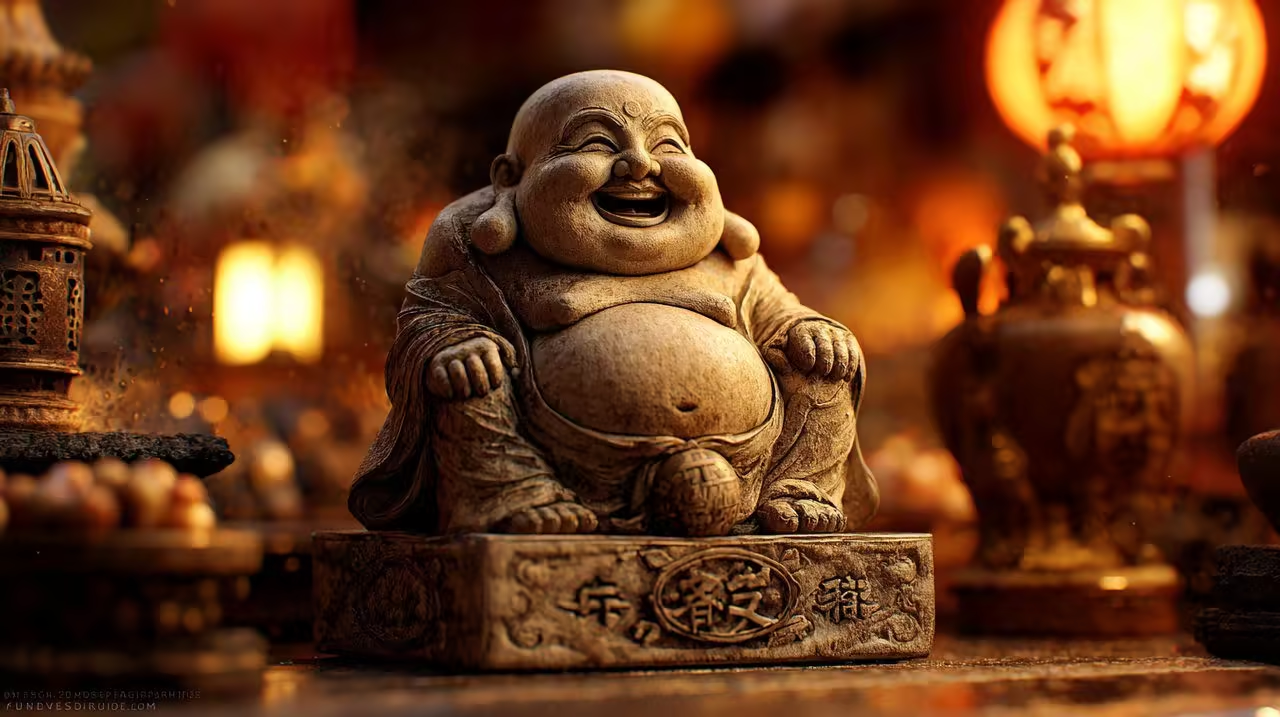
Budai is easy to recognize: a smiling, round-bellied monk carrying a cloth sack. He is often called the Laughing Buddha, yet he is not a depiction of Siddhartha Gautama, the historical Buddha.
The figure is associated with a tenth-century Chinese monk known as Qici. Historical evidence about his life is limited, while later Chan records, religious tradition, and centuries of art added layers of meaning around him. Understanding Budai therefore requires a careful distinction between what is documented, what is traditionally told, and what later images came to symbolize.
Who Was Budai?
Budai means “cloth sack,” a name taken from the bag that identifies him in stories and art. Sources describe Qici as an eccentric wandering monk active in eastern China around the tenth century. Beyond that outline, many vivid details belong to hagiography: religious biography shaped to communicate values rather than provide a modern factual record.
Calling Budai a “quiet rebel” can be a useful modern interpretation, but it should not be mistaken for a documented title or a complete account of his teaching. He is better understood as a figure whose informal appearance and public presence challenged expectations about what a holy person should look like.

Budai and Maitreya
In East Asian Buddhist tradition, Budai came to be regarded as a manifestation of Maitreya, the future Buddha. This association is traditionally linked to a verse attributed to Budai near the end of his life. Because accounts of his life were transmitted through religious literature, it is most accurate to describe this as a devotional tradition rather than a historically verifiable declaration.
Maitreya existed in Buddhist belief and art long before Budai. Earlier depictions often show a princely bodhisattva with identifying attributes. The round-bellied monk is a distinct Chinese form through which Maitreya came to be recognized in many East Asian settings.
What the Cloth Sack Means
The sack is Budai’s defining attribute. At the simplest level, it identifies a wandering monk carrying his belongings. In later stories and images, it becomes more expansive: a container for provisions, gifts, abundance, or the burdens people wish to release.
These meanings do not amount to a single doctrine taught by the historical Qici. They show how a practical object can gather symbolic weight over generations. The sack can suggest contentment with little, generosity toward others, or the freedom to carry possessions without being possessed by them.
Why Budai Became a Symbol of Good Fortune
Budai’s smile, relaxed posture, large belly, and open sack made him a natural image of ease and abundance. Over time, this visual language encouraged associations with prosperity and good fortune. Museums commonly identify these later meanings while also noting his identity as a tenth-century monk associated with Maitreya.
Gold ingots, treasure, and other wealth symbols belong mainly to later popular and commercial imagery. They tell us how communities adapted Budai to their hopes. They do not prove that the historical monk taught a method for attracting money.
This distinction matters. A Budai figure may serve as a reminder of generosity or contentment, but it should not be presented as a guaranteed instrument of wealth.
Budai in Art
Artists across China, Japan, Korea, and Vietnam developed many forms of Budai. He may appear alone, resting on his sack, walking, or surrounded by children. In Japan he is known as Hotei and became one of the Seven Lucky Gods.
Material changes the mood of a figure without changing its religious identity. Wood feels warm and shows grain; stone carries visual weight; metal reflects light and records touch. These are sensory and artistic qualities. Claims that a particular timber automatically slows breathing or transmits a specific spiritual frequency require evidence and should not be treated as established fact.
What Can Budai Teach Today?
We cannot reconstruct a complete system of “Budai teachings” from the surviving record. What remains is an image, a body of stories, and a long tradition of interpretation.
From those sources, several careful reflections are possible:
- Contentment is different from accumulation. The sack can hold necessities without becoming an identity.
- Generosity makes abundance visible. A full bag matters most when its contents can be shared.
- Spiritual seriousness need not look severe. Budai’s informal appearance leaves room for humor and ordinary life.
- Symbols change across time. A monk associated with simplicity can later become an emblem of wealth; both layers deserve to be recognized.
Living With a Budai Figure
A statue does not need supernatural claims to be meaningful. Its presence can prompt a simple question: what are you carrying, and what can you set down?
Placement traditions vary by household, cultural practice, and decorative purpose. Treat the figure respectfully, keep it in a clean and intentional location, and avoid presenting one modern placement rule as universal Buddhist doctrine. For practical display considerations, see our Placement Guide.
References
- Cleveland Museum of Art: Budai — explains how Zen literature and popular folklore shaped Budai’s later identity and imagery in Japan.
- Cleveland Museum of Art: Figure of Budai or Hotei — identifies Budai as a semi-legendary Chinese monk known in Japan through the transmission of Chan Buddhism.